
Summary
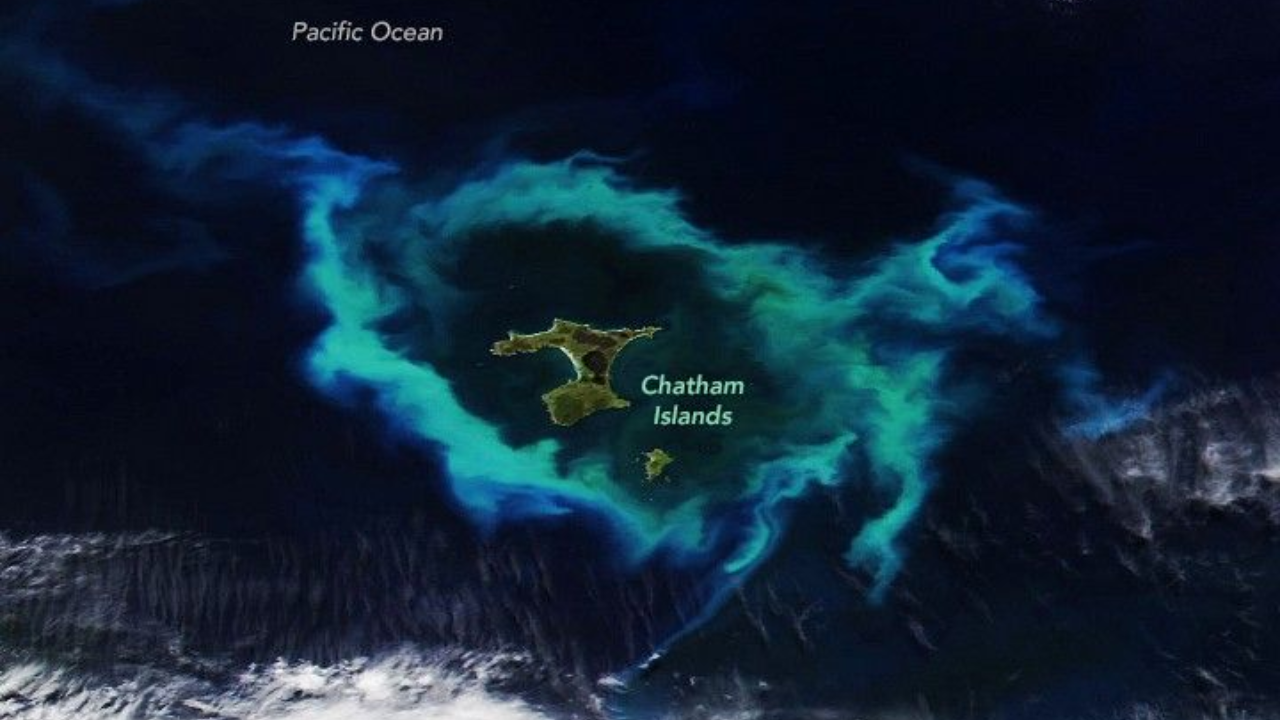
NASA satellites recently captured a striking image of a bright, glowing ring surrounding the Chatham Islands near New Zealand. This visual phenomenon, which looks like a gleaming halo from space, is caused by a massive growth of tiny sea plants and moving ocean currents. The event highlights the rich biological activity in this remote part of the Pacific Ocean and provides scientists with important data about ocean health. These images show how natural processes under the water can create beautiful and visible changes on the surface.
Main Impact
The discovery of this glowing halo is more than just a beautiful picture. It shows the massive scale of life in the ocean and how underwater geography affects the environment. This bright ring is a sign of a very healthy and active ecosystem. Because these tiny plants are the base of the food chain, a large bloom like this means there is plenty of food for fish, birds, and whales. For researchers, these satellite images are vital tools for tracking how nutrients move through the sea and how the ocean reacts to changing temperatures.
Key Details
What Happened
The Operational Land Imager on the Landsat 8 satellite was passing over the South Pacific when it recorded the unusual sight. Around the small group of the Chatham Islands, the water turned a bright, milky turquoise color. This color stands out sharply against the dark blue of the deep ocean. The glow is caused by billions of microscopic organisms called phytoplankton. These tiny plants contain calcium carbonate, which acts like tiny mirrors. When sunlight hits them, they reflect the light back up into space, creating the halo effect seen in the photos.
Important Numbers and Facts
The Chatham Islands sit about 800 kilometers, or roughly 500 miles, east of New Zealand’s South Island. The islands are located on a massive underwater plateau known as the Chatham Rise. While the surrounding ocean is very deep, the water over this plateau is much shallower, ranging from 100 to 1,000 meters deep. The bloom itself can cover thousands of square miles of ocean surface during its peak. This area is known as one of the most productive biological zones in the world because of the way different ocean currents meet right at this spot.
Background and Context
To understand why this halo appears, you have to look at the ocean floor. The Chatham Rise acts like a giant wall under the water. To the north, the water is warm and low in nutrients. To the south, the water is cold and very rich in food for plants. When these two different types of water crash into the underwater plateau, they mix together. This mixing zone is called the Subtropical Front.
The cold water from the south brings up minerals and nutrients from the deep ocean floor. When these nutrients reach the shallow, sunlit waters near the islands, they act like fertilizer for the phytoplankton. Just like grass grows fast in the spring with rain and sun, these tiny sea plants grow in huge numbers, changing the color of the entire ocean around the islands.
Public or Industry Reaction
The images have gained attention from both the scientific community and the fishing industry. Scientists use these high-resolution photos to measure how much carbon the ocean is absorbing. Since phytoplankton take in carbon dioxide, these blooms help clean the air. Environmental groups are also watching these patterns closely to see if the timing of the blooms changes over the years due to global warming.
For the local people and the fishing industry in New Zealand, the halo is a welcome sight. The Chatham Rise is a primary area for commercial fishing. A strong bloom usually means a good year for fish populations. When there are plenty of tiny plants, the small fish have more to eat, which eventually helps the larger fish that people catch for food.
What This Means Going Forward
NASA and other space agencies will continue to monitor the waters around New Zealand. By comparing these images to photos taken in the past, experts can tell if the ocean is becoming more or less productive. There is some concern that as ocean temperatures rise, the "front" where the warm and cold water meet might move further south. If that happens, the glowing halo might appear in different places or become less bright.
Future satellite missions will have even better cameras to look at the specific types of plants in the water. This will help scientists understand not just that something is growing, but exactly what kind of life is thriving. This information is key to protecting the ocean and making sure that fishing stays sustainable for the future.
Final Take
The glowing halo around the Chatham Islands is a powerful reminder of how connected our planet is. A simple change in the shape of the ocean floor can lead to a massive explosion of life that is visible from hundreds of miles above the Earth. These satellite images do more than just show us a pretty view; they give us a window into the health of our oceans and the complex systems that keep our world alive.
Frequently Asked Questions
What causes the water to glow around the islands?
The glow is caused by huge groups of tiny plants called phytoplankton. These organisms reflect sunlight, which makes the water look bright blue or green from the sky.
Are the Chatham Islands part of New Zealand?
Yes, they are a remote territory of New Zealand located about 800 kilometers east of the main islands in the Pacific Ocean.
Is this halo visible every day?
No, the halo is most visible during specific times of the year when the water temperature and nutrient levels are just right for the plants to grow quickly.

