
Summary
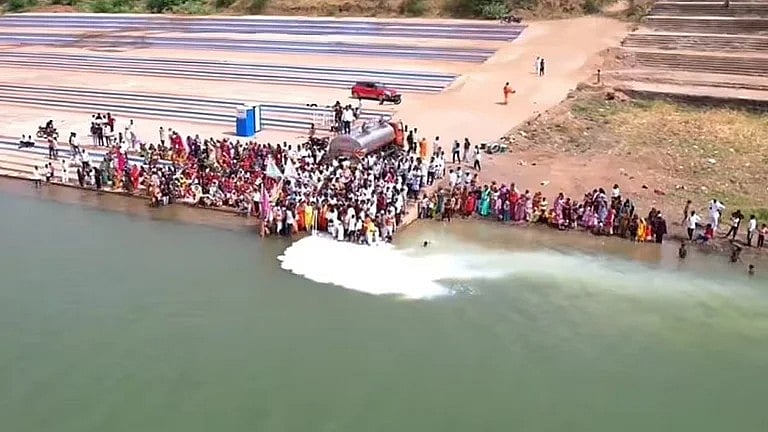
A major controversy has broken out in central India after 11,000 liters of milk were poured into the Narmada River. This act was part of a 21-day religious ceremony held in the Sehore district of Madhya Pradesh. While the event was intended to be a spiritual ritual, it has caused a massive debate about the damage done to the environment. Experts warn that dumping such a large amount of organic material into the water acts like a poison, killing fish and destroying the river's natural balance.
Main Impact
The primary impact of this event is the immediate threat to the Narmada River’s health. The Narmada is often called the lifeline of the region, providing water and food to millions. However, adding 11,000 liters of milk has introduced a massive amount of organic waste into the water. This does not just change the color of the river; it starts a chemical reaction that can kill almost everything living in that section of the water. Environmentalists are calling this a "biological poison" because of how quickly it removes oxygen from the river.
Key Details
What Happened
The incident took place during a large religious gathering at the Satdev area, which is about 40 kilometers from Bhopal. Thousands of people attended the ceremony, which lasted three weeks. Along with the milk, large amounts of ritual items like coconuts and ceremonial powders were thrown into the river or burned in ritual fires nearby. The Satdev area is considered a holy site where ancient sages are said to have lived, which is why these large-scale events are frequently held there.
Important Numbers and Facts
The sheer scale of the waste is what has shocked the public. Here are the key figures involved in the incident:
- 11,000 Liters: The total amount of milk dumped into the river from large tankers.
- ₹5.5 to ₹7.7 Lakh: The estimated cost of the milk that was wasted.
- 21 Days: The length of the religious ceremony.
- 40 Kilometers: The distance from the state capital, Bhopal, where this event occurred.
When milk enters a river, it creates a high "Biological Oxygen Demand." This means that bacteria in the water work overtime to break down the milk. As they do this, they use up all the oxygen. Without oxygen, fish and other water creatures suffocate and die within a few hours. The fats in the milk also create a thick layer on top of the water, which stops new oxygen from the air from getting into the river.
Background and Context
The Narmada River starts in Amarkantak and flows across several states. It is already a river in deep trouble. For years, it has faced problems from illegal sand mining, which destroys the riverbed. Forests along the banks have been cut down, and factories often dump chemical waste directly into the flow. Large dams have also slowed down the river's movement. When a river moves slowly, it loses its ability to clean itself. Adding thousands of liters of milk to a river that is already struggling makes the situation much worse.
Public or Industry Reaction
The reaction from the public has been a mix of anger and sadness. Many people on social media pointed out the irony of wasting so much food in a country where many children suffer from hunger. India often ranks low on global hunger lists, and critics argue that this milk could have fed thousands of malnourished children. Environmentalists have been very vocal, calling the act "criminal." They argue that if a private company had dumped this much waste into a river, they would face heavy fines or jail time. They are asking why religious groups are allowed to bypass environmental laws.
What This Means Going Forward
This event highlights the need for a change in how rituals are performed. Experts suggest that faith and science must work together. Instead of dumping thousands of liters of milk, a symbolic offering of just a few drops could be used. This would respect the tradition without killing the river. There are now calls for the National Green Tribunal, India’s environmental court, to take action and set strict rules for religious events near water bodies. If these practices continue, the Narmada may lose its ability to support life entirely.
Final Take
True devotion should not come at the cost of the environment. The Narmada River is a living system that provides for the people, and protecting it is a form of service in itself. Wasting thousands of liters of milk while people go hungry is hard to justify under any religious or logical framework. Moving forward, the focus must be on "green" rituals that honor traditions while keeping the water clean and the people fed. Protecting the river is the best way to honor the life it gives to the region.
Frequently Asked Questions
Why is milk harmful to a river?
Milk contains fats, sugars, and proteins. When it enters a river, bacteria eat these nutrients and use up all the oxygen in the water. This leaves no oxygen for fish, causing them to suffocate and die.
Is there a religious reason for dumping so much milk?
While milk is used in many Hindu rituals, scholars and leaders like Swami Vivekananda have argued that feeding the hungry is the highest form of worship. There is no specific religious rule that requires wasting thousands of liters of food.
What are the other threats to the Narmada River?
The river is currently struggling with illegal sand mining, industrial pollution, the destruction of nearby forests, and reduced water flow caused by large dams.

