Summary
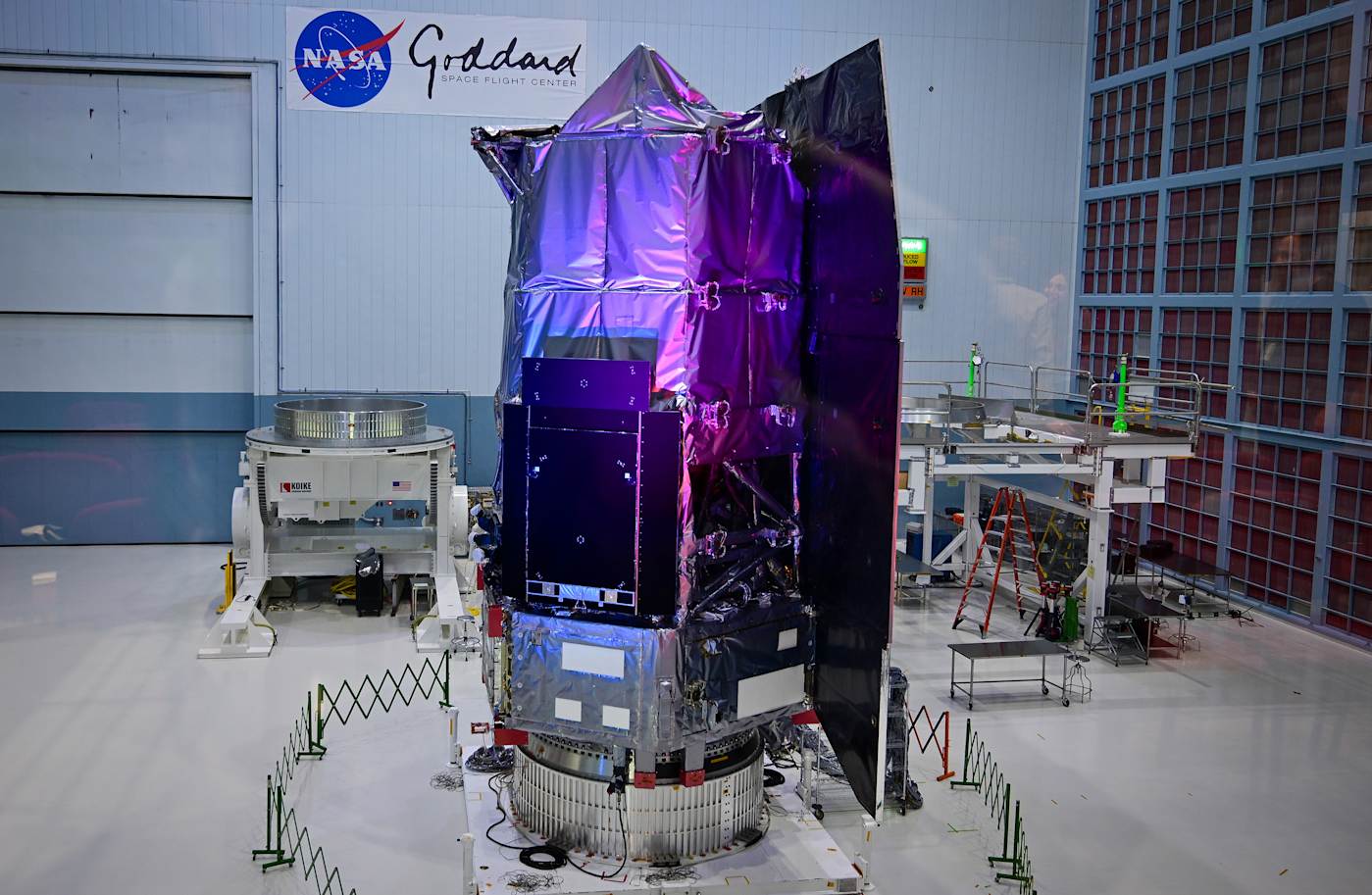
NASA has announced a target launch date for its next major space observatory, the Nancy Grace Roman Space Telescope. The agency plans to send the telescope into space as early as September 2026. This new mission will provide a much wider view of the universe than previous tools, helping scientists study dark energy and search for planets around other stars. By capturing massive images of the sky, the Roman telescope will help find rare space objects that were previously hidden from view.
Main Impact
The arrival of the Nancy Grace Roman Space Telescope will change how astronomers study the stars. For years, telescopes like the James Webb Space Telescope have focused on looking at very small parts of the sky in great detail. While this is helpful for seeing deep into space, it makes it hard to find new or rare objects. The Roman telescope solves this problem by looking at a much larger area at once.
Because it can see 100 times more of the sky in a single photo than the Hubble Space Telescope, it acts like a wide-angle lens for the universe. This capability allows it to act as a "discovery machine." It will find interesting things in space that other telescopes can then zoom in on to study more closely. This teamwork between different observatories will give scientists a more complete picture of how the universe began and how it continues to change.
Key Details
What Happened
NASA confirmed that the Nancy Grace Roman Space Telescope is on track for a launch later this year. The agency is aiming for a window that opens in early September 2026. To get the telescope into orbit, NASA will use a SpaceX Falcon Heavy rocket. This powerful rocket is necessary to carry the heavy equipment far away from Earth. While September is the earliest possible date, NASA has built in extra time to ensure everything is perfect. The launch could happen any time between September 2026 and May 2027.
Important Numbers and Facts
The telescope is packed with advanced technology designed for big tasks. Its main mirror is about the same size as the one on the Hubble Space Telescope, measuring 2.4 meters across. However, the camera inside is much more powerful. It features a 300.8-megapixel camera that can see both visible light and infrared light. This allows it to peer through dust clouds in space that usually block our view.
Once it launches, the telescope will travel to a special spot in space about 1 million miles away from Earth. From this distance, it can stay in a stable position to take clear pictures without interference from our planet. One of its most important tools is a coronagraph. This is a special device that blocks out the bright light from stars so the telescope can see the much dimmer planets orbiting them. This is a difficult task, similar to trying to see a tiny firefly flying next to a bright searchlight from miles away.
Background and Context
This project has been in development for a long time. It was first introduced in 2016 under a different name: the Wide Field Infrared Survey Telescope, or WFIRST. Later, NASA renamed it to honor Nancy Grace Roman. She was NASA’s first chief astronomer and is often called the "mother" of the Hubble Space Telescope because she played a huge role in making that project a reality. Naming this new telescope after her recognizes her work in helping humans see the stars more clearly.
The mission is designed to answer some of the biggest questions in science. One of those questions involves dark energy. Scientists believe dark energy makes up about 68 percent of everything in the universe, yet they still do not fully understand what it is or how it works. By mapping large parts of the sky, the Roman telescope will help researchers see how dark energy pushes the universe apart.
Public or Industry Reaction
The scientific community is very excited about this launch. Experts say that the Roman telescope fills a gap that other telescopes cannot. While the James Webb telescope is famous for its beautiful, zoomed-in photos, the Roman telescope will provide the "big picture" that has been missing. Scientists believe this will lead to the discovery of thousands of new planets and perhaps even entirely new types of space events that we have never seen before. Space fans are also looking forward to the mission, as it promises to deliver stunning new images of the galaxy that will be shared with the public.
What This Means Going Forward
Once the telescope reaches its destination 1 million miles away, it will begin a multi-year mission. The data it collects will be shared with scientists all over the world. Because the telescope takes such large images, the amount of information it sends back will be massive. This will require new ways of processing data and could lead to a surge in scientific papers and discoveries over the next decade.
If the launch goes well in September, we could see the first images from the Roman telescope by early 2027. These images will help map the Milky Way galaxy in more detail than ever before. The mission will also test the new coronagraph technology, which could pave the way for future telescopes designed specifically to look for signs of life on other planets.
Final Take
The Nancy Grace Roman Space Telescope represents a major leap in our ability to explore the stars. By combining a wide view with high-powered cameras, NASA is opening a new window into the dark corners of the universe. This mission will likely change our understanding of space for generations to come, proving that there is still much to learn about the world beyond our own.
Frequently Asked Questions
How is the Roman telescope different from Hubble?
While both have similar-sized mirrors, the Roman telescope can see an area of the sky 100 times larger than Hubble in a single image. This makes it much faster at mapping the universe.
What is dark energy?
Dark energy is a mysterious force that makes up most of the universe and causes it to expand at an increasing speed. The Roman telescope will study how it affects the movement of galaxies.
When will the telescope launch?
NASA is targeting early September 2026 for the launch, though the window remains open until May 2027 to ensure the mission is ready.