Summary
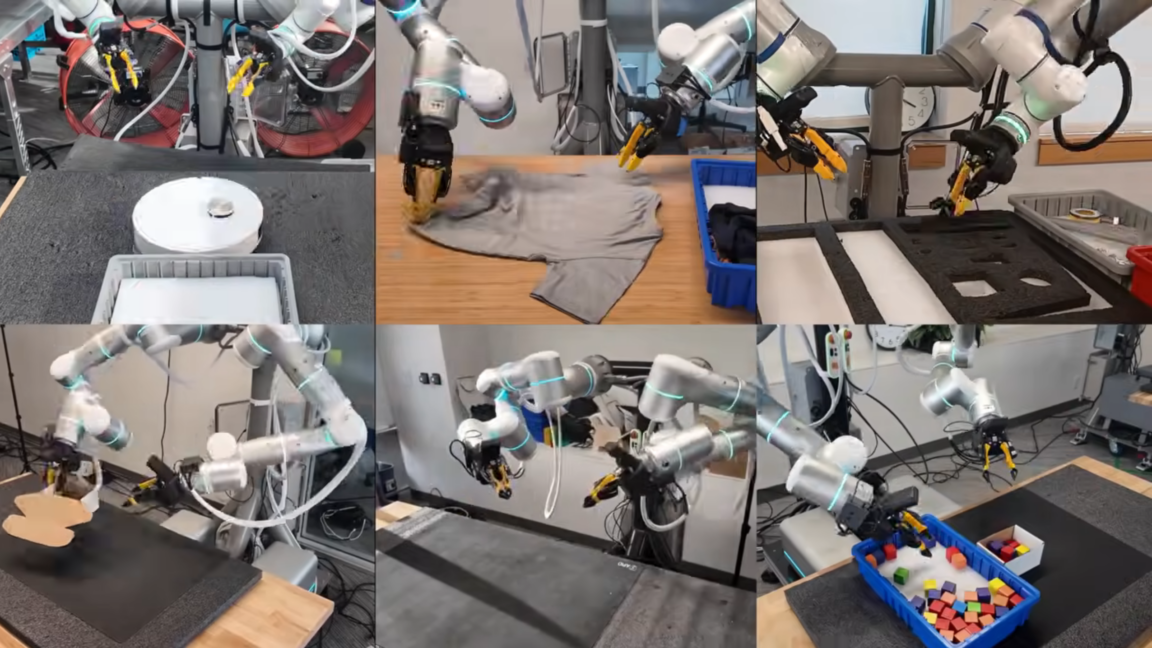
Generalist, a company that specializes in robotic machine learning, has introduced a new AI system called GEN-1. This system has achieved a 99% success rate in performing physical tasks that usually require human skill and hand-eye coordination. By learning from a massive amount of human movement data, the robot can now handle complex jobs like folding boxes and repairing household appliances with high reliability. This development marks a major shift from experimental robots to machines that are ready for real-world work.
Main Impact
The most important part of this news is that GEN-1 has reached what experts call "production-level" success. In the past, robots were often clumsy or could only do one specific task in a controlled environment. If something changed, the robot would fail. GEN-1 is different because it can handle surprises. If a person interrupts the robot or moves an object out of place, the AI can improvise and find a new way to finish the task. This means robots are becoming reliable enough to work in factories, warehouses, and even homes without needing constant human supervision.
Key Details
What Happened
Generalist announced the launch of GEN-1 as an upgrade to their previous model, GEN-0. While the older version was a test to see if robots could learn from large amounts of data, GEN-1 is the finished product designed for actual use. The system uses "physical AI," which focuses on how objects move and how much force is needed to handle them. This allows the robot to perform delicate actions, such as fixing a vacuum cleaner, which requires understanding how different parts fit together.
Important Numbers and Facts
To make this robot so smart, the company had to collect a huge amount of information. They used more than 500,000 hours of data showing how humans move their hands and tools. This added up to several petabytes of data. A petabyte is a very large amount of digital storage—one petabyte can hold about 500 billion pages of standard printed text. By feeding all this information into the GEN-1 model, the robot learned the "muscle memory" needed to hit a 99% success rate across many different physical skills.
Background and Context
Training a robot is much harder than training a chatbot like ChatGPT. Chatbots learn by reading billions of words from the internet, which is easy to find. However, there is no "internet for physical movements" that robots can use to learn how to pick up a cup or turn a screwdriver. To solve this, Generalist used a special technology called "data hands." These are wearable devices that people wear while they work. As the person performs a task, the devices record every tiny movement and visual detail. This gave the AI the high-quality data it needed to understand the physical world.
Public or Industry Reaction
The robotics industry is watching this development closely because it proves that "scaling laws" work for physical machines. Scaling laws are the idea that if you give an AI more data and more computer power, it will naturally get better. Many people were not sure if this would work for robots, but GEN-1 shows that it does. Industry experts are excited because this could lead to robots that are much more flexible. Instead of being programmed for just one job, these robots can learn many different skills just by watching and practicing.
What This Means Going Forward
The success of GEN-1 suggests that we will soon see robots doing more complex work in our daily lives. Since the model can "connect ideas" from different tasks, it might be able to solve problems it has never seen before. For example, a robot that knows how to fold a box might use that same logic to fold laundry or package items for shipping. The next step for Generalist and other companies will be to make these robots faster and cheaper so they can be used by more businesses. There is also a focus on making sure these robots can work safely alongside human employees in busy environments.
Final Take
GEN-1 represents a turning point where robots move from being experimental toys to useful tools. By reaching 99% reliability, Generalist has shown that physical AI can finally match the dexterity of human hands. This technology will likely change how we think about manual labor and machine automation in the coming years. As robots become better at improvising and learning, the gap between what a human can do and what a machine can do continues to shrink.
Frequently Asked Questions
What is the GEN-1 robotics model?
GEN-1 is a physical AI system created by a company called Generalist. It is designed to help robots perform complex physical tasks, like fixing machines or folding boxes, with a 99% success rate.
How did the robot learn how to move?
The robot was trained using "data hands," which are wearable sensors worn by humans. These sensors recorded over 500,000 hours of human movements, providing the AI with the data it needed to learn how to handle objects.
Can GEN-1 handle mistakes or changes?
Yes. One of the main features of GEN-1 is its ability to improvise. If something goes wrong or a task is interrupted, the AI can figure out a new way to complete the job instead of stopping or failing.