Summary
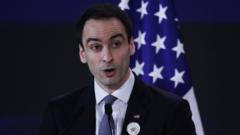
A recent memo from the White House has raised serious alarms about the theft of American artificial intelligence technology. The document, authored by tech advisor Michael Kratsios, claims that companies in China are systematically copying advanced AI models developed in the United States. This practice, known as model distillation, allows foreign firms to create powerful AI tools by using the hard work and massive investments of American companies. This development marks a significant moment in the ongoing struggle over global technology leadership.
Main Impact
The primary impact of this memo is a heightened sense of urgency regarding intellectual property protection in the tech sector. If Chinese firms can successfully copy US models, they can bypass the years of research and billions of dollars in costs required to build these systems from scratch. This creates an unfair market where the original creators bear all the financial risk while competitors reap the rewards. Furthermore, it poses a threat to national security, as these copied models can be used for military or surveillance purposes that may go against US interests.
Key Details
What Happened
Michael Kratsios, who has served as a top technology official, issued a memo detailing how Chinese firms are "wrongfully distilling" American AI models. Distillation is a technical process where a smaller, cheaper AI model is trained to mimic the behavior and knowledge of a much larger and more expensive "teacher" model. By feeding the outputs of a US-made AI into their own systems, Chinese companies can effectively steal the logic and capabilities of the original software without needing the original data or code.
Important Numbers and Facts
Building a top-tier AI model today can cost between $100 million and $500 million in computing power alone. In contrast, distilling that same model can cost a tiny fraction of that amount, sometimes less than a few thousand dollars. The memo suggests that this is not happening in isolated cases but is a widespread strategy used by major firms in China to close the gap with US tech giants like OpenAI, Google, and Meta. The White House is now looking at ways to track how these models are accessed from overseas to prevent this type of digital copying.
Background and Context
To understand why this matters, it helps to think of AI models like secret recipes for a very complex medicine. It takes years of testing and a lot of money to find the right ingredients. Once the medicine is made, a competitor could try to figure out the recipe just by looking at the final product. In the world of AI, this is what distillation does. The US has long been the leader in AI development, but the gap is closing. For years, the US and China have been in a "tech war," with both sides trying to control the future of chips, software, and data. This memo shows that the fight has now moved into the very heart of AI logic and intelligence.
Public or Industry Reaction
The reaction from the tech industry has been a mix of concern and calls for action. Many leaders in Silicon Valley are worried that their inventions are being taken without permission. Some experts suggest that the US should put stricter "fences" around AI tools, making it harder for users in certain countries to access them. However, others warn that being too restrictive could hurt the spirit of open science. In Washington, lawmakers are using this memo as evidence that new laws are needed to protect "digital assets" just as strictly as physical goods or military hardware.
What This Means Going Forward
Looking ahead, we can expect the US government to introduce new rules for AI companies. These might include stricter checks on who can use AI services through the cloud. There is also talk of "watermarking" AI outputs. This would make it easier to tell if a new model was trained using stolen data from an American source. For businesses, this means that security will become just as important as innovation. Companies will have to spend more money protecting their models from being copied by rivals. The relationship between the US and China regarding technology is likely to become even more tense as these rules are put into place.
Final Take
The claim of mass AI theft is a wake-up call for the entire technology industry. It shows that software is now the most valuable resource in the world, and protecting it is a major challenge. As AI becomes a part of every industry, from healthcare to finance, the ability to keep these models safe will determine which countries and companies lead the global economy. The US must find a way to stay open to the world while ensuring that its most important inventions are not simply taken by others.
Frequently Asked Questions
What is AI distillation?
AI distillation is a process where a smaller AI model learns to copy the behavior of a larger, more advanced model. It is a way to get high-quality results without the high cost of original research.
Why is the White House concerned about China?
The White House is concerned because Chinese firms are allegedly using this method to copy American technology. This allows them to catch up to US progress quickly and without paying for the development costs.
How can the US stop AI theft?
The US may use new regulations, such as limiting access to AI tools for certain foreign users or requiring companies to add digital markers to their AI outputs to track how they are used.