
Summary
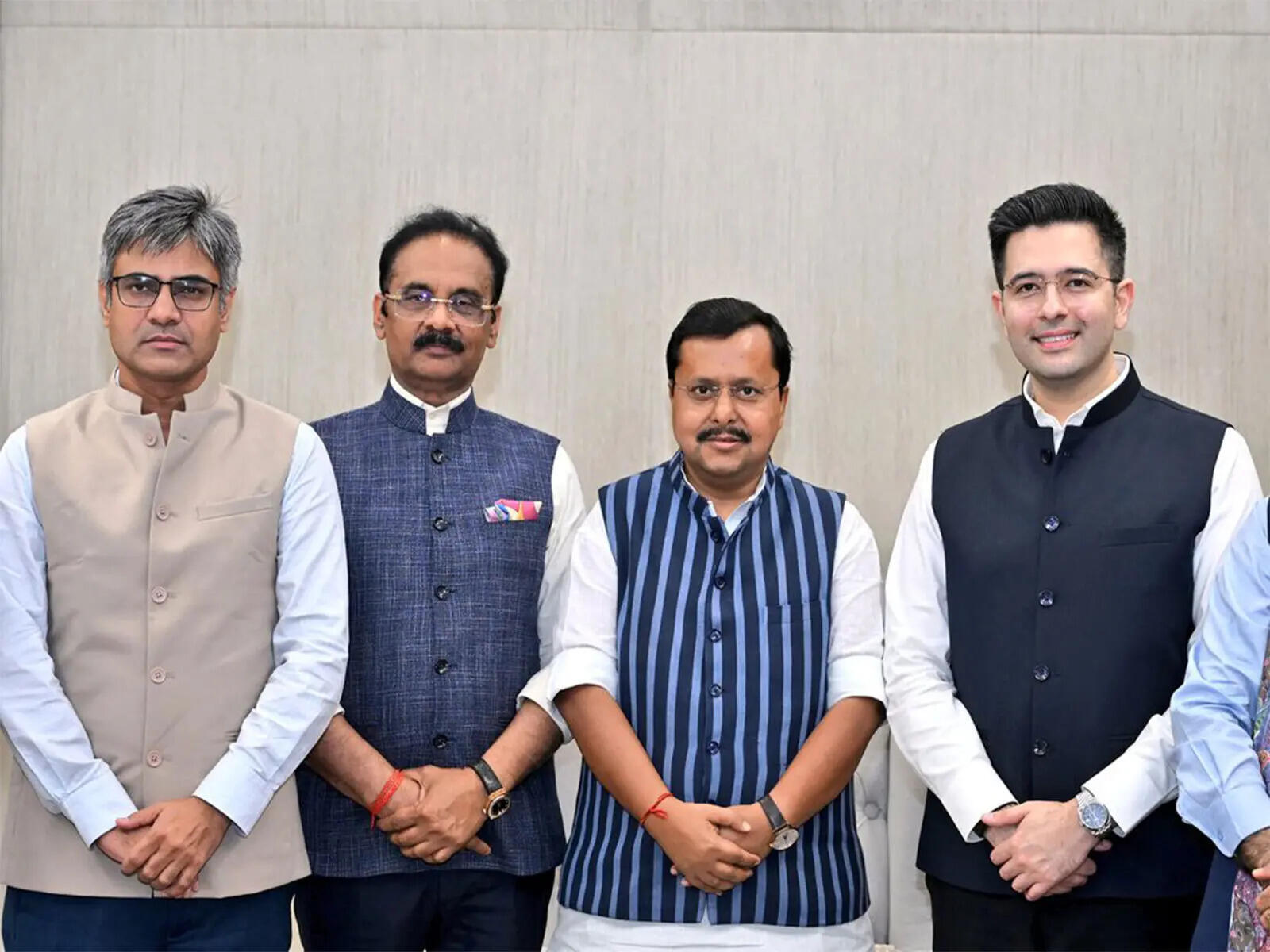
In a major political shift, seven members of the Rajya Sabha from the Aam Aadmi Party (AAP) have officially joined the Bharatiya Janata Party (BJP). The Chairman of the Rajya Sabha, Jagdeep Dhankhar, has formally accepted this merger, marking a significant change in the strength of the ruling party in the upper house of Parliament. This move is allowed under India’s laws because more than two-thirds of the party's members in the house decided to switch sides together. This development weakens the opposition and gives the government more power to pass new laws without much delay.
Main Impact
The biggest impact of this decision is the change in the balance of power within the Rajya Sabha. For a long time, the ruling BJP has worked to gain a full majority in the upper house to match its strength in the Lok Sabha. With these seven new members, the BJP is now much closer to that goal. This makes it easier for the government to pass important bills, including those that require a high number of votes, such as changes to the Constitution.
For the Aam Aadmi Party, this is a massive blow to its national presence. AAP had 10 members in the Rajya Sabha, making it one of the larger opposition groups. Now, with only three members left, their ability to protest or influence debates has been greatly reduced. This shift also sends a message to other small parties about the difficulty of keeping their members together when faced with a much larger political force.
Key Details
What Happened
The process began when seven AAP members of the Rajya Sabha wrote a joint letter to the Chairman. In this letter, they expressed their desire to merge with the BJP. They argued that since they represented 70% of the AAP’s total strength in the house, their move should be seen as a legal merger rather than a simple resignation or defection. After reviewing the legal documents and the rules of the house, Chairman Jagdeep Dhankhar accepted their request. The members will now be counted as BJP lawmakers in all official records.
Important Numbers and Facts
Before this event, the Aam Aadmi Party had 10 seats in the Rajya Sabha. The seven members who left represent 70% of that group. According to the 10th Schedule of the Indian Constitution, at least two-thirds (66.6%) of a party’s elected members must agree to a merger for it to be legal. Because 70% is higher than 66.6%, these MPs will not lose their seats. They will continue to serve their terms as members of the BJP. This leaves AAP with only three representatives in the 245-seat house.
Background and Context
To understand why this matters, one must look at the Anti-Defection Law in India. This law was created to stop politicians from switching parties for personal gain or power. Usually, if an MP leaves their party, they lose their seat in Parliament. However, there is an exception: if a large enough group leaves together to join another party, it is called a "merger." This exception was designed to allow for genuine political shifts while preventing individual members from being "bought" or pressured.
The Rajya Sabha is the "Council of States," where members are elected by state legislatures. AAP’s members mostly came from Delhi and Punjab, where the party holds power. Losing these members means that the voters who supported AAP in those states are now represented by the BJP in the upper house. This has caused a lot of debate about whether such mergers truly reflect the will of the people who voted in the original elections.
Public or Industry Reaction
The reaction to this news has been split along party lines. Leaders from the BJP have welcomed the move, stating that the seven MPs joined because they believe in the Prime Minister’s vision for the country. They claim that these members were unhappy with how AAP was being run and wanted to be part of a party that focuses on national development. They see this as a sign of the BJP’s growing appeal across different political backgrounds.
On the other hand, the Aam Aadmi Party has reacted with anger. Party leaders have accused the BJP of using unfair tactics to pull their members away. They argue that this is an attack on democracy and that the BJP is trying to silence any party that opposes them. Other opposition parties have also expressed concern, fearing that this sets a precedent where smaller parties can be absorbed by larger ones through political pressure.
What This Means Going Forward
Looking ahead, the BJP will find it much easier to manage the Rajya Sabha. In the past, the government often had to rely on support from neutral parties to pass controversial bills. Now, with a stronger count of their own members, they have more control over the legislative agenda. This could lead to the faster passage of economic reforms, security laws, and other major policies.
For the AAP, the focus will now shift to protecting its remaining members and preparing for future state elections. They will need to explain to their supporters why so many of their top leaders chose to leave. This event also serves as a warning to other regional parties. It shows that having a strong presence in a state does not always guarantee that their representatives in the national Parliament will stay loyal to the party leadership.
Final Take
This merger is a clear example of how political power can shift quickly in a democracy. While the move is legally valid under the current rules, it raises important questions about party loyalty and the strength of the opposition. As the BJP grows stronger in the Rajya Sabha, the way laws are made in India will likely become more streamlined. However, the loss of a strong opposition voice is something that will be felt in the debates and discussions that shape the country's future.
Frequently Asked Questions
Why did the 7 MPs not lose their seats?
They did not lose their seats because they moved as a group that made up more than two-thirds of their party's strength in the house. Under Indian law, this is considered a legal merger rather than a defection.
How many members does AAP have left in the Rajya Sabha?
After the merger of the seven members with the BJP, the Aam Aadmi Party is left with only three members in the Rajya Sabha.
Who approved this merger?
The merger was officially accepted and approved by the Chairman of the Rajya Sabha, Jagdeep Dhankhar, after he verified that the move followed the rules of the Constitution.



