Summary
The United States is sending more warships and Marines to the Middle East to strengthen its military presence in the region. These reinforcements are coming from an amphibious ready group that is normally stationed in Japan. This decision highlights a shift in military focus as the U.S. looks to protect its interests and allies during a time of increased regional tension. The move involves thousands of personnel and specialized ships designed for quick response missions.
Main Impact
The arrival of these additional forces will significantly change the balance of power in the Middle East. By moving ships from the Pacific to the Middle East, the U.S. is showing that it views current threats in the region as a top priority. This impact is felt not just in the military world but also in global trade. More warships in the area can help protect shipping lanes that are vital for moving oil and goods around the world. However, this also means there will be fewer U.S. resources available in Asia for the time being, which could change how other countries in that region behave.
Key Details
What Happened
According to reports from CBS News and the BBC, a senior official confirmed that the U.S. military is redirecting a specific group of ships and troops. This group is known as an amphibious ready group. These units are highly mobile and can stay at sea for long periods without needing to dock. They are often used to respond to emergencies, provide security, or help with humanitarian aid. The decision to move them from their usual base in Japan suggests that the U.S. needs more "boots on the ground" and "ships in the water" to handle potential conflicts in the Middle East.
Important Numbers and Facts
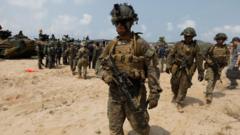
An amphibious ready group typically consists of three major ships. The largest of these is often a big-deck ship that looks like a small aircraft carrier. It can carry helicopters, fighter jets, and landing craft. Along with these ships, there is usually a Marine Expeditionary Unit, which includes about 2,200 Marines. These soldiers are trained for a wide range of tasks, from combat to rescuing civilians. The journey from Japan to the Middle East takes several weeks as the ships must travel across the Indian Ocean and through various narrow waterways.
Background and Context
The Middle East has been a focus of U.S. foreign policy for many decades. It is a region where many different interests meet, including energy production and major trade routes like the Suez Canal. In recent years, the U.S. has tried to move more of its military power toward Asia to keep an eye on growing competition there. This was often called the "Pivot to Asia." However, sudden crises in the Middle East often force the U.S. to move its ships back. This latest move shows that the region remains a volatile place where the U.S. feels it must maintain a strong presence to prevent larger wars from breaking out.
Public or Industry Reaction
Military experts have mixed views on this move. Some believe it is a necessary step to stop aggression and keep the peace. They argue that a strong show of force is the best way to prevent small fights from turning into big ones. On the other hand, some critics worry that moving ships away from Japan might send the wrong message to allies in Asia. They fear it could make the Pacific region less stable. Meanwhile, the global shipping industry has reacted positively. Companies that move goods through the Red Sea and the Persian Gulf feel safer when they know U.S. warships are nearby to protect them from attacks or piracy.
What This Means Going Forward
In the coming months, we can expect to see more U.S. patrols in the waters around the Middle East. The presence of these Marines gives the U.S. government more options if a crisis happens. They can quickly move troops onto land or use their aircraft to monitor large areas of the sea. This move might also lead to more joint exercises with local allies. The long-term question is how long these ships will stay. If they remain in the Middle East for a long time, the U.S. Navy will have to find a way to balance its duties in other parts of the world without wearing out its crews and equipment.
Final Take
The decision to move Marines and warships from Japan to the Middle East is a clear sign of how quickly global priorities can change. It shows that the U.S. is willing to shift its most powerful tools across the globe to address immediate threats. While this move provides more security in the short term, it also highlights the ongoing challenge of managing military resources in multiple parts of the world at the same time. For now, the focus is clearly on ensuring stability in one of the world's most important regions.
Frequently Asked Questions
What is an amphibious ready group?
It is a group of U.S. Navy ships that carry a large number of Marines, aircraft, and landing vehicles. These groups are designed to move quickly and can perform many different types of missions from the sea.
Why are these ships moving from Japan?
The U.S. keeps a large military presence in Japan, but it can move those forces whenever there is a more urgent need in another part of the world. In this case, the Middle East requires more support than usual.
How many troops are involved in this move?
While the exact number can change, a typical group like this includes about 2,200 Marines along with the hundreds of sailors who operate the ships. This adds a significant amount of manpower to the region.