
Summary
United States military forces recently carried out a targeted strike against a major Iranian missile production plant located in Karaj. The mission, known as "Operation Epic Fury," resulted in heavy damage to the facility, making it completely unusable for future manufacturing. This move is part of a larger effort by the U.S. to stop the spread of dangerous weapons and protect international shipping routes. Experts believe this strike has significantly weakened Iran's ability to launch long-range missiles, though security risks in the region still exist.
Main Impact
The primary result of this military action is the total shutdown of one of Iran's most important surface-to-surface missile factories. By hitting this specific location, the U.S. has cut off a major source of military hardware that Iran uses to exert influence. The destruction of the Karaj plant means that Iran will find it much harder to replace or build new missiles in the short term. This creates a gap in their military strength and reduces the immediate threat to neighboring countries and international waters.
Key Details
What Happened
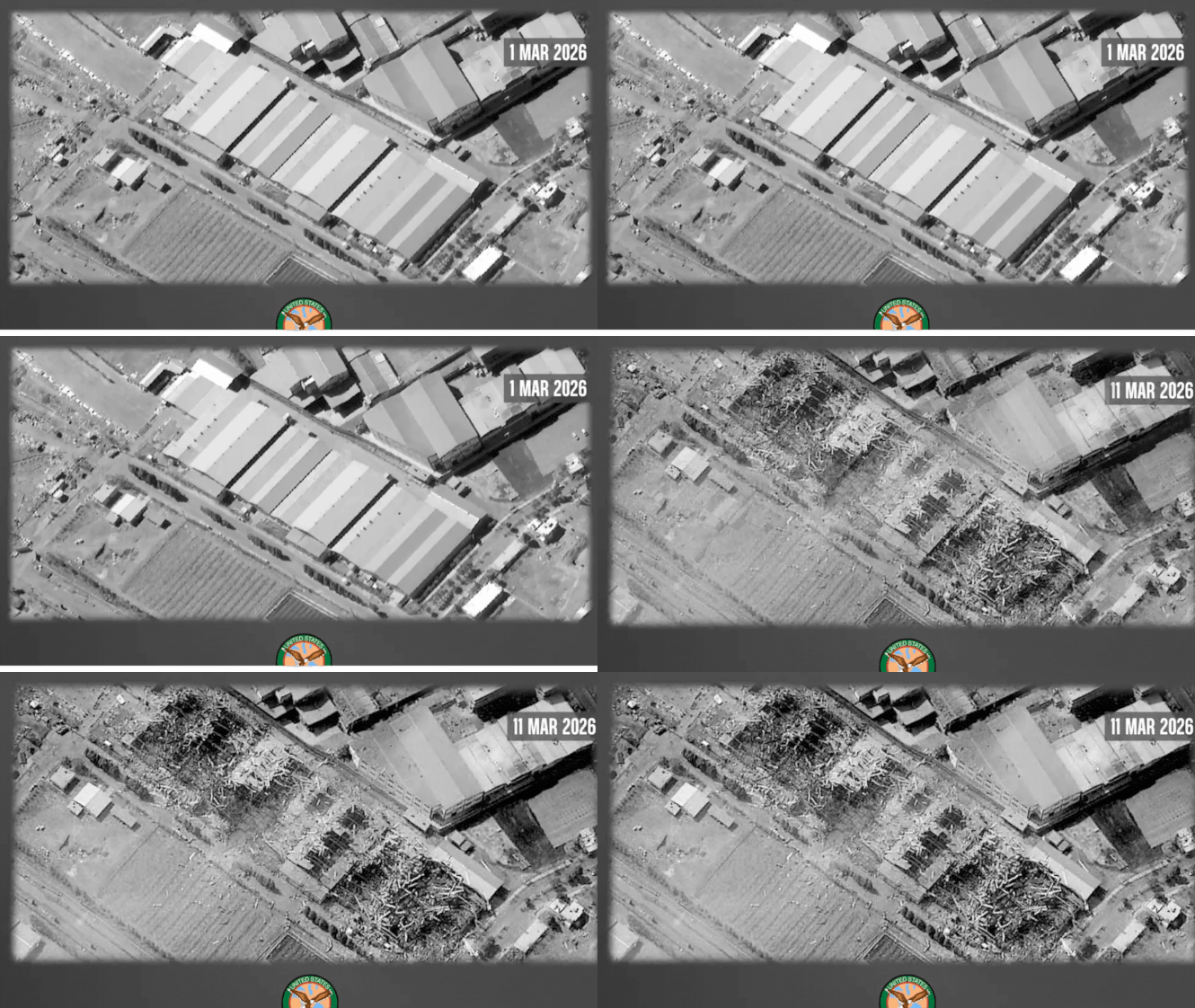
During the operation, U.S. forces used precision weapons to hit key buildings within the Karaj industrial complex. Satellite images taken before and after the event show a clear difference in the site. Before the strike, the images showed active workshops and storage units. After the strike, those same buildings appear as rubble or have suffered massive structural failure. Military officials confirmed that the goal was not just to damage the site, but to ensure it could no longer function as a factory.
Important Numbers and Facts
The Karaj facility was a central hub for surface-to-surface missile technology. These are weapons launched from the ground to hit targets also on the ground, often hundreds of miles away. While the exact number of missiles destroyed is not public, intelligence reports suggest a "significant decline" in Iran's total launch capacity. The operation was part of a coordinated campaign to address maritime threats, referring to attacks on ships in nearby seas that have disrupted global trade over the past year.
Background and Context
To understand why this strike happened, it is important to look at the role of missiles in modern conflict. Iran has spent years building a large collection of missiles. They use these weapons to show power and to support various groups they work with in other countries. The U.S. and its allies have grown increasingly worried about these weapons being used to target commercial ships or civilian areas. By targeting the production side—the factories where these missiles are made—the U.S. aims to stop the problem at its source rather than just waiting to intercept missiles after they are fired.
The Karaj area has long been known as a center for industrial and military work. Because it is located near the capital, it is a highly protected and vital part of Iran's defense system. Hitting such a sensitive spot shows a high level of confidence in U.S. intelligence and military technology.
Public or Industry Reaction
The international community is watching the situation closely. Security experts say that while the strike was successful in physical terms, it may lead to higher political tension. Some regional leaders have expressed concern that such direct actions could lead to a wider conflict. On the other hand, many trade organizations have welcomed the move, hoping it will lead to safer waters for cargo ships. Within the U.S., officials have stated that the action was necessary for self-defense and to maintain global security. They emphasize that the goal is to prevent war by taking away the tools needed to start one.
What This Means Going Forward
While the Karaj plant is now out of commission, the threat has not disappeared entirely. Iran still has other smaller, hidden facilities where they can build parts or assemble weapons. There is also the risk of "proxy forces." These are smaller armed groups that Iran supports with money and training. These groups might try to retaliate using the weapons they already have in their possession. U.S. military planners are likely staying on high alert to watch for any signs of a counter-attack.
In the coming months, the focus will likely shift to monitoring how Iran tries to rebuild. Satellite surveillance will be used to track any new construction or movement of equipment to other sites. The U.S. may also increase its presence in the sea to ensure that no further threats are made against international shipping vessels.
Final Take
The strike on the Karaj missile plant is a major turning point in the effort to limit Iran's military reach. By making a key production site inoperable, the U.S. has successfully slowed down the growth of Iran's missile program. However, the long-term peace of the region depends on more than just destroying buildings. It will require constant watching and a clear strategy to handle the smaller groups that still hold these dangerous weapons. For now, the message is clear: the production of advanced missiles will face direct and heavy consequences.
Frequently Asked Questions
What is a surface-to-surface missile?
It is a weapon that is launched from a platform on the ground and travels through the air to hit a target that is also on the ground. These can be used to hit military bases, cities, or industrial sites from a long distance.
What was Operation Epic Fury?
This was the name given to the U.S. military mission specifically designed to target and destroy Iran's missile manufacturing capabilities in Karaj. The goal was to reduce the threat Iran poses to the region and to international shipping.
Is the Karaj plant still working?
No. According to military assessments and satellite imagery, the facility has been rendered inoperable. This means the damage is so severe that the factory can no longer be used to build or test missiles.

