Summary
The United States has launched a significant military strike against Iran, targeting the strategic Kharg Island. This location serves as the primary hub for Iran's oil exports, making it a vital part of the country's economy. President Donald Trump announced the attack as a direct response to Iran's attempts to close the Strait of Hormuz. Following the strike, the U.S. leader is now calling for the creation of an international naval fleet to ensure the waterway remains open for global trade. This move marks a major increase in tensions and could have lasting effects on global energy markets.
Main Impact
The bombing of Kharg Island is a direct hit to Iran's financial lifeline. Because the island handles the vast majority of the country's crude oil sales, any damage to its facilities stops the flow of money into the Iranian government. This action is intended to force Iran to stop its military pressure in the region. Beyond the local impact, the move has sent shockwaves through the global energy sector. If the Strait of Hormuz becomes a permanent battleground, the price of oil could rise quickly, affecting everything from gas prices to the cost of shipping goods around the world.
Key Details
What Happened
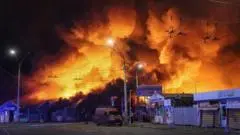
On Friday, March 13, 2026, U.S. military forces carried out a series of strikes on military targets located on Kharg Island. This island is situated in the Persian Gulf and acts as a massive loading dock for oil tankers. The U.S. government stated that the attack was necessary because Iran had been using its military to threaten and block ships in the Strait of Hormuz. By hitting the island, the U.S. aims to show that there are heavy costs for interfering with international shipping routes. President Trump emphasized that the U.S. will not allow a single nation to control a waterway that is essential for the entire world.
Important Numbers and Facts
The scale of this event is best understood through the data involved. Kharg Island is responsible for roughly 90% of all Iranian oil exports. This makes it the single most important piece of infrastructure for the Iranian economy. The Strait of Hormuz, which Iran has threatened to close, is a narrow passage that is only about 21 miles wide at its tightest point. Despite its small size, about 20% of the world's total oil supply passes through this strait every single day. The U.S. proposal for an international fleet suggests a coalition of several nations, potentially involving dozens of warships to patrol these few miles of water.
Background and Context
The tension between the U.S. and Iran over the Strait of Hormuz is not new, but it has reached a dangerous new level. For decades, Iran has used the threat of closing the strait as a way to bargain with the international community. Since the strait is so narrow, it is relatively easy for a local military to harass large oil tankers. The U.S. has traditionally kept a strong naval presence in the area to prevent this. However, recent escalations led to Iran taking more aggressive steps to stop traffic. The U.S. decided that diplomatic warnings were no longer enough, leading to the decision to strike the source of Iran's wealth on Kharg Island.
Public or Industry Reaction
The reaction from the global community has been a mix of support and deep concern. Many oil-importing nations in Asia and Europe are worried about the stability of their energy supplies. While they want the strait to stay open, they fear that a direct military conflict will lead to even higher prices. Within the U.S., some political leaders support the strong stance, arguing that it is the only way to stop Iranian aggression. However, critics worry that this could lead to a long and expensive war. Oil markets reacted almost immediately, with crude prices jumping as traders prepared for potential supply shortages. Shipping companies are also reconsidering their routes, with some choosing to avoid the area entirely until the situation settles.
What This Means Going Forward
The next steps depend on how Iran chooses to respond and whether other countries join the proposed international fleet. If Iran retaliates by attacking more ships or U.S. bases, the conflict could expand into a much larger regional war. On the other hand, if the U.S. successfully builds a coalition, the presence of many international ships might discourage Iran from further action. The creation of this fleet would require help from countries like the United Kingdom, France, and perhaps even nations in Asia that rely on Middle Eastern oil. This would turn the defense of the strait into a global effort rather than just a U.S. mission. In the coming weeks, the world will be watching to see if oil prices stabilize or if the energy crisis worsens.
Final Take
The strike on Kharg Island is a bold move that changes the rules of the conflict in the Middle East. By targeting the heart of Iran's oil industry, the U.S. has moved from simple defense to a strategy of economic pressure through military force. The proposal for an international fleet shows a desire to share the responsibility of global security, but it also highlights the extreme risk currently facing the world's energy supply. The safety of the Strait of Hormuz is now the central focus of international politics, and the outcome will affect the global economy for a long time.
Frequently Asked Questions
What is the Strait of Hormuz?
It is a narrow waterway between the Persian Gulf and the Gulf of Oman. It is the most important oil transit point in the world because so much of the global oil supply must pass through it to reach international markets.
Why did the U.S. bomb Kharg Island?
The U.S. bombed the island because it is Iran's main oil export terminal. The strike was a response to Iran's attempts to block the Strait of Hormuz and was intended to damage Iran's ability to fund its military actions.
What is the proposed international fleet?
President Trump has called for a group of nations to work together to send warships to the region. This fleet would be responsible for protecting oil tankers and making sure that no country can block the passage of trade through the strait.