Summary
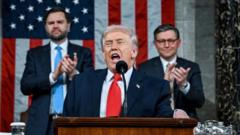
President Donald Trump recently delivered a long and highly theatrical State of the Union address to a joint session of Congress. The speech focused heavily on his past achievements and served as a direct appeal to his core group of supporters. Rather than offering new policy ideas or trying to find common ground with his political rivals, the president used the event to highlight his current path. This performance suggests that his administration will continue its current direction without making major changes to its strategy or tone.
Main Impact
The primary impact of this speech is the clear signal that the political divide in the United States is not going to shrink anytime soon. By using the State of the Union as a stage for political theater, President Trump reinforced the loyalty of his base while showing little interest in winning over his critics. This approach turns a traditional government report into a powerful campaign tool. It shows that the president believes his current methods are working and that he does not feel the need to pivot toward the political center.
For the average citizen, this means the political environment will likely remain tense and combative. The speech did not bridge the gap between Republicans and Democrats. Instead, it drew a line in the sand, making it clear that the president intends to fight for his agenda exactly as it stands. This lack of change in course suggests that the upcoming months will be filled with the same heated debates over the economy, immigration, and national security that have defined his time in office so far.
Key Details
What Happened
The address was a marathon event, lasting much longer than many typical presidential speeches. Throughout the night, President Trump used a variety of theatrical techniques to keep the audience engaged. He invited special guests to sit in the gallery and used their personal stories to support his political points. In one of the most talked-about moments, he surprised a well-known radio host with a high-level national award right in the middle of the chamber. These moments felt more like a television production than a standard policy speech.
While the president spoke about "American Greatness," he also took several opportunities to mock and taunt his political opponents. He criticized the policies of the Democratic party, specifically focusing on healthcare and border security. The atmosphere in the room was visibly split, with one side of the aisle frequently standing to cheer while the other side remained seated in silence. This visual divide perfectly captured the current state of the American government.
Important Numbers and Facts
The speech lasted over 75 minutes, making it one of the longer State of the Union addresses in recent history. During the talk, the president highlighted several economic figures, including low unemployment rates and the creation of millions of new jobs. He also mentioned the construction of hundreds of miles of wall along the southern border, a key promise to his voters. While these numbers are often debated by experts, they served as the backbone of his argument that the country is stronger than ever under his leadership.
Background and Context
The State of the Union is a yearly event where the president speaks to both the House of Representatives and the Senate. According to the Constitution, the president must give Congress information on how the country is doing. Over time, this has turned into a major televised event that millions of people watch at home. It is usually a time for the president to lay out a plan for the coming year and ask for cooperation from both parties.
However, the context of this specific speech is unique. It comes at a time when the country is deeply split along party lines. President Trump has often used large rallies to talk directly to his fans, and he brought that same energy into the halls of Congress. By focusing on his "America First" agenda, he is sticking to the themes that helped him get elected in the first place. This context helps explain why the speech felt more like a victory lap than a list of new legislative goals.
Public or Industry Reaction
The reaction to the speech was split exactly down the middle. Republican lawmakers praised the president for his energy and for highlighting the growth of the economy. They saw the speech as a strong defense of American values and a clear vision for the future. Many of his supporters felt energized by his refusal to back down from his critics.
On the other side, Democratic leaders were very critical. They argued that the speech was full of exaggerations and lacked a real plan to help working-class families. Some members of the opposition even walked out during the speech or refused to clap. The most famous reaction came at the very end when the Speaker of the House visibly tore up her copy of the speech. This moment went viral and showed just how much tension exists between the executive and legislative branches of the government.
What This Means Going Forward
Looking ahead, we can expect the president to double down on his current policies. There is no sign that he will try to pass major bipartisan laws in the near future. Instead, he will likely focus on executive actions and using his public platform to pressure his opponents. The theatrical nature of this speech will probably become the new standard for his public appearances as he moves closer to the next election cycle.
For voters, the path is clear. The president has laid out his record and his style, and he is not planning to change either. This sets the stage for a very intense political season where both sides will try to motivate their supporters by highlighting their differences rather than their similarities. The lack of a "change in course" means that the current political battles will continue with the same intensity as before.
Final Take
President Trump’s latest address was less about policy and more about performance. By sticking to his familiar themes and focusing on his base, he has made it clear that he is comfortable with the current political climate. The speech was a reminder that in today's Washington, the goal is often to win the argument rather than to find a compromise. As the country moves forward, the theatrical style seen in this address will likely remain a central part of the national conversation.
Frequently Asked Questions
What is the main purpose of a State of the Union address?
The main purpose is for the president to report to Congress on the current condition of the country and to propose a legislative agenda for the upcoming year.
Why was this specific speech called theatrical?
It was called theatrical because the president used surprise awards, special guests, and dramatic storytelling to make his points, similar to a television show.
Did the president announce any major new policies?
No, the speech mostly focused on his past achievements and the continuation of his current policies regarding the economy and immigration.