Summary
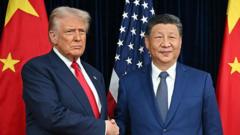
President Donald Trump has requested to postpone a highly anticipated meeting with Chinese leader Xi Jinping. The decision comes as the United States finds itself increasingly involved in a growing conflict in Iran. This shift in schedule highlights how urgent military matters in the Middle East are now taking priority over long-term trade and diplomatic goals in Asia. The delay suggests that the U.S. government is struggling to manage multiple global crises at the same time.
Main Impact
The decision to delay the meeting has immediate effects on global markets and international diplomacy. For months, businesses and world leaders expected this meeting to settle ongoing trade disputes between the U.S. and China. By pushing the date back, the U.S. is signaling that the war in Iran is now its primary concern. This move could slow down progress on important economic agreements and may cause tension with Chinese officials who had already prepared for the visit.
Key Details
What Happened
The White House confirmed this week that the planned trip to Beijing will not happen as scheduled. President Trump was expected to fly to China to discuss new trade rules and security issues in the Pacific region. However, the escalating military situation in Iran has forced a change in plans. Officials stated that the president needs to remain in Washington to oversee military operations and coordinate with defense leaders. The administration has not yet provided a new date for the meeting, leaving the future of U.S.-China relations in a state of uncertainty.
Important Numbers and Facts
The conflict in Iran has seen a significant increase in military activity over the last month. Reports indicate that thousands of U.S. troops have been moved into the region to support ongoing operations. Because of this, the federal budget is being shifted toward defense spending. On the economic side, the delay in the China meeting affects over $400 billion in potential trade deals that were under discussion. Oil prices have also risen by 15% since the conflict began, adding more pressure on the U.S. government to resolve the situation in the Middle East before focusing elsewhere.
Background and Context
To understand why this delay matters, it is important to look at the relationship between the U.S., China, and Iran. For several years, the U.S. and China have been in a "trade war," using taxes and restrictions to compete with each other. A meeting between the two presidents was seen as the best way to end these disagreements. At the same time, tensions with Iran have been building for a long time. Recent events have turned those tensions into a full-scale war. When a country is at war, it often has to put other plans on hold. The U.S. is currently trying to balance its role as a global leader in both the Middle East and Asia, but the intensity of the Iran conflict is making that balance difficult to maintain.
Public or Industry Reaction
Financial experts have expressed concern over the delay. Stock markets showed a slight drop following the news, as investors prefer stability and clear timelines. Many business leaders were hoping for a quick resolution to the trade issues with China to help lower costs for consumers. In China, the reaction has been more guarded. Some Chinese officials suggested that the U.S. is using the Iran conflict as an excuse to avoid difficult trade talks. Meanwhile, political critics in the U.S. are divided. Some believe the president is right to focus on the war, while others argue that ignoring China for too long could lead to even bigger problems in the future.
What This Means Going Forward
The next few months will be critical for U.S. foreign policy. If the war in Iran continues to grow, the meeting with Xi Jinping might be delayed indefinitely. This could lead to a "cooling" of relations between Washington and Beijing. Without direct talks, both countries might continue to increase tariffs or restrict technology sales. Furthermore, the U.S. military will likely remain focused on the Middle East, which could give China more room to expand its influence in Asia. The administration will need to find a way to handle the Iran crisis without completely abandoning its goals in other parts of the world.
Final Take
The decision to prioritize the Iran conflict over a meeting with China shows the difficult choices modern leaders must make. While trade with China is vital for the economy, the immediate threat of war often takes precedence. The world is now watching to see if the U.S. can successfully manage a major military conflict while still keeping its economic promises. The delay is not just a change in a calendar; it is a sign of how quickly global priorities can shift when security is at risk.
Frequently Asked Questions
Why did President Trump delay the meeting with Xi Jinping?
The meeting was delayed because the escalating war in Iran requires the president's full attention and presence in Washington to manage military and security decisions.
How does this delay affect the U.S. economy?
The delay creates uncertainty in the stock market and pauses progress on trade deals that could lower costs for businesses and consumers. It also coincides with rising oil prices due to the conflict.
When will the meeting between the U.S. and China happen?
A new date has not been set yet. The White House indicated that the meeting will be rescheduled once the situation in Iran becomes more stable.