
Summary
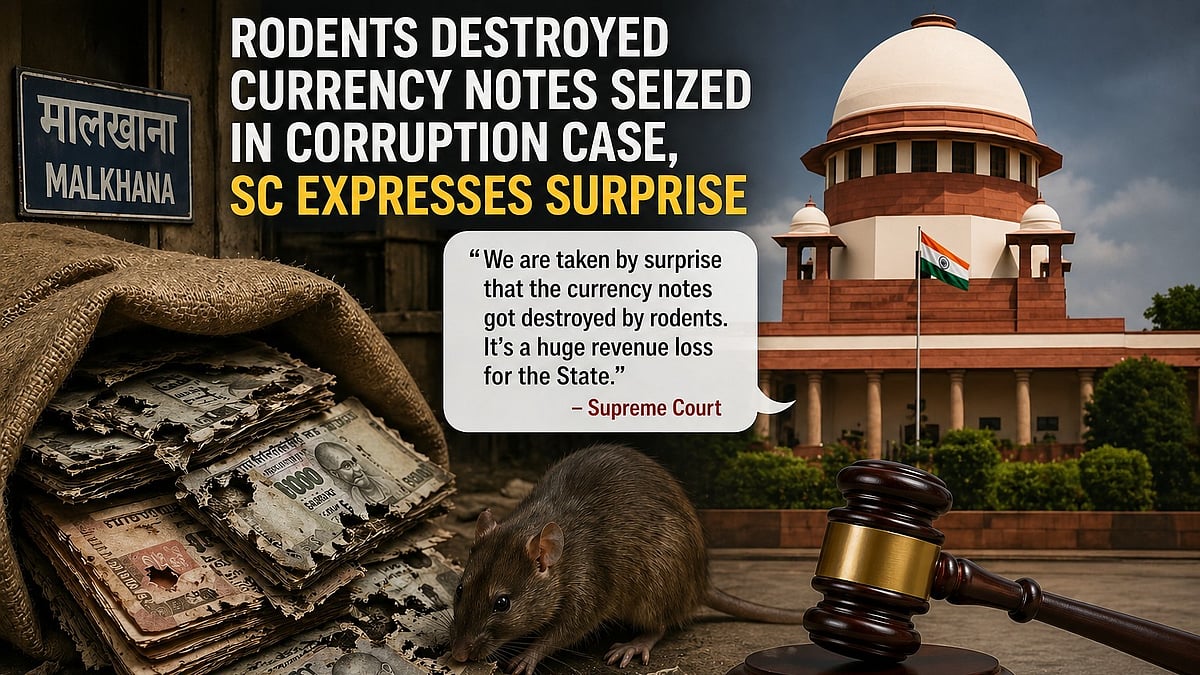
The Supreme Court of India recently expressed its shock over a report that rats destroyed cash seized in a corruption case in Bihar. The money was being held as evidence in a police storage facility when the damage occurred. This unusual situation has raised serious questions about how police handle and protect seized property. The court noted that such incidents lead to a major loss of money for the government and show a lack of care in the legal system.
Main Impact
This development highlights a major flaw in the way evidence is managed in India. When cash or other items are taken during an investigation, they are supposed to be kept safe until a judge makes a final decision. If rodents can get to the money and destroy it, it suggests that storage facilities are in very poor condition. This not only ruins the evidence needed for a trial but also results in a direct financial loss to the state. The Supreme Court’s reaction suggests that there may be a push for stricter rules and better facilities for storing evidence across the country.
Key Details
What Happened
The issue came to light during a hearing for a woman who was convicted in a bribery case from 2014. She was accused of taking a bribe while working as a child development officer. During the legal process, it was revealed that the cash seized by the police had been ruined by rodents while sitting in a 'malkhana,' which is a special room used by police to store evidence. The Supreme Court bench, led by Justice J.B. Pardiwala and Justice K.V. Viswanathan, found it hard to believe that rats could cause such damage to currency notes. They pointed out that the explanation given for the missing money did not seem reliable.
Important Numbers and Facts
The case involves a bribe of Rs 10,000 that was allegedly accepted over ten years ago. While the amount might seem small compared to other cases, the principle of keeping evidence safe is what worried the judges. The woman had originally been found not guilty by a lower court, but the Patna High Court later changed that decision and found her guilty. Because of the strange circumstances regarding the destroyed evidence, the Supreme Court has now granted her bail and paused her sentence while they look into the matter further.
Background and Context
In the Indian legal system, any item or money seized during a criminal investigation is called "case property." These items are stored in police stations in rooms known as malkhanas. These rooms are often crowded and poorly maintained. Over the years, there have been several reports from different parts of the country where police claimed that rats ate drugs, drank alcohol, or destroyed cash kept in these rooms. The Supreme Court is now questioning how often this actually happens and whether it is being used as an excuse for poor management or even theft. Protecting this property is vital because it serves as proof during a trial and, in many cases, the money is eventually returned to the government budget.
Public or Industry Reaction
Legal experts and the public have reacted with a mix of surprise and concern. Many people find it hard to believe that modern storage systems cannot protect paper money from small animals. Within the legal community, there is a growing conversation about the need to digitize records and improve the physical security of evidence rooms. Critics argue that if the government cannot protect a few thousand rupees in a controlled environment, it raises doubts about how they handle larger assets or more sensitive evidence in high-profile cases.
What This Means Going Forward
The Supreme Court has decided to study this problem more closely. They want to understand the current state of storage facilities and find out why these losses are happening. This could lead to new orders requiring police departments to upgrade their storage rooms or use better technology to track seized items. For the woman involved in the case, the destruction of the cash could play a big role in her final appeal. If the evidence against her was not handled correctly, it might affect the strength of the case. In the long run, this could force state governments to spend more money on building secure, pest-proof facilities for police departments.
Final Take
The idea of rats eating through evidence sounds like a scene from a movie, but it presents a real problem for the justice system. When evidence is lost, the truth becomes harder to find, and the state loses money that belongs to the public. The Supreme Court’s decision to look into this matter is a necessary step toward making the police more accountable for the items they take into their care. Proper storage is not just about keeping things clean; it is about making sure the law is followed correctly and fairly.
Frequently Asked Questions
What is a malkhana?
A malkhana is a secure room or warehouse located within a police station. It is used to store items seized during investigations, such as weapons, drugs, or cash, until they are needed in court.
Why did the Supreme Court grant bail to the woman?
The court granted bail and suspended her sentence because of the strange circumstances of the case, including the destruction of the seized cash and the fact that she was originally found not guilty by a lower court.
Why is destroyed cash considered a revenue loss?
When cash is seized in corruption cases, it is often kept as evidence. If the person is convicted, that money is usually taken by the state. If the money is destroyed, the government loses those funds forever.

