Summary
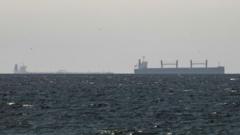
Iran has announced the closure of the Strait of Hormuz following a series of attacks on ships in the region. Officials in Tehran claim this move is a direct response to a blockade by the United States, which they say violates a recent ceasefire agreement. This shutdown affects one of the most important oil routes in the world, causing immediate concerns for global energy prices. The situation has created a tense standoff that could impact the global economy and international security.
Main Impact
The primary impact of this closure is the complete halt of oil and gas shipments through a vital waterway. Because a large portion of the world's energy passes through this narrow point, the sudden stop is expected to drive up fuel prices globally. Shipping companies are now forced to find other routes or wait in dangerous waters, which increases costs and delays for many goods. Beyond the economy, the closure raises the risk of a direct military conflict between the United States and Iran, as both sides blame each other for breaking the peace.
Key Details
What Happened
The crisis began when several commercial ships were reportedly attacked while traveling near the Strait of Hormuz. Shortly after these incidents, the Iranian government stated it would no longer allow ships to pass through the area. Iran claims that the United States has been using its navy to block ships from reaching Iranian ports. They argue that this blockade is a clear violation of the ceasefire deal that both nations had agreed to follow earlier this year. According to Tehran, if their trade is blocked, they will not allow any other trade to pass through the strait.
Important Numbers and Facts
The Strait of Hormuz is a very narrow body of water, measuring only about 21 miles wide at its tightest point. Despite its small size, it is the most important "chokepoint" for the world's oil supply. Roughly 20 million barrels of oil pass through the strait every day, which is about 20% of the total oil used worldwide. In addition to oil, a large amount of liquefied natural gas (LNG) also travels through this route. If the closure lasts for more than a few days, energy experts predict that oil prices could rise by 10% to 20% almost immediately.
Background and Context
The Strait of Hormuz connects the Persian Gulf with the Gulf of Oman and the Arabian Sea. It is the only way for oil-producing countries like Saudi Arabia, Kuwait, and the United Arab Emirates to ship their oil to the rest of the world. Because of its location, Iran has a lot of control over who enters and leaves the gulf. For many years, the United States and Iran have had a difficult relationship. They have often disagreed over nuclear energy, trade rules, and military presence in the Middle East. The ceasefire mentioned by Iran was a recent attempt to stop the fighting and allow trade to continue safely. However, this new development suggests that the peace deal is falling apart.
Public or Industry Reaction
The international community has reacted with deep concern. Shipping industry leaders have warned that the safety of sailors is at risk and have asked for military protection for their vessels. Oil markets saw an immediate jump in prices as news of the closure spread to traders. Many world leaders are calling for both the United States and Iran to talk and resolve the issue without more violence. Some neighboring countries in the Middle East are worried that their own economies will suffer if they cannot export their oil. Meanwhile, the United States has denied that it is acting unfairly, stating that it is only following international laws to keep the seas safe.
What This Means Going Forward
In the coming days, the focus will be on whether diplomatic talks can restart. If the United States and Iran cannot agree on the terms of the ceasefire, the strait could remain closed for a long time. This would lead to a global energy crisis, making it more expensive for people to drive cars, heat their homes, and run factories. There is also the danger of a military escalation. If the U.S. Navy tries to force the strait open, it could lead to a direct battle. International organizations like the United Nations are expected to hold emergency meetings to try and find a peaceful solution before the situation gets worse.
Final Take
The closure of the Strait of Hormuz shows how easily global trade can be disrupted by local conflicts. While the dispute is between two nations, the consequences will be felt by people all over the world. The next few days will be critical in determining if this is a short-term problem or the start of a much larger global crisis. Clear communication and a return to the ceasefire terms seem to be the only ways to prevent a major economic and military disaster.
Frequently Asked Questions
Why is the Strait of Hormuz so important?
It is the main path for oil coming out of the Middle East. About one-fifth of the world's oil passes through this narrow waterway, making it essential for global energy supplies.
Why did Iran decide to close the strait?
Iran claims that the United States is blockading its ports and breaking a ceasefire agreement. They are closing the strait as a way to fight back against these actions.
Will this make gas prices go up?
Yes, most experts believe that if the strait stays closed, the price of oil will rise quickly. This usually leads to higher prices for gasoline and other fuels at the pump.