
Summary
The ongoing blockade in the Strait of Hormuz has created a major crisis for global trade and energy supplies. As tensions rise, the Congress party in India has pointed back to history to offer a lesson in diplomacy. They recently highlighted the 1956 Suez Canal crisis and the significant role played by Indian diplomat VK Krishna Menon. By recalling these events, the party suggests that India should return to its roots of active peacemaking to help resolve the current standoff in the Middle East.
Main Impact
The closure of the Strait of Hormuz is not just a local problem; it is a global economic threat. This narrow waterway is the most important path for oil and gas in the world. With ships unable to pass, energy prices are expected to climb, affecting everything from transport costs to the price of household goods. For India, the impact is even more direct because the country relies heavily on this route for its fuel needs. The political discussion around this event shows a growing demand for India to take a lead role in international talks, similar to how it did decades ago.
Key Details
What Happened
The Strait of Hormuz has become a site of intense military and political tension, leading to a stop in regular shipping traffic. This area connects the Persian Gulf with the Gulf of Oman and the Arabian Sea. Because it is so narrow, even a small blockade can stop hundreds of large tankers. In response to this, the Congress party issued a statement reminding the public of India’s historical success in handling similar maritime crises. They specifically mentioned the Suez Canal crisis of 1956, where India acted as a bridge between Western powers and Egypt.
Important Numbers and Facts
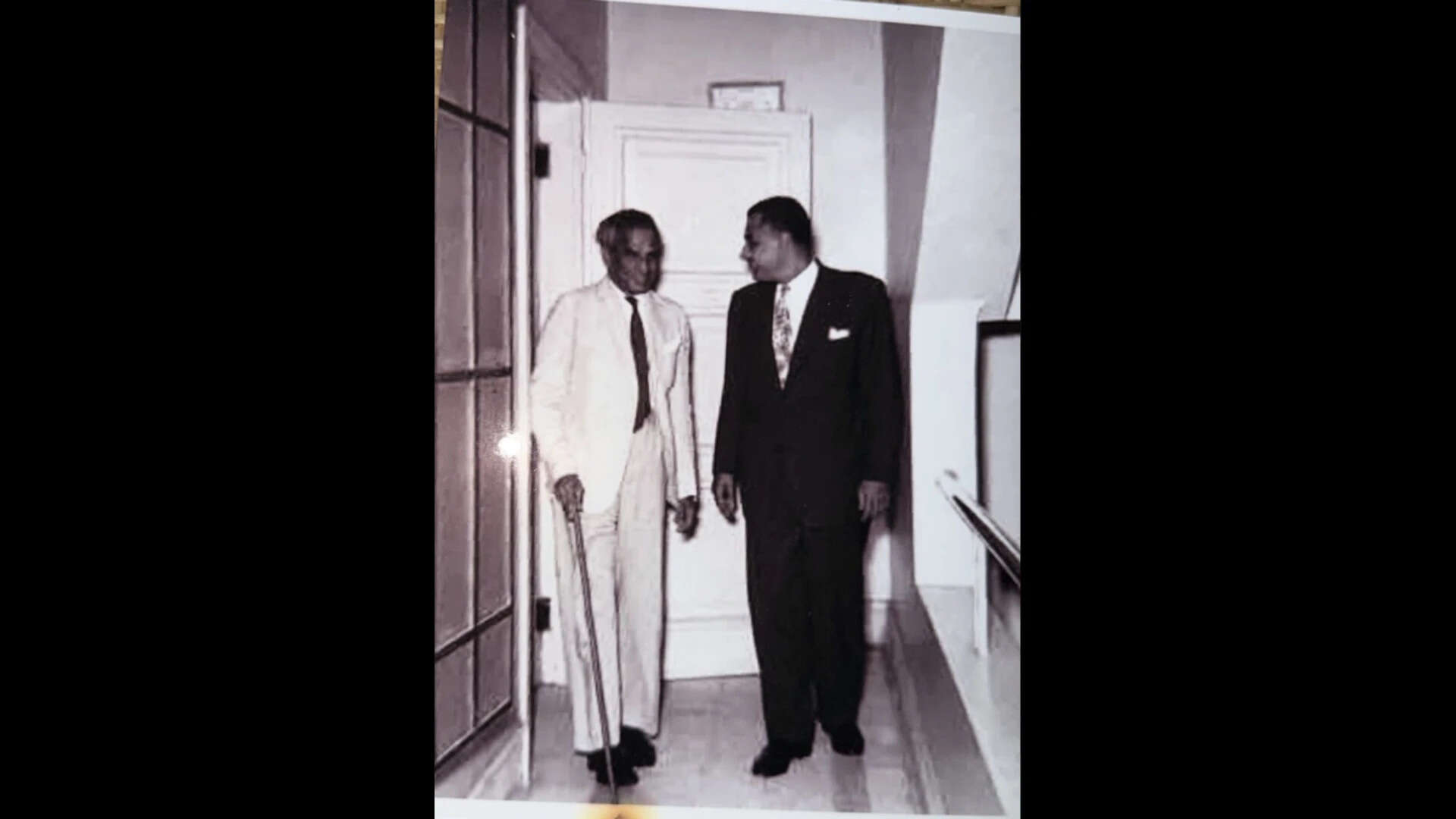
The Strait of Hormuz handles about 21 million barrels of oil every day. This represents roughly 21% of the world's total oil consumption. During the 1956 Suez crisis, which Congress referenced, the canal was closed for several months, causing a massive energy shortage in Europe. VK Krishna Menon, who was then a key advisor to Prime Minister Jawaharlal Nehru, spent weeks traveling between world capitals to find a peaceful solution. His efforts are often credited with preventing the local conflict from turning into a much larger global war.
Background and Context
To understand why this matters, we have to look at how India used to handle world problems. In the 1950s, India followed a policy of not taking sides in big power fights. When the Suez Canal crisis broke out, Britain, France, and Israel attacked Egypt after Egypt took control of the canal. The world was on the edge of a major war. VK Krishna Menon stepped in with a plan that respected Egypt's rights while ensuring the canal stayed open for international ships. This "Menon Plan" became a blueprint for the final peace deal. By bringing this up now, the Congress party is arguing that India has the historical experience to lead today’s peace talks.
Public or Industry Reaction
The reaction to this historical reminder has been mixed. Many historians and older diplomats agree that India’s past role was a high point for the country's global influence. They believe that a neutral, firm voice is exactly what the Middle East needs right now. However, some modern analysts argue that the world has changed since 1956. They point out that today’s conflicts involve more complicated groups and different types of warfare, making old diplomatic tricks harder to use. Within India, the statement has sparked a debate about whether the current government is doing enough to use its diplomatic weight to clear the shipping lanes.
What This Means Going Forward
If the blockade in the Strait of Hormuz continues, India will face a tough choice. It can either wait for other global powers to fix the situation or it can try to lead the negotiations itself. Following the "Menon model" would mean talking to all sides involved without showing favor. The next steps will likely involve high-level meetings in the region. If India can successfully help open the Strait, it would prove that its old style of diplomacy still works in the modern world. If not, the country may have to deal with long-term high energy prices and a slower economy.
Final Take
The current trouble in the Strait of Hormuz is a reminder of how fragile global trade can be. By looking back at the work of VK Krishna Menon, we see that clever talking and neutral ground can sometimes solve problems that weapons cannot. Whether or not the lessons of 1956 can be applied today, the goal remains the same: keeping the world's trade routes open and avoiding a larger conflict. India’s history as a peacemaker provides a possible path through the current darkness.
Frequently Asked Questions
Why is the Strait of Hormuz so important?
It is the world's most vital oil transit point. A large portion of the world's petroleum passes through this narrow stretch of water, making it essential for global energy stability.
Who was VK Krishna Menon?
He was a prominent Indian diplomat and politician who served as India's Defense Minister and represented the country at the United Nations. He was famous for his long speeches and his role in solving international disputes during the 1950s.
What was the Suez Canal crisis?
It was a conflict in 1956 that started when Egypt took control of the Suez Canal. This led to an invasion by Britain, France, and Israel. The crisis ended after international pressure, with India playing a major role in the peace negotiations.



