Summary
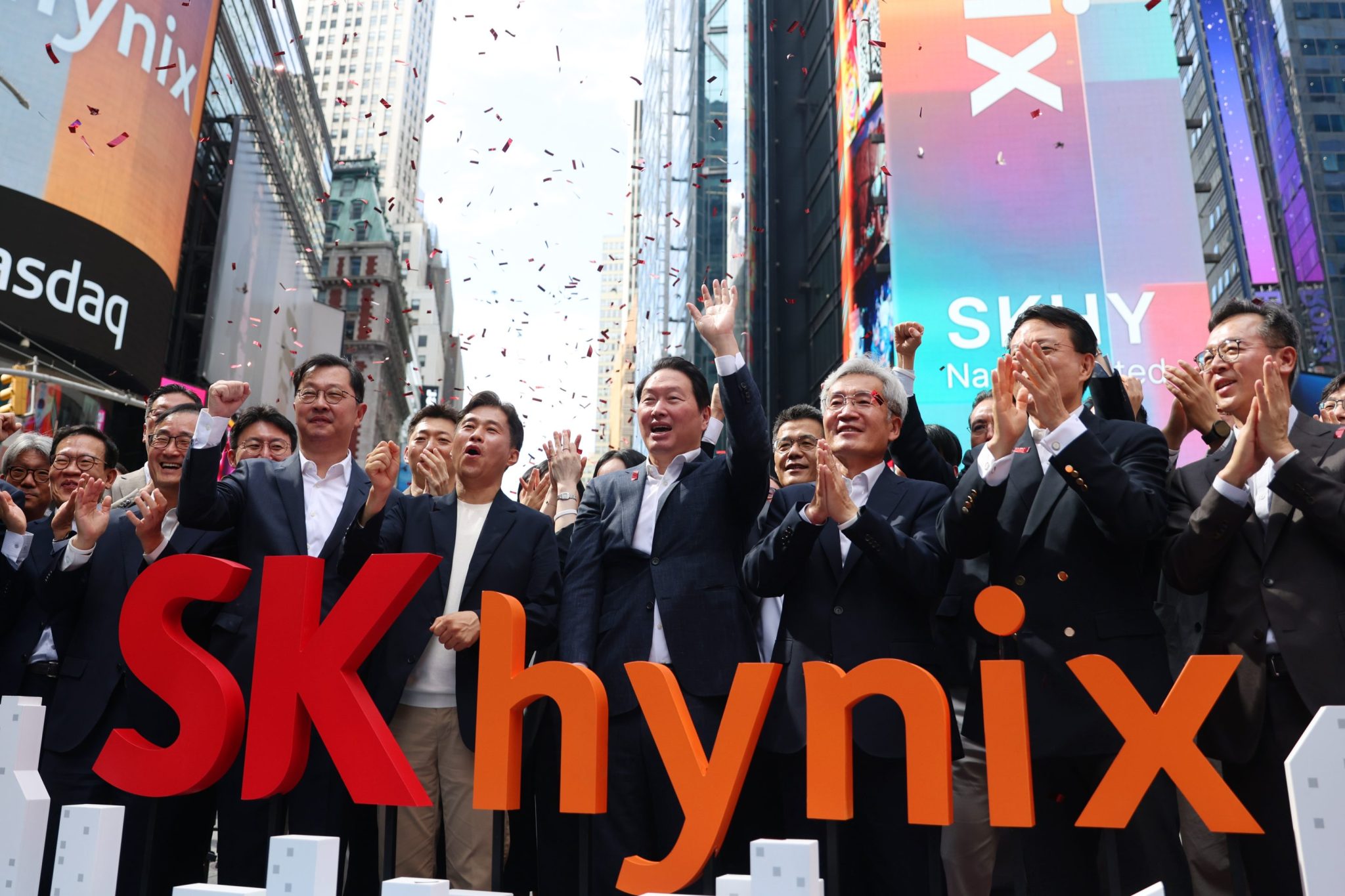
SK Hynix, the world's top maker of high-bandwidth memory chips, made its debut on the Nasdaq on July 10, 2026. The company raised $26.5 billion in the largest U.S. listing ever by a foreign company. It is also the second-largest share sale in U.S. history, behind only SpaceX's $86 billion IPO last month. The listing gives U.S. investors a direct way to invest in a key player in the artificial intelligence (AI) boom.
Main Impact
SK Hynix shares rose 12.8% on their first trading day. The company makes the specialized memory chips that sit inside almost every Nvidia processor. These chips are in high demand and short supply, which has pushed prices up. The listing is a major step for SK Hynix, which is now valued at over $1 trillion. It is only the second South Korean company to reach that milestone, after Samsung Electronics.
Key Details
What Happened
SK Hynix listed its American depository receipts (ADRs) on the Nasdaq. ADRs are a way for U.S. investors to buy shares in foreign companies. The company raised $26.5 billion from the sale. SK Group Chair Chey Tae-won said the company plans to double production capacity within five years, but customers still say it is not enough.
Important Numbers and Facts
SK Hynix shares traded in Korea have surged more than 630% over the past 12 months. The company reported record revenue of 97.1 trillion won ($64.1 billion) in 2025. Its net profit margin was 44%. The company controls about 60% of the global high-bandwidth memory (HBM) market. HBM chips deliver much more bandwidth than regular memory, making them perfect for AI training.
Background and Context
SK Hynix was founded in 1983 as Hyundai Electronics. After the Asian Financial Crisis of 1997, the Korean government pushed the industry to consolidate. Hyundai absorbed LG Semiconductor and renamed the company Hynix. The merger left the company with a lot of debt. It needed bailouts from creditors and the government. SK Group, South Korea's second-largest conglomerate, bought the company in 2012.
The turning point came in 2013, when SK Hynix co-developed the world's first high-bandwidth memory chip with AMD. At the time, HBM was a niche product. But SK Hynix kept investing in it. When the AI boom started, processor companies realized they needed HBM to train large language models quickly. SK Hynix had a ten-year lead on competitors like Samsung and Micron.
Public or Industry Reaction
Analysts say the U.S. listing will help SK Hynix overcome the "Korea Discount." This is a term used to describe how Korean company shares often trade at lower prices compared to global peers. HSBC analysts estimate the listing could lift SK Hynix's valuation by as much as 20%.
In South Korea, the AI boom has also changed social dynamics. SK Hynix agreed to give 10% of its annual operating profits to employee bonuses. The first payout averaged around 140 million won ($93,000) per employee. This has made chip workers more popular in the dating scene. One matchmaking agency CEO said SK Hynix and Samsung employees are now seen as "A+" candidates.
However, the Bank of Korea has warned that these bonuses could cause inflation. Some analysts worry that the profit-sharing deals could hurt the long-term health of the industry. They also warn of "worsening social division" caused by the huge profits at chip companies.
What This Means Going Forward
SK Hynix, along with Samsung and Micron, is benefiting from a memory chip shortage. AI manufacturers are willing to pay high prices for the limited supply. This has pushed up prices across the entire industry. Even lower-end memory chips are getting more expensive, forcing device makers like Apple, Sony, and Nintendo to raise prices.
SK Hynix CEO Kwak Noh-jung has warned that next year could be the worst year in the industry's history from a supply perspective. The company is investing heavily in new capacity. Samsung and SK Hynix jointly announced plans to invest 800 trillion won ($517 billion) to build two new chip fabrication complexes in South Korea.
But some analysts are skeptical that the shortage will last. They warn of the old boom-and-bust cycles that plagued chip revenues before the AI era. New capacity takes two to three years to come online, which could lead to oversupply just as demand starts to fall.
Final Take
SK Hynix's U.S. listing marks a major milestone for the company and for South Korea's tech industry. The company has transformed from a struggling memory chip maker into a key supplier for the AI revolution. But the challenges ahead are significant. The company must manage the current shortage while avoiding the overinvestment that has hurt the industry in the past. The social and economic effects of the AI boom in South Korea will also need careful handling.
Frequently Asked Questions
What is high-bandwidth memory (HBM)?
High-bandwidth memory is a type of computer memory chip that can transfer data much faster than regular memory. It is used in AI processors to quickly train large language models. SK Hynix controls about 60% of the global HBM market.
Why did SK Hynix list on the Nasdaq?
SK Hynix listed on the Nasdaq to give U.S. investors direct access to its shares. The company also wants to overcome the "Korea Discount," where Korean company shares often trade at lower prices compared to global peers. Analysts say the listing could lift the company's valuation by up to 20%.
What is the "Korea Discount"?
The "Korea Discount" is a term used to describe how shares of South Korean companies often trade at lower prices compared to similar companies in other countries. Analysts blame this on corporate governance practices that prioritize group cohesion over shareholder returns. SK Hynix hopes its U.S. listing will help attract global investors and close this gap.