
Summary
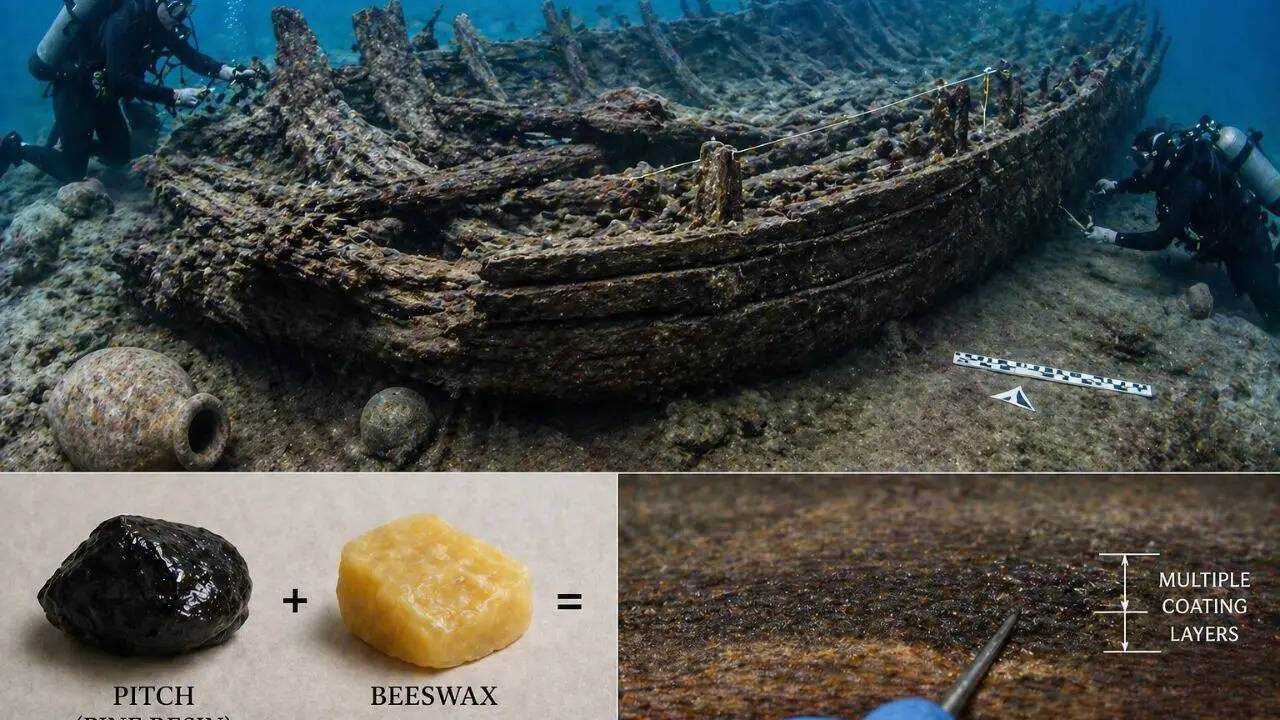
A 2,200-year-old Roman shipwreck found off the coast of Sicily has revealed how ancient builders kept their vessels from sinking. Researchers discovered a special mixture of natural materials used to seal the wood and protect it from the sea. This find gives us a rare look at the advanced engineering skills used during the Roman era. It shows that ancient people had a deep understanding of chemistry and construction to help their ships survive long journeys.
Main Impact
The discovery of this shipwreck, known as the Marausa 2, is a major step forward for underwater archaeology. It proves that Roman shipbuilders used a specific "secret formula" to waterproof their boats. This formula involved using plant resins and tar to create a thick barrier on the hull. This coating did more than just stop leaks; it also protected the wood from tiny sea creatures that usually eat away at sunken ships. Because of this, the ship remained in excellent condition for over two thousand years. This find helps explain how the Roman Empire managed to control the seas and move goods across vast distances safely.
Key Details
What Happened
The wreck was found in very shallow water near the shore of Marausa, a town in Sicily, Italy. Divers first spotted the remains just a few feet below the surface. Because the ship was buried under layers of sand and seagrass, it was shielded from oxygen. Oxygen is what usually causes wood to rot, so the sand acted like a natural preservative. Archaeologists spent months carefully digging around the site to reveal the ship's structure without damaging the fragile wood. They were surprised to find that much of the wood was still solid and held together well.
Important Numbers and Facts
The ship is roughly 15 meters long and 4 meters wide, making it a medium-sized cargo vessel for its time. It dates back to the 3rd century BC, a period when Rome was growing into a major power. Inside the ship, the team found a large number of amphorae. These are tall clay jars with two handles used for transport. These jars were still packed tightly in the cargo hold, showing exactly how the Romans organized their trade ships. Scientists believe the ship was carrying wine, olive oil, and perhaps a popular fermented fish sauce.
Background and Context
To understand why this is important, we have to look at how hard it was to sail in ancient times. The Mediterranean Sea can be very rough, and ships were made entirely of wood. Wood naturally absorbs water and can rot or warp over time. If a ship leaked too much, it would sink, and the valuable cargo would be lost. The Romans needed a way to make their ships last for many years. They experimented with different types of wood, like oak for the frame and pine for the planks. However, the real secret was the coating. By boiling down wood from certain trees, they made a sticky substance called pitch. They mixed this with other resins to create a waterproof paint that worked much like modern sealants.
Public or Industry Reaction
Experts in the field of history and science are very impressed by the state of the ship. Many have called it one of the most important finds in recent years because it serves as a perfect time capsule. They are surprised by how well the "secret formula" worked over such a long time. Even after 2,200 years, some of the coating is still visible on the wood. This has sparked new interest in ancient chemistry and how people used natural resources. Museums and historians are already planning how to share these findings with the public to show the high level of Roman craftsmanship.
What This Means Going Forward
Now that the ship has been found, the next step is to preserve it so it does not fall apart. When ancient wood is taken out of the water, it can dry out and crumble very quickly. Scientists will use a special liquid to replace the water inside the wood cells, a process that can take several years. Once the wood is stable, the ship will be put back together for display in a museum. Researchers also want to test the resin formula in a lab to see if they can recreate the exact mixture. This could teach us more about the plants and resources that were available to people in the ancient world.
Final Take
This ancient shipwreck shows that the Romans were much more than just soldiers. They were also brilliant engineers who knew how to work with nature to build things that lasted. The "secret formula" they used on their ships is a reminder of how much we can still learn from the past. It proves that even thousands of years ago, humans were finding smart ways to solve difficult problems and explore the world around them.
Frequently Asked Questions
How old is the Roman shipwreck?
The ship is approximately 2,200 years old, dating back to the 3rd century BC.
What was the "secret formula" used for?
The formula was a mixture of plant resin and pitch used to waterproof the ship's wooden hull and protect it from rotting in the sea.
Where was the ship found?
The ship was discovered in shallow water near the coast of Marausa in Sicily, Italy, buried under sand and seagrass.

