
Summary
Priyanka Chopra Jonas recently appeared on the Joe Rogan Experience podcast to discuss her life, her career, and her upcoming film, The Bluff. During the conversation, she spoke about how colonial history and the movement of people across the world still impact personal identity today. She shared stories about the history of Indian workers who were moved to different countries centuries ago and how that shaped modern communities. The actress also talked about the massive diversity within India and her own journey from the Indian film industry to Hollywood.
Main Impact
The discussion highlights a part of history that is often overlooked: the system of indentured labor that followed the end of slavery in the British Empire. By bringing these themes into a mainstream podcast and her new movie, Chopra is helping a global audience understand the roots of Indian communities in places like the Caribbean. Her insights also challenge common misunderstandings about Indian culture and the film industry, showing that "Bollywood" is only a small part of a much larger and more complex picture.
Key Details
What Happened
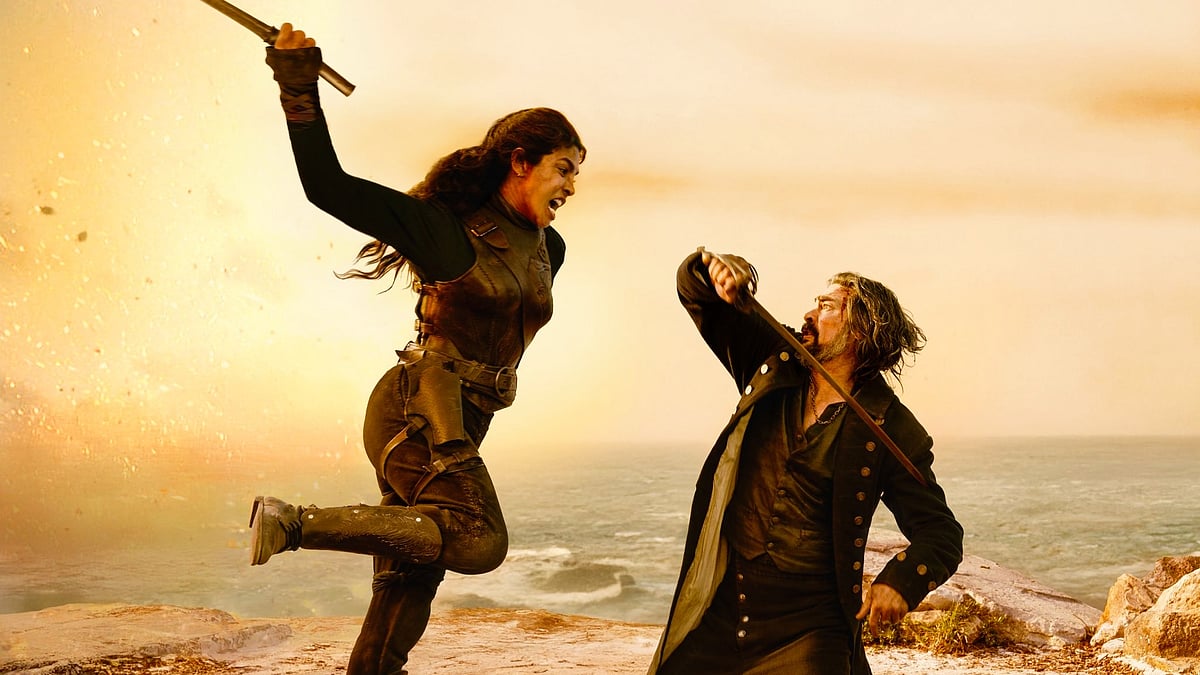
In her talk with Joe Rogan, Priyanka Chopra Jonas explained the historical background of her new action movie, The Bluff. The film is set during a time of colonial growth and sea battles. Her character in the movie comes from a family of indentured servants. This led to a deeper conversation about how hundreds of thousands of Indians were moved to distant lands in the 1800s to work on plantations. Many were promised better lives but ended up in difficult conditions far from home.
Important Numbers and Facts
The history Chopra discussed involves the 19th century, specifically the period after the British Empire stopped the practice of slavery. To replace workers, colonial leaders moved Indian people to the Caribbean, Africa, and Southeast Asia. Today, these regions have large populations of Indian descent. Chopra noted that in the Cayman Islands, she met people who could not trace their family history back more than five generations because their ancestors' records were lost during these migrations. She also pointed out that India produces thousands of movies every year across many different languages, including Telugu, Tamil, Punjabi, and Marathi, not just Hindi.
Background and Context
To understand why this matters, one must look at the history of migration. When slavery was abolished, the British Empire needed a new source of cheap labor for its colonies. They turned to India, creating a system where workers signed contracts to work for a set number of years. This is known as indentured labor. While it was different from slavery, it was often very harsh. This movement of people created the "Indian Diaspora," which refers to people of Indian origin living outside of India. Over time, many of these families lost touch with their specific roots in India, creating a sense of lost history that Chopra finds significant.
Furthermore, Chopra explained that India itself is a product of thousands of years of different groups moving in and out of the region. This has created a country with dozens of major languages and different writing systems. Because of this, an Indian person from the north might not understand the language of someone from the south. This diversity is why the Indian film industry is so large and varied, catering to many different linguistic groups within the same country.
Public or Industry Reaction
Chopra also touched on how the global film industry views Indian actors. In the past, she said, Indian actors in Hollywood were often used as a "diversity check." This means they were hired just to make a cast look more diverse, rather than for their acting skills. These roles often relied on stereotypes, such as characters having very thick accents or working specific types of jobs. Chopra mentioned a time when she was told to be "more Indian" during an audition, which she found confusing. However, she expressed respect for the actors who came before her and took those roles, as they helped create the path she follows today.
What This Means Going Forward
The release of The Bluff, with its trailer expected in early 2026, marks a shift in how historical action movies are told. Instead of just focusing on battles, the film looks at the personal history of displacement and family. Chopra’s own experience as a new mother also played a role in her performance. She explained that the instinct to protect a child is a central theme of the movie. This personal connection makes the historical setting feel more relevant to modern audiences. As more actors like Chopra gain influence in Hollywood, we can expect to see more stories that explore complex identities and histories that were previously ignored.
Final Take
Priyanka Chopra Jonas is using her platform to bridge the gap between history and entertainment. By discussing the difficult past of migration and the rich diversity of her home country, she provides a deeper look at what it means to belong to a culture. Her journey shows that while history can sometimes erase parts of a person's story, telling those stories through film can help bring them back to life for a new generation.
Frequently Asked Questions
What is the movie The Bluff about?
The Bluff is an action film set during the colonial era. It follows a mother who must protect her family and child in a violent world of maritime conflict and colonial expansion.
What did Priyanka Chopra say about Bollywood?
She explained that "Bollywood" only refers to the Hindi-language film industry in Mumbai. India actually has many different film industries in various languages like Tamil and Telugu, which together produce thousands of movies every year.
What is indentured labor?
Indentured labor was a system where people were contracted to work in a foreign land for a certain period. In the 19th century, many Indians were moved to colonies in the Caribbean and Africa under this system to work on plantations.

