Summary
Fresh hostilities between the U.S. and Iran have pushed oil prices higher again, raising concerns about a repeat of the trade war pattern seen during Trump’s first term with China. A top economist from Oxford Economics says the current negotiations feel “eerily similar” to that earlier period. While markets remain relatively calm, analysts warn that oil price spikes and inflation risks could return if tensions continue to escalate.
Main Impact
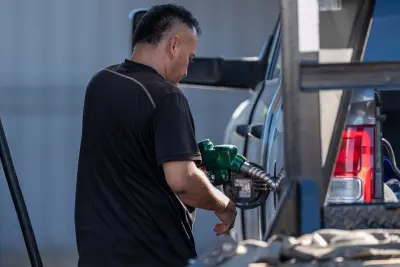
The latest clashes between the U.S. and Iran have made oil tankers hesitant to travel through the Strait of Hormuz, a key shipping route. This has stalled some oil supplies and pushed Brent crude back up to $77 a barrel. Although prices are lower than the May high of $113, they are still well above levels seen before the conflict began in February. The uncertainty is making it hard for economists to predict whether oil prices—and inflation—will spike again.
Key Details
What Happened
Despite a supposed ceasefire, the U.S. and Iran have traded strikes multiple times this week. The renewed fighting has disrupted oil shipments through the Strait of Hormuz, a narrow waterway that carries a large share of the world’s oil. This has caused oil prices to rise again, adding to the volatility that has marked the conflict since it started.
Important Numbers and Facts
Brent crude is currently at $77 a barrel, down from a May peak of $113 but still above the pre-war price of around $70. The VIX volatility index, which measures market fear, has crept higher but remains below the levels seen at the start of the conflict. Oxford Economics forecasts oil prices could fall to $73 by the end of the third quarter and $70 by year-end, assuming tensions ease.
Background and Context
The current situation mirrors Trump’s first-term approach to China, according to Ben May, director of global macro research at Oxford Economics. From 2018 to 2019, Trump imposed tariffs on Chinese goods, leading to a tit-for-tat trade war that eventually resulted in the “Phase One” trade agreement in 2020. During that period, Trump alternated between harsh criticism of China and insistence that a deal could be reached. Now, with Iran, Trump has similarly oscillated between calling negotiations a “waste of time” and saying the conflict won’t return to all-out war. May notes that this “playbook” creates uncertainty for markets, making it difficult to price in different outcomes.
Public or Industry Reaction
Wall Street has so far remained calm, with markets still up month-to-month despite the geopolitical bumps. Some analysts attribute this to optimism bias, while others suggest investors are becoming used to this pattern of flare-ups and de-escalation. May points out that deep distrust between the U.S. and Iran means bumps in the road were inevitable, and the latest developments have increased the risk of a more severe scenario but haven’t yet forced major changes to baseline forecasts.
What This Means Going Forward
The key question is whether the current tensions are just a temporary bump or the start of a more serious escalation. May says it’s too early to conclude that a major and sustained surge in oil prices is likely, but the risks are now weighted to the upside. Both the U.S. and Iran have an interest in keeping the Strait of Hormuz open, as a complete standstill would hurt both sides. However, if negotiations break down completely, oil prices could spike again, pushing inflation higher and creating more economic uncertainty.
Final Take
The U.S.-Iran talks are following a familiar pattern of pressure and de-escalation that markets have seen before. While the situation remains volatile, the fact that both sides are still leaving the door open for negotiations suggests a full-blown crisis may be avoided. But for now, oil prices and inflation remain at risk, and investors should be prepared for more bumps ahead.
Frequently Asked Questions
Why are oil prices rising again?
Oil prices are rising because of renewed fighting between the U.S. and Iran, which has made oil tankers reluctant to travel through the Strait of Hormuz. This has disrupted some oil supplies, pushing prices higher.
How is this similar to Trump’s trade war with China?
Economists say the pattern is similar because Trump is using the same approach of applying pressure while leaving room for negotiations. During his first term, he did this with China through tariffs and trade talks, creating a cycle of escalation and de-escalation that confused markets.
Could oil prices spike much higher?
It’s possible, but not certain. If tensions continue to escalate and the Strait of Hormuz is blocked for a long time, oil prices could spike. However, both the U.S. and Iran have reasons to avoid a complete shutdown, so many analysts expect prices to stay near current levels or fall slightly if talks progress.