Summary
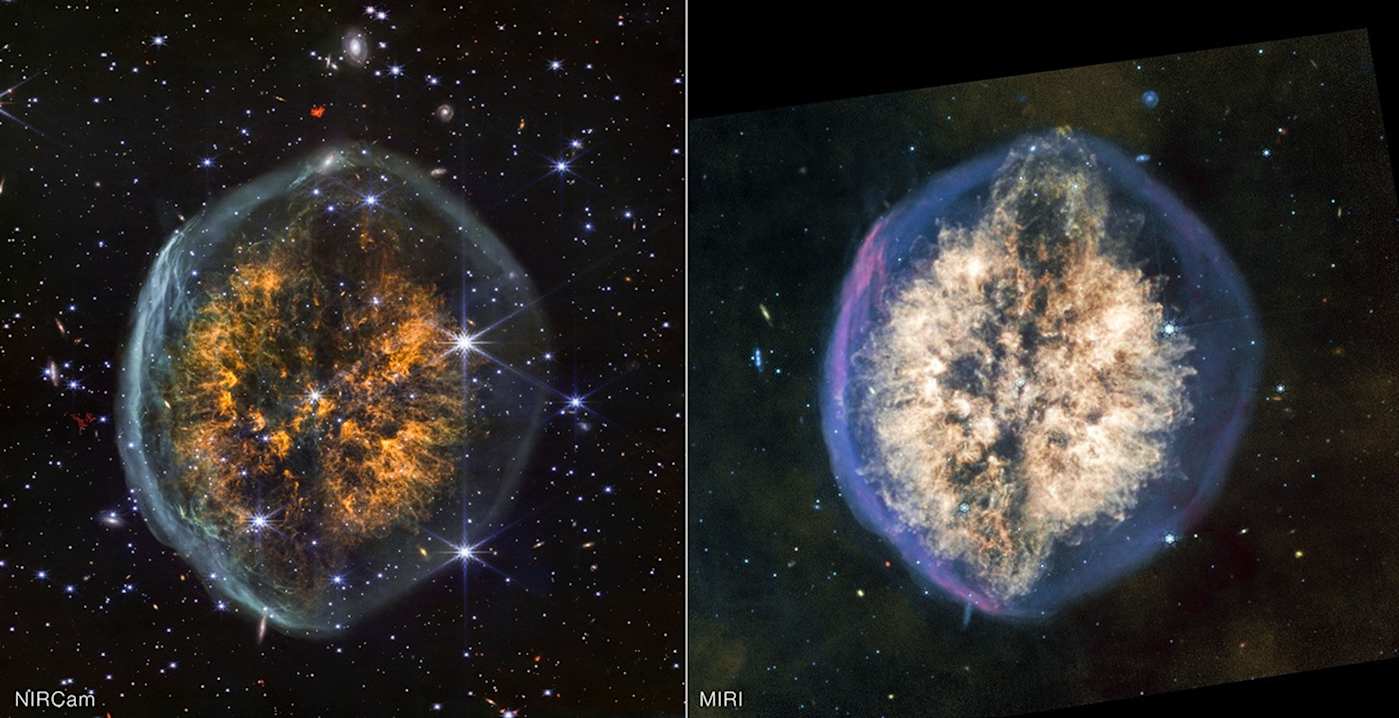
NASA has released stunning new images of a space object known as the Exposed Cranium Nebula. Captured by the James Webb Space Telescope, these photos show a massive cloud of gas and dust that looks remarkably like a human brain. This nebula, officially named PMR 1, offers a detailed look at the final stages of a star's life. By studying these images, scientists can better understand how dying stars shape the space around them.
Main Impact
The primary impact of these new images is the level of detail they provide about stellar death. For years, astronomers have studied how stars end their lives, but the James Webb Space Telescope allows us to see through thick dust that older telescopes could not penetrate. These photos show the different layers of gas being pushed away from a central star. This helps researchers map out the history of the star’s final moments and explains how complex shapes form in the deep reaches of space.
Key Details
What Happened
The James Webb Space Telescope used two of its most powerful tools to take these pictures: the Near-Infrared Camera (NIRCam) and the Mid-Infrared Instrument (MIRI). Together, these tools captured different parts of the nebula. The images reveal an outer shell of gas that the star blew off a long time ago. Inside that shell is a more complex cloud of mixed gases. The most striking feature is a dark vertical line that runs through the center. Scientists believe this line was created by powerful jets of energy shooting out from the star in opposite directions, which carved a path through the surrounding dust.
Important Numbers and Facts
The nebula is officially cataloged as PMR 1, but its "Exposed Cranium" nickname comes from its wrinkled, brain-like appearance. The outer layer is made almost entirely of hydrogen, which was the first material the star discarded. The inner regions contain a more complicated mix of gases that were released later. Because the Webb telescope sees in infrared light, it can detect the heat from these gases even when they do not give off much visible light. This allows the telescope to document the "evolution" of the nebula, showing which parts are old and which parts are new.
Background and Context
A nebula is a giant cloud of dust and gas in space. Some nebulas are "nurseries" where new stars are born, but others are created when a star dies. When a star like our Sun reaches the end of its life, it runs out of fuel and begins to expand. Eventually, it sheds its outer layers into space. These layers form the glowing clouds we see in these photos. The star that remains at the center is usually very small and hot. Understanding these objects is important because the gas and dust they release will eventually become the building blocks for new stars and planets.
Public or Industry Reaction
The space community and the general public have reacted with excitement to these images. Many people find the "brain" shape fascinating, as it makes a distant scientific object feel more relatable. Astronomers are particularly pleased with the clarity of the data. Previous telescopes could see the general shape of PMR 1, but they could not see the fine structures or the clear separation between the different gas layers. This new data provides a much clearer "timeline" of the star's death than was ever possible before.
What This Means Going Forward
Moving forward, scientists will use these images to study the chemical makeup of the nebula in more detail. By looking at the different colors in the infrared photos, they can tell exactly which elements are present, such as oxygen, nitrogen, or sulfur. This information helps them understand how stars recycle matter back into the galaxy. These findings also give us a preview of what might happen to our own solar system in several billion years. While our Sun is currently stable, it will eventually go through a similar process, leaving behind its own beautiful cloud of gas.
Final Take
The images of the Exposed Cranium Nebula are a perfect example of why the James Webb Space Telescope is so important. It turns distant, blurry objects into clear maps that tell a story of life and death in the universe. While the "brain" shape is a fun coincidence, the science behind it helps us understand the very foundation of our galaxy. Every new photo from this telescope brings us one step closer to knowing how the universe works and what the future holds for stars like our own.
Frequently Asked Questions
Why does the nebula look like a brain?
The brain-like appearance is caused by the way gas and dust are pushed out from the dying star. The "wrinkles" are different layers of gas, and the dark line in the middle was likely carved out by energy jets shooting from the star's poles.
What is the difference between NIRCam and MIRI?
NIRCam looks at near-infrared light, which is good for seeing stars and fine details. MIRI looks at mid-infrared light, which is better for seeing cooler dust and the overall structure of the gas clouds.
Is the star in the nebula still alive?
The star is in its final stages. It has pushed off most of its outer layers and is becoming a white dwarf. It is no longer a "living" star in the way our Sun is, but it still gives off a lot of heat and light that makes the nebula glow.