Summary
The conflict in the Middle East has reached a critical point following reports that Iran’s new Supreme Leader, Mojtaba Khamenei, has been injured. U.S. officials suggest the leader may be disfigured, which explains his recent absence from public view. As Israel and the United States continue military operations against Iranian targets, the Iranian government is reportedly struggling with internal chaos. These developments have caused global oil prices to surge, creating new tensions between the United States and its European allies.
Main Impact
The most significant development is the reported injury of Mojtaba Khamenei. According to U.S. Defense Secretary Pete Hegseth, the Iranian leadership is currently hiding in underground bunkers and is unable to communicate effectively. This breakdown in command has left the Iranian regime in a state of confusion. Without a visible leader to guide the country, the military and political structure of Iran is facing its most difficult challenge in decades. This power vacuum could lead to unpredictable actions from various factions within the country.
Key Details
What Happened
On Thursday, Mojtaba Khamenei’s first official message to the Iranian people was read by a news anchor during a television broadcast rather than being delivered by the leader himself. This unusual move supported claims by U.S. intelligence that he is physically unable to appear on camera. Meanwhile, the U.S. military confirmed a tragic incident in western Iraq where a KC-135 refueling plane crashed, resulting in the deaths of all six crew members. Officials have clarified that the plane was not shot down by enemy fire but crashed due to other factors.
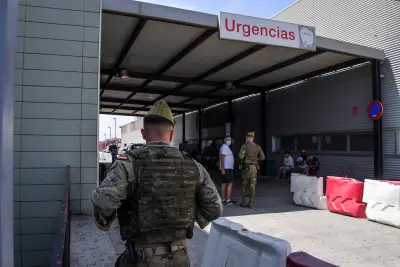
In Turkey, the situation remains tense at the Incirlik airbase. This base, which houses U.S. and Turkish troops, is also protected by a Spanish Patriot missile battery. These defense systems successfully intercepted an Iranian ballistic missile that was flying over Turkish territory. This shows that the conflict is spreading beyond the borders of the primary combatants and involving NATO allies.
Important Numbers and Facts
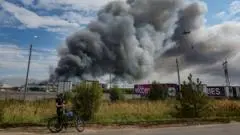
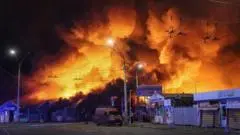
The military activity has had an immediate effect on the global economy. Oil prices have hit $100 per barrel, a level that causes significant concern for international markets. Additionally, Israel has expanded its air campaign, hitting multiple targets in Tehran and other major Iranian cities. At the same time, Israeli forces are striking Hezbollah positions in Lebanon to prevent secondary attacks. Iran has tried to fight back by launching drones and missiles at neighboring countries that it believes are supporting the U.S. and Israeli efforts.
Background and Context
The tension between Iran, Israel, and the United States has been growing for years, but it has recently turned into a direct military confrontation. Mojtaba Khamenei recently took over as Supreme Leader, a position that holds ultimate power in Iran. His ability to lead is vital for the country's stability. When a leader of such importance is injured or hidden, it creates a sense of fear and uncertainty among the population and the military.
The involvement of other countries, like Turkey and Spain, highlights how a local conflict can quickly become a regional or even global issue. The use of advanced missile defense systems like the Patriot missiles shows the high level of technology being used in this war. Furthermore, the economic side of the conflict is becoming just as important as the military side, as energy prices affect every country in the world.
Public or Industry Reaction
The international community is reacting with a mix of fear and political disagreement. The European Union has expressed strong criticism toward the United States. The EU is unhappy with the U.S. decision to lift certain sanctions on Russian oil. European leaders argue that this move is inconsistent, especially while the world is trying to manage a major energy crisis caused by the fighting in the Middle East. They believe that allowing more Russian oil into the market might help lower prices, but it also weakens the political pressure intended to stop other global conflicts.
What This Means Going Forward
The next few days will be vital in determining if this conflict turns into a full-scale regional war. If the Iranian leadership remains in bunkers and unable to talk to their people, the risk of a total government collapse increases. However, a leaderless military might also act more aggressively without central control. The world will be watching to see if Mojtaba Khamenei makes a public appearance to prove he is still in charge.
Economically, if oil remains at or above $100, many countries will face higher inflation and transport costs. This could lead to more political arguments between the U.S. and Europe over how to handle energy supplies. Military forces in the region remain on high alert, and more missile interceptions are expected as Iran continues to use its drone and missile technology against its neighbors.
Final Take
The reported injury of Iran’s Supreme Leader has changed the nature of this conflict from a standard military exchange to a crisis of leadership. With the Iranian regime in chaos and global oil prices climbing, the situation is no longer just a regional matter. The stability of the global economy and the safety of the Middle East now depend on whether a diplomatic solution can be found before the violence spreads even further.
Frequently Asked Questions
Who is Mojtaba Khamenei?
Mojtaba Khamenei is the new Supreme Leader of Iran. He recently took over the position and is considered the most powerful person in the Iranian government and military.
Why are oil prices rising?
Oil prices have reached $100 because of the instability in the Middle East. Investors fear that the war will disrupt the production and transport of oil from the region.
What is the role of the Patriot missiles in Turkey?
The Patriot missiles are part of a NATO defense system. A Spanish battery stationed in Turkey recently intercepted an Iranian missile to protect the Incirlik airbase and the surrounding area.