
Summary
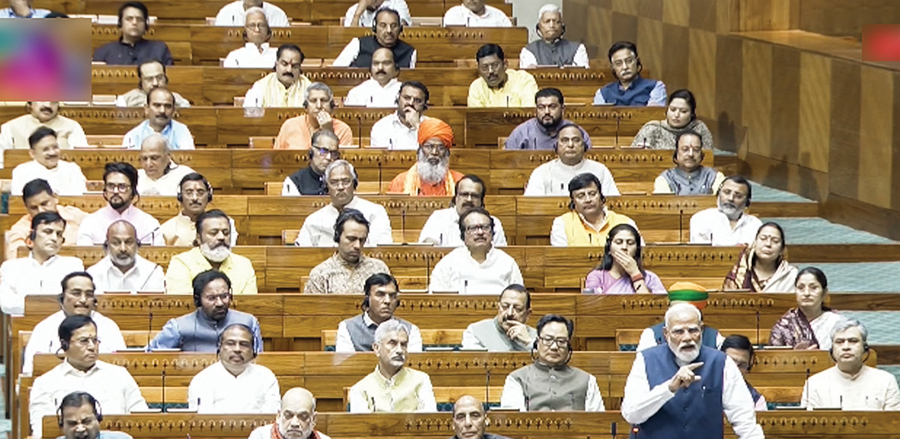
Prime Minister Narendra Modi has promised that no state will face unfair treatment during the upcoming process to redraw electoral boundaries, known as delimitation. Speaking in the Lok Sabha, the Prime Minister addressed concerns that some regions might lose political influence. He also gave his strong support to the plan for reserving seats for women in legislatures, which is expected to start in 2029. This move aims to balance representation across the country while ensuring that every state maintains its fair share of voices in Parliament.
Main Impact
The biggest impact of this announcement is the planned increase in the number of seats in the Lok Sabha. To ensure that no state loses its current level of influence, the government plans to increase the total number of seats by 50%. This means that instead of the current 543 seats, the Lower House will eventually have 816 seats. For states in the south and east that were worried about losing power due to their successful population control efforts, this news provides significant relief. Their seat counts will go up, not down, keeping the political balance stable across the nation.
Key Details
What Happened
The Prime Minister spoke during a heated debate regarding three new bills. These bills focus on changing the laws for women’s quotas and setting up a commission to redraw voting areas. The government introduced the Constitution (131st Amendment) Bill, which passed its first stage after a vote of 251 in favor and 185 against. During the session, the Prime Minister challenged the opposition, stating that those who fight against women's representation would face political consequences. He emphasized that the government is not looking for praise but wants to do what is right for the country's future.
Important Numbers and Facts
Union Home Minister Amit Shah provided specific details on how the seat numbers will change for southern states. Under the new plan, the total seats for five southern states will jump from 129 to 195. Here is the breakdown of the expected changes:
- Tamil Nadu: Increasing from 39 to 59 seats.
- Karnataka: Increasing from 28 to 42 seats.
- Andhra Pradesh: Increasing from 25 to 38 seats.
- Telangana: Increasing from 17 to 26 seats.
- Kerala: Increasing from 20 to 30 seats.
The total number of seats in the Lok Sabha is capped at a maximum of 850 in the bill, but the government clarified that the actual working number will be 816. This represents a perfect 50% increase from the current structure. Additionally, the percentage of power held through these seats will see a slight adjustment, moving to nearly 24%.
Background and Context
Delimitation is the process of redrawing the boundaries of Lok Sabha and State Assembly seats based on the latest population data. In India, this has been a sensitive topic for decades. States in the south have been more successful at controlling population growth compared to some states in the north. Because seats are usually handed out based on population size, southern states feared they would be punished for their success by having fewer representatives in Parliament. The Prime Minister’s statement was a direct attempt to calm these fears by promising that the proportion of seats for each state would remain the same even as the total number grows.
Public or Industry Reaction
The debate in Parliament was intense. Opposition leaders expressed concerns that the new laws could harm democracy if not handled carefully. They pushed for a formal vote even at the introduction stage of the bill. Some critics argued that the delay in implementing the women's quota until 2029 was too long. However, the government maintained that the timeline is necessary to complete the census and the redrawing of boundaries properly. Political experts note that the 50% increase in seats is a bold move to satisfy all regions while moving forward with constitutional changes.
What This Means Going Forward
The next few years will involve a massive administrative effort. First, a national census must be conducted to get updated population figures. After that, the Delimitation Commission will begin the work of drawing new map lines for every constituency. The women’s reservation law will only take effect after these steps are finished, meaning the 2024 general elections will follow the old system. By 2029, the Indian Parliament will look very different, with more seats and a guaranteed number of women lawmakers. This transition aims to make the government more representative of the actual population.
Final Take
The government is moving toward a major expansion of India's democratic structure. By promising that no state will lose its voice, the Prime Minister is trying to build a national agreement on a difficult issue. The focus now shifts to the technical work of counting the population and drawing new maps. If successful, this plan will change the face of Indian politics by 2029, bringing more seats to the states and more women into the halls of power.
Frequently Asked Questions
What is delimitation?
Delimitation is the process of redrawing the boundaries of parliamentary and assembly seats based on the most recent population data to ensure each seat represents a similar number of people.
When will the women's reservation bill start?
The government plans to implement the women's reservation law in 2029, after the next census and the redrawing of electoral boundaries are completed.
Will southern states lose seats in the Lok Sabha?
No. The Prime Minister and Home Minister have stated that the number of seats in southern states will actually increase by 50%, ensuring their political influence does not decrease.



