
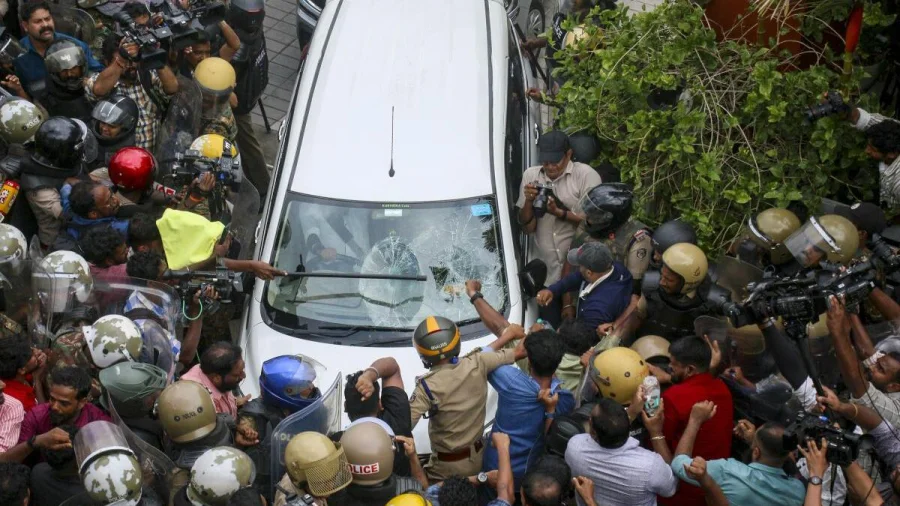
One more accused in the ED attack case can step out of the legal shadow. The Kerala High Court has upheld bail for the ninth accused, adding to a run of similar orders that already covered 17 other accused in the same case.
What the Kerala High Court's bail ruling means
The Kerala High Court upheld the bail granted to the ninth accused in the case connected to an attack on Enforcement Directorate officials, as described in the headline. The available report also notes that the court recently allowed bail applications of 17 other accused.
For the ninth accused, the immediate consequence is clear: no return to custody for now, subject to whatever conditions the court attached to the bail order.
Why the ED attack case carries wider weight
An attack on officials conducting a statutory investigation is not an ordinary criminal matter. It tests whether officers can work without fear and whether the legal system can hold those who obstruct them accountable without overreaching.
For the accused, the case has meant months of uncertainty, time in custody, and the personal cost of a criminal trial looming ahead. For the public, it raises a simpler question: how does the law balance an alleged attack on an official against an individual's right to liberty?
Background: how the case reached this point
Confirmed information is limited. What is known from the provided report is that the Kerala High Court has upheld bail for the ninth accused and that bail applications of 17 other accused were recently allowed by the court.
The original incident, the arrests, and the earlier bail hearings have not been detailed in the available material. This article is deliberately restricted to the headline and the reported summary supplied.
Who stands affected by the bail order
Most directly, the ninth accused and their family, for whom the ruling ends one phase of legal anxiety. The 17 other accused granted bail will also watch how the case develops, since a future cancellation of bail is always a legal possibility.
Beyond them, the ED officials who were part of the original incident have a stake in how the case proceeds, and Kerala's legal fraternity will read the order as a signal about the strength of the prosecution's case at this stage.
What the official position actually says
The Kerala High Court's decision is the only official position reflected in this report. The specific Division Bench or single judge, the date of pronouncement, and the arguments relied upon have not been independently verified.
In the absence of a sourced judgment copy, everything in this article should be treated as reported information rather than confirmed legal text.
Reading the pattern: bail after bail
Seventeen accused, then the ninth accused — the sequence suggests the High Court has been scrutinising the prosecution's material at the bail stage. Bail decisions normally turn on flight risk, tampering potential, and the nature and gravity of the offence.
But without the judgment's reasoning, it would be speculative to conclude that the court has formed a definitive view of the evidence. Bail is not a verdict on guilt.
Confirmed facts vs what remains unclear in the ED attack case
Confirmed from the available report: The Kerala High Court upheld bail for the ninth accused, and it recently allowed bail applications of 17 other accused in the same case.
Not yet independently confirmed: The identity of the ninth accused, the date and bench of the order, any bail conditions imposed, and the specific details of the attack that led to the case. All of these await official court records.
Risks and the prosecution's unanswered questions
Bail is relief, not absolution. The accused still face trial, and the prosecution's case remains alive. If the alleged attack on ED officials is established in court, the seriousness of the incident will be weighed far more heavily than it is at the bail stage.
Critics of such bail orders may argue that attacks on investigating agencies demand a stricter approach. Defenders of the orders will point out that bail is a settled legal right, not a favour — and that the court has applied the law as it stands.
A wider pattern: courts, ED probes, and liberty
Indian courts have generally taken a firm line on assaults against officials discharging statutory duties, while also insisting that bail must follow settled legal tests rather than public sentiment. The Kerala High Court's orders here sit inside that larger judicial tension.
How courts calibrate that balance in the ED attack case will be followed beyond Kerala, especially by agencies that conduct high-stakes investigations across the country.
What accused, families, and court watchers should do now
For those connected to the case, the immediate step is to obtain a certified copy of the High Court order to understand the bail conditions precisely, including any reporting requirements or travel restrictions.
For observers and media, official court records remain the only reliable route to the full picture. Until then, any strong claim about the court's reasoning would be premature.
Where the ED attack case could go next
The matter is expected to move toward trial, with the accused on bail. A challenge to the bail order in the Supreme Court remains a theoretical possibility, though nothing of that kind has been reported in the available material.
The other accused granted bail will also be watching for any move to cancel bail, which the prosecution can seek if conditions are violated or new material emerges.
Our Take
This is a story available only in fragments. The headline confirms a legal outcome; the follow-up line confirms a pattern of relief. What is missing is the texture — the court's reasoning, the agency's response, and the human narrative behind the ninth accused. Honest reporting in such a situation means being precise about what is established and explicit about what is not. The full meaning of this order will only emerge when the judgment speaks for itself.
Frequently Asked Questions
Who is the ninth accused in the ED attack case?
The identity of the ninth accused has not been independently confirmed in the available report. What is confirmed is that the Kerala High Court upheld this person's bail in the ED attack case.
How many accused have received bail in the ED attack case so far?
According to the available report, the Kerala High Court recently allowed bail applications of 17 other accused in the case. Together with the ninth accused whose bail was upheld, at least 18 accused have now received bail relief.
What is the ED attack case?
As described in the headline, it is a case connected to an attack on officials of the Enforcement Directorate in Kerala. Detailed facts about the incident are not available in the source material provided for this article.
Does bail in the ED attack case mean the accused are acquitted?
No. Bail only means release from custody during trial, often with conditions attached. The accused still face trial, and the prosecution's case remains pending unless the court decides otherwise.



