
Summary
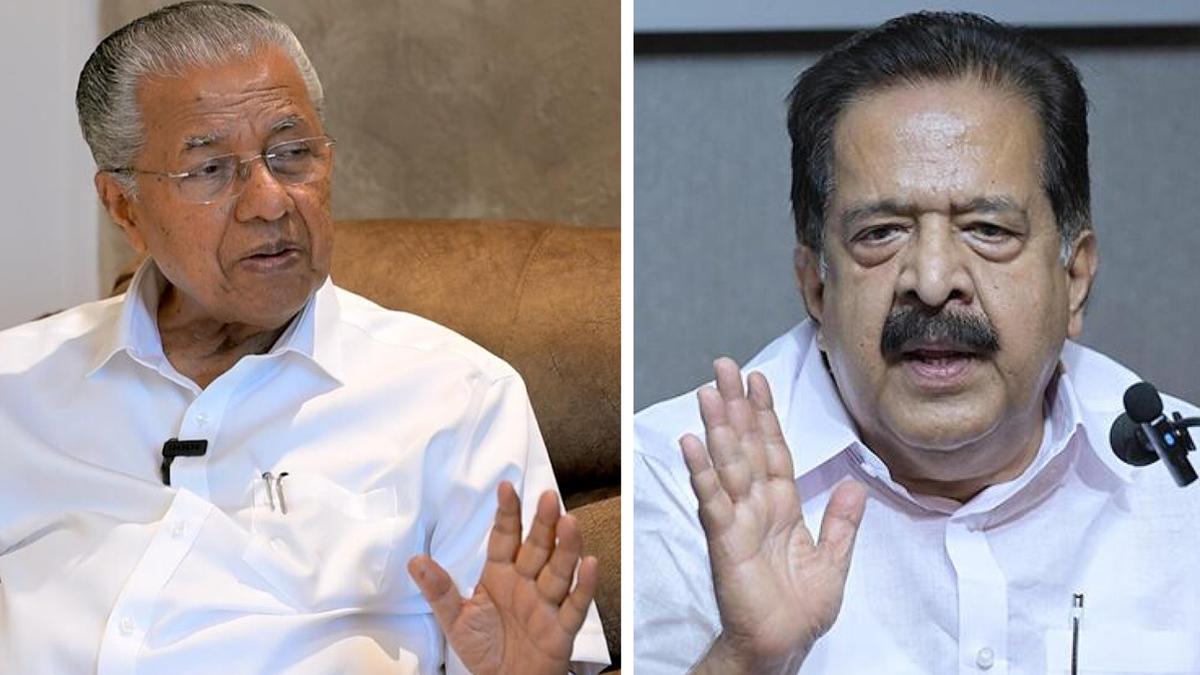
As the 2026 Kerala Assembly elections approach, the state’s two main political groups are locked in a heated argument. The Left Democratic Front (LDF) and the United Democratic Front (UDF) are accusing each other of secretly helping the Bharatiya Janata Party (BJP). Chief Minister Pinarayi Vijayan and Congress leader K.C. Venugopal have exchanged sharp words, each claiming the other is a tool for the BJP’s growth in the state. This conflict highlights the changing political environment in Kerala, where a long-standing two-party system is facing new pressure.
Main Impact
The primary impact of this political fight is the potential breakdown of the traditional power structure in Kerala. For decades, the state has switched between the LDF and the UDF every five years. However, the rise of the BJP as a third force is making both traditional groups nervous. By accusing each other of being "secret allies" of the BJP, the LDF and UDF are trying to prove they are the only true opposition to the saffron party. This strategy could confuse voters or, conversely, make the BJP appear more relevant in a state where it has historically struggled to win seats.
Key Details
What Happened
The tension started when Chief Minister Pinarayi Vijayan made strong comments about the national leadership of the Congress party. He claimed that under Rahul Gandhi, the Congress is acting like the "B-Team" of the BJP. Vijayan suggested that the Congress is not doing enough to stop the BJP's policies and is instead helping them indirectly. This is a serious charge in Kerala, where being seen as "soft" on the BJP can lead to a loss of support from minority communities and secular voters.
Congress leaders did not stay silent. K.C. Venugopal, the AICC General Secretary, fired back with his own accusations. He stated that Prime Minister Narendra Modi and Home Minister Amit Shah have found a "willing tool" in Pinarayi Vijayan. Venugopal argued that the Chief Minister is attacking Rahul Gandhi to please the BJP leadership in Delhi. He claimed that while Rahul Gandhi is fighting a difficult battle against the BJP and its corporate supporters, Vijayan is trying to weaken that effort from within Kerala.
Important Numbers and Facts
The 2026 Kerala Assembly election will decide the fate of 140 seats. In the last few elections, the LDF has managed to break the tradition of alternating power by winning two consecutive terms. The UDF is desperate to win back the state to remain a strong national force. Meanwhile, the BJP has been slowly increasing its vote share in Kerala, even if it has not won many seats in the state assembly yet. The current war of words shows that both the Left and the Congress believe the BJP's influence is a major factor that could decide the next winner.
Background and Context
To understand why this matters, one must look at how Kerala politics works. For over 50 years, the state has been a battleground between the communists (LDF) and the Congress-led coalition (UDF). This "duopoly" meant that a third party almost never had a chance. However, the BJP has been working hard to change this. They have focused on specific districts and community issues to build a base.
The LDF and UDF both rely on a similar group of voters who want to keep the BJP out of power. Because they are competing for the same "anti-BJP" vote, they must prove that they are the most effective shield against the BJP. If one party can convince the public that the other is secretly working with the BJP, it could win over a large number of undecided voters. This is why the "B-Team" and "willing tool" labels are being used so frequently now.
Public or Industry Reaction
Political observers in Kerala note that this level of personal attack between state and national leaders is becoming more common. Many voters are expressing concern that the real issues, such as the economy, jobs, and infrastructure, are being ignored in favor of these political insults. On social media, supporters of both parties are busy defending their leaders. LDF supporters point to the Congress party's losses in other states as proof that they cannot stop the BJP. UDF supporters point to the lack of central government investigations into Kerala state leaders as proof of a "secret deal" between the CPI(M) and the BJP.
What This Means Going Forward
As the election draws closer, the rhetoric is expected to get even tougher. The BJP will likely use this infighting to its advantage. They can tell voters that both the LDF and UDF are two sides of the same coin and that only the BJP offers something different. For the LDF, the challenge is to maintain its image as a strong, independent force. For the Congress, the goal is to show that Rahul Gandhi’s national fight is relevant to the people of Kerala. The 2026 election will not just be about who runs the state, but about whether the two-party system can survive the rise of a third competitor.
Final Take
The political fight in Kerala has moved beyond local governance and into a battle over national identity. By accusing each other of aiding the BJP, the LDF and UDF are playing a high-stakes game. While this might help them secure their core supporters, it also risks making the BJP the center of the conversation. In the end, the voters of Kerala will have to decide which party truly represents their interests and which one is simply using the fear of a third party to stay in power.
Frequently Asked Questions
Why is the 2026 Kerala election important?
It will determine if the LDF can stay in power for a third term or if the UDF can make a comeback. It also tests if the BJP can finally become a major player in the state.
What does "B-Team" mean in this context?
It is an insult used to suggest that a political party is not a real opponent but is actually working to help another party win indirectly.
Who are the main leaders involved in this argument?
The main figures are Kerala Chief Minister Pinarayi Vijayan from the CPI(M) and K.C. Venugopal and Rahul Gandhi from the Congress party.



