
Summary
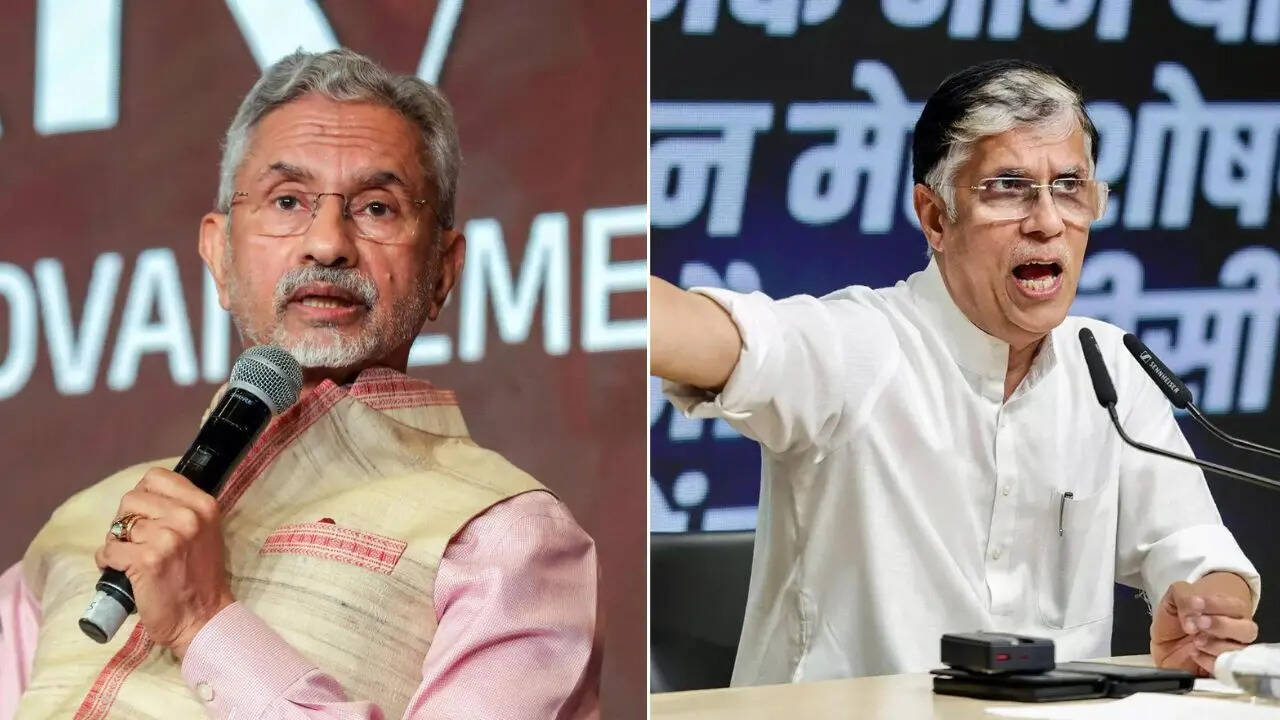
The Congress party has launched a sharp critique against External Affairs Minister S. Jaishankar following his recent comments on India’s role in global conflicts. The dispute began after the Minister stated that India is not a "broker nation," using the term "dalaal" to describe such a role. Congress leaders quickly pointed out the government's past attempts to mediate between Russia and Ukraine, calling the current stance "selective brokering." This political disagreement highlights a growing divide over how India should handle international crises, especially the ongoing tension in West Asia.
Main Impact
This exchange has sparked a fresh debate about India’s foreign policy and its consistency on the world stage. By questioning the government’s refusal to act as a mediator in some regions while doing so in others, the opposition is challenging the "Vishwa Bandhu" or "friend of the world" image that the current administration promotes. The impact of this criticism forces the government to clarify its diplomatic strategy, especially as the public and international community watch how India responds to major global shifts.
Key Details
What Happened
External Affairs Minister S. Jaishankar recently spoke about India’s position in international diplomacy. During his remarks, he emphasized that India does not act as a middleman or a "broker" in global disputes. He used the Hindi word "dalaal" to make his point, suggesting that India’s involvement in foreign affairs is based on its own interests and principles rather than just facilitating deals between other countries.
The Congress party responded by calling this statement hypocritical. They reminded the public that Prime Minister Narendra Modi has often been presented as a peacemaker who could help end the war between Russia and Ukraine. Congress leaders argued that if the government was willing to step in for Russia and Ukraine, it should not dismiss the idea of mediation in other areas, such as the crisis in West Asia.
Important Numbers and Facts
The debate centers on several key points of India's recent foreign activity. Since the start of the Russia-Ukraine conflict in 2022, Prime Minister Modi has held multiple high-level talks with both President Vladimir Putin and President Volodymyr Zelenskyy. Government officials have frequently highlighted these interactions as proof of India’s growing influence. However, the opposition points out that similar energy has not been seen regarding the recent escalations in West Asia, involving Israel, Palestine, and Iran. Congress is now demanding a formal debate in Parliament to address these inconsistencies and understand the government's long-term plan.
Background and Context
For many years, India followed a policy of non-alignment, which meant it did not take sides in major global power struggles. In recent times, the government has shifted toward a more active role, often described as being a "voice for the Global South." This means India tries to represent the interests of developing nations. Because of this new role, many people expect India to help solve international problems.
The term "broker" or "dalaal" is sensitive in Indian politics. It often carries a negative meaning, suggesting someone who works for profit or hidden motives. By using this word, Jaishankar was likely trying to say that India’s diplomacy is honorable and independent. However, the opposition used this choice of words to suggest that the government is being picky about which peace efforts it supports based on political optics.
Public or Industry Reaction
The reaction from opposition leaders has been firm. They believe that foreign policy should be transparent and discussed openly in Parliament. Several leaders expressed that the government cannot claim to be a global leader while simultaneously backing away from mediation when the situation becomes difficult. On social media and in news outlets, political analysts are divided. Some agree with Jaishankar, stating that India must protect its own interests first. Others agree with Congress, arguing that a true global leader must be consistent in its efforts to promote peace everywhere.
What This Means Going Forward
This dispute is likely to lead to heated discussions in the next session of Parliament. The government will face pressure to explain why it chooses to intervene in some conflicts but remains distant from others. There is also the risk that this internal political fighting could affect how other countries view India’s reliability as a diplomatic partner. If the government wants to maintain its image as a global peacemaker, it may need to find a more balanced way to talk about its role as a mediator without using language that the opposition can easily flip against them.
Final Take
The clash between the government and the opposition shows that foreign policy is no longer a topic kept behind closed doors. As India grows more powerful, every word spoken by its leaders is checked for consistency. While the government wants to avoid being seen as a simple middleman, it must also answer for the expectations it has built as a global peace seeker. Clear communication will be necessary to ensure that India's diplomatic goals are understood both at home and abroad.
Frequently Asked Questions
Why did S. Jaishankar say India is not a "broker"?
He wanted to emphasize that India makes its own decisions based on national interest and principles, rather than just acting as a middleman to settle scores between other nations.
What is "selective brokering"?
This is a term used by the Congress party to claim that the government chooses to help solve some international conflicts, like Russia-Ukraine, while ignoring others, like the crisis in West Asia.
Why does the Congress party want a parliamentary debate?
The opposition wants the government to explain its foreign policy clearly and ensure that India's actions on the global stage are consistent and transparent to the public.



