Summary
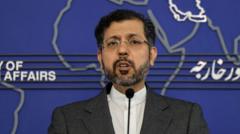
Iran’s Deputy Foreign Minister, Majid Takht-Ravanchi, has issued a strong warning regarding the current situation in Lebanon. In a recent interview with the BBC, he described Israeli military strikes as a serious break of the ceasefire agreement. He stated that these actions threaten the fragile peace that leaders worked hard to establish. Furthermore, he called on the United States to take a clear side, suggesting that American leaders must choose between supporting a wider war or ensuring the ceasefire holds. This development comes at a time when the Middle East remains on high alert due to ongoing regional tensions.
Main Impact
The primary impact of these statements is the increased pressure on the international community to monitor the truce between Israel and Hezbollah. When a high-ranking official like Takht-Ravanchi calls military actions a "grave violation," it signals that the diplomatic path is in danger. If the ceasefire fails, the region could see a return to full-scale fighting, which would lead to more displacement and loss of life. Additionally, by putting the responsibility on the United States, Iran is making it clear that it views American support for Israel as a deciding factor in whether the conflict grows or shrinks.
Key Details
What Happened
During his conversation with the BBC, the Iranian minister focused on the recent military activity in Lebanon. He argued that Israel has not followed the rules of the ceasefire that was meant to stop the violence. According to the minister, these strikes are not just small incidents but are major threats to regional stability. He also touched upon the broader conflict between Iran and Israel, mentioning that Iran still feels it has the right to respond to previous attacks on its own land. This suggests that the tension in Lebanon is closely tied to the direct rivalry between Tehran and Jerusalem.
Important Numbers and Facts
The ceasefire in question was designed to last for an initial period of 60 days to allow for a more permanent solution. During this time, the Lebanese army was supposed to move into the southern part of the country to keep the peace. However, reports show that there have been multiple instances of gunfire and air strikes since the deal began. Iran claims these actions by Israel are unprovoked. On the other side, Israel maintains that it only acts when it sees Hezbollah trying to move weapons or rebuild its military bases near the border. The United States has been acting as a mediator, trying to keep both sides from returning to war.
Background and Context
To understand why this matters, it is important to look at the history of the last year. Israel and Hezbollah have been trading fire for months, leading to thousands of people fleeing their homes on both sides of the border. The fighting grew much worse recently, leading to a ground invasion and heavy bombing campaigns. The ceasefire was seen as a major win for diplomacy, aimed at giving civilians a chance to return home and stopping the violence from spreading to other countries like Iran. Iran supports Hezbollah and sees the group as a key partner in the region. Therefore, any attack on Hezbollah is seen by Iran as a direct challenge to its own interests.
Public or Industry Reaction
The reaction to the minister’s comments has been mixed. Some international observers worry that Iran is looking for a reason to restart the conflict or justify its own future military moves. Others believe that Iran’s concerns about the ceasefire are valid, as any military strike during a truce makes the deal look weak. In Israel, officials have stayed firm, saying they will do whatever is needed to protect their citizens from threats. Meanwhile, the U.S. government continues to call for calm, urging all parties to stick to the written agreement to avoid a disaster that could affect the whole world.
What This Means Going Forward
Looking ahead, the next few weeks will be very important for the Middle East. If the strikes in Lebanon continue, the ceasefire might fall apart completely. This would force the Lebanese army and international peacekeepers into a very difficult position. We may also see the United States change its approach. If the U.S. feels that the ceasefire is failing, it might have to put more pressure on Israel to stop its strikes or find new ways to stop Hezbollah from rearming. The biggest risk is a direct fight between Iran and Israel, which the minister’s comments suggest is still a very real possibility if diplomacy fails.
Final Take
The words from Iran’s deputy foreign minister show that the road to peace is still full of obstacles. While the ceasefire brought a brief moment of hope, the reality on the ground is much more complicated. The world is now watching to see if the United States will take the "choice" mentioned by Iran and if both sides can find a way to stop the cycle of violence before it turns into a much larger war.
Frequently Asked Questions
Why is Iran calling the strikes a violation?
Iran believes that any military action taken by Israel during the ceasefire period breaks the rules of the agreement. They argue that these strikes are unprovoked and prevent the region from becoming stable.
What is the role of the United States in this conflict?
The United States helped negotiate the ceasefire and acts as a mediator. Iran is now calling on the U.S. to use its influence to stop Israeli military actions and prevent the conflict from growing.
Is the ceasefire in Lebanon still active?
Technically, the ceasefire is still in place, but it is very weak. Both sides have accused each other of breaking the rules, and military activity has continued in some areas despite the official agreement to stop fighting.