
Summary
Iran has officially asked India to lead a group statement from the BRICS nations to criticize the United States and Israel. This request follows recent military strikes on Iranian territory. India currently holds the leadership role for the BRICS group, which puts the country in a tough spot. While Iran wants a strong statement of condemnation, India is trying to remain neutral to maintain its good relationships with all countries involved in the Middle East conflict.
Main Impact
The main impact of this request is the heavy pressure it puts on India’s foreign policy. India has worked for years to build strong ties with the United States, Israel, and Iran at the same time. If India agrees to Iran’s request, it could damage its friendship with the U.S. and Israel. However, if India says no, it might look like it is not supporting a fellow member of the BRICS group. This situation highlights how difficult it is for India to lead a large group of countries that have very different goals and enemies.
Key Details
What Happened
On Thursday night, high-level talks took place between Indian and Iranian leaders. Prime Minister Narendra Modi spoke with Iranian President Masoud Pezeshkian to discuss the growing violence in the region. During the same evening, India’s External Affairs Minister, S. Jaishankar, had a phone call with Iran’s Foreign Minister, Seyed Abbas Araghchi. During these talks, Iran urged India to use its power as the BRICS president to issue a formal statement against the military actions of the U.S. and Israel.
Important Numbers and Facts
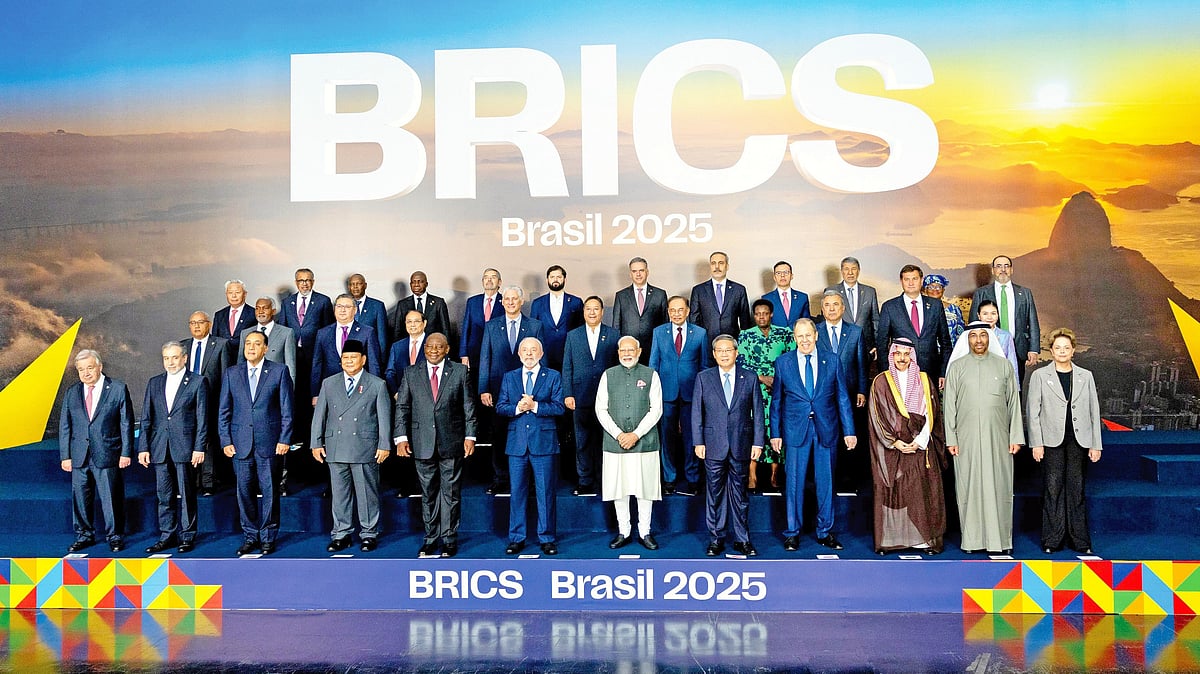
India is the rotating president of BRICS for the year 2026. This means India is responsible for organizing meetings and setting the group's goals for the year. The current round of fighting in the region began on February 28. Since that date, the foreign ministers of India and Iran have spoken four different times. The BRICS group has also grown recently and now includes 11 members: Brazil, Russia, India, China, South Africa, Egypt, Ethiopia, Iran, Saudi Arabia, the United Arab Emirates, and Indonesia.
Background and Context
BRICS started as a small group of five major developing countries. Over time, it has grown into a much larger organization that wants to give more power to countries outside of the West. However, the new members do not always get along. For example, Iran has recently launched drone and missile attacks against Saudi Arabia and the United Arab Emirates. Even though all three countries are now in BRICS, they still have serious disagreements. India has to manage these internal fights while also dealing with outside powers like the United States.
India also has a lot at stake in the Middle East. Millions of Indian citizens live and work in countries like Saudi Arabia and the UAE. Any major war in the region could put these people in danger and hurt India’s economy. This is why India usually prefers to stay neutral and ask everyone to stop fighting rather than taking one side over the other.
Public or Industry Reaction
The Indian government has been very careful with its words. Prime Minister Modi said he is very worried about the loss of innocent lives and the destruction of buildings. He told the Iranian president that the only way to fix the problem is through talking and peace. He did not blame any specific country for the violence. On the other side, Iran’s government is being much more direct. They claim they have a legal right to defend themselves and believe the rest of the world should punish the U.S. and Israel for their "crimes."
What This Means Going Forward
India is scheduled to host a major summit for all BRICS leaders later this year. This meeting will be a huge test for Indian diplomats. They will have to find a way to write a joint statement that satisfies Iran without making the U.S. or Israel angry. If the members of BRICS cannot agree on a simple message about the war, it could show that the group is too divided to be effective. India will likely continue to push for "dialogue and diplomacy," which is a safe way to call for peace without picking a side in the fight.
Final Take
India is currently walking a thin line between its old friends in the West and its new partners in the BRICS group. By staying neutral, India hopes to keep its influence with everyone. However, as the fighting in the Middle East gets worse, it will become much harder for India to avoid taking a side. The world will be watching to see if India can lead BRICS through this crisis or if the group's internal differences will pull it apart.
Frequently Asked Questions
Why did Iran ask India for a statement?
Iran asked India because India is currently the president of the BRICS group. As the leader, India has the power to suggest and release official statements on behalf of all the member countries.
What is India's position on the conflict?
India has chosen to stay neutral. The Indian government is calling for both sides to stop the violence and use talking and diplomacy to solve their problems instead of military force.
Which countries are part of BRICS?
The group now includes 11 countries: Brazil, Russia, India, China, South Africa, Egypt, Ethiopia, Iran, Saudi Arabia, the United Arab Emirates, and Indonesia.

