Summary
GPS signals in the Middle East are facing constant interference, making it difficult for ships and planes to navigate safely. This problem, known as GPS jamming and spoofing, has turned the region into a testing ground for electronic warfare. Because these signals are being blocked or faked, pilots and ship captains can no longer fully trust their digital maps. This situation is forcing the travel and shipping industries to find new ways to stay on course without relying only on satellites.
Main Impact
The primary impact of this interference is a significant increase in safety risks for international travel. When GPS signals are disrupted, a plane might receive data showing it is hundreds of miles away from its actual location. This can lead to aircraft accidentally flying into restricted airspace or toward dangerous mountain ranges. For ships in the Gulf, losing GPS means they could drift into the waters of a hostile country, leading to international legal battles or physical danger for the crew. This "invisible battle" is not just a military issue; it is a direct threat to global trade and civilian safety.
Key Details
What Happened
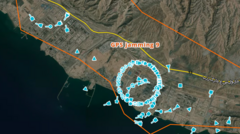
In recent months, there has been a sharp rise in two types of interference: jamming and spoofing. Jamming happens when a powerful radio signal is used to drown out the weak signals coming from GPS satellites. This causes the GPS device to lose its connection entirely. Spoofing is even more dangerous. Instead of blocking the signal, spoofing sends a fake signal that tricks the device into thinking it is in a different location. Pilots have reported their navigation systems showing them circling over cities they are nowhere near. These attacks are often used by military forces to protect themselves from drones, but the effects spread far beyond the intended targets.
Important Numbers and Facts
Data from flight tracking services shows that thousands of flights over the Middle East have been affected by these signal issues. In some parts of the Eastern Mediterranean and the Gulf, interference is present nearly 24 hours a day. Most modern planes use a system called the Global Navigation Satellite System (GNSS). While there are multiple satellite groups, such as the American GPS or the European Galileo, they all use similar radio frequencies. This makes them all vulnerable to the same types of jamming equipment. Experts note that a jammer costing only a few hundred dollars can disrupt signals for miles, while high-end military systems can affect entire regions.
Background and Context
GPS was originally created by the United States military, but it is now used by everyone for everything from food delivery to flying jumbo jets. The satellites that send these signals are about 12,000 miles above the Earth. By the time the signal reaches a phone or a plane, it is very weak. This makes it very easy for a ground-based transmitter to overpower the satellite signal. In the Middle East, many countries and groups are in conflict. They use electronic warfare to stop guided missiles and drones that rely on GPS. Unfortunately, these electronic "shields" do not have borders, and they end up hitting civilian ships and planes that are just passing through the area.
Public or Industry Reaction
Airlines and shipping companies are becoming increasingly vocal about their concerns. Pilots are being told to go back to basics, such as using ground-based radio beacons or even looking out the window to confirm their location. Some airline groups have called for governments to take more action to stop the spread of jamming technology. In the shipping world, captains are being trained to use "dead reckoning," which is a way of calculating position based on speed and direction rather than satellite data. There is a general feeling of frustration because the technology that the world has relied on for decades is suddenly becoming unreliable in one of the world's busiest trade zones.
What This Means Going Forward
The world is now looking for a "Plan B" for navigation. Since GPS can no longer be trusted 100% of the time, engineers are developing new tools. One option is "inertial navigation," which uses sensors like gyroscopes to track a vehicle's movement from its starting point without needing any outside signals. Another idea is to use ground-based radio towers, similar to how navigation worked before satellites existed. These systems are much harder to jam because their signals are much stronger. In the future, we will likely see a mix of different technologies being used together so that if one fails, the others can keep the journey safe. This shift will require billions of dollars in new equipment for planes and ships worldwide.
Final Take
The era of taking GPS for granted is over. As electronic warfare becomes a common part of modern conflict, the "invisible battle" in the skies and seas will continue to grow. Safety now depends on our ability to build systems that do not rely on a single source of information. For the average traveler, this means that while flights might still be safe, the technology keeping them on track is becoming much more complex behind the scenes. We must adapt to a world where the digital map on the screen might not always tell the truth.
Frequently Asked Questions
What is the difference between GPS jamming and spoofing?
Jamming simply blocks the GPS signal so the device cannot find a location. Spoofing sends a fake signal that makes the device believe it is in a completely different place, which is often more dangerous for pilots.
Why is this happening mostly in the Middle East?
The region has many active military conflicts. Armies use jamming to stop drones and missiles from hitting their targets. These signals often interfere with civilian planes and ships traveling nearby.
Are planes still safe to fly in these areas?
Yes, planes are still safe because pilots are trained to use other tools when GPS fails. They use ground-based radio signals and onboard sensors to stay on the correct path, though it requires more work and attention from the crew.