Summary
The political environment in Tamil Nadu has become more intense following a sharp exchange between the state's top leaders. Edappadi K. Palaniswami, the leader of the AIADMK, recently launched a verbal attack against Chief Minister M.K. Stalin and the DMK party. This happened after Stalin compared Palaniswami to Bihar Chief Minister Nitish Kumar, suggesting he frequently changes his political loyalties. Palaniswami rejected this comparison and instead claimed that the DMK and its leaders act as "slaves" to the Congress party.
Main Impact
This public disagreement marks a significant shift in how the two largest parties in Tamil Nadu are attacking each other. By using the word "slaves," Palaniswami is trying to convince voters that the DMK does not make its own decisions and instead follows orders from national leaders in Delhi. On the other hand, Stalin’s comparison to Nitish Kumar aims to paint the AIADMK as an unreliable party that might change its mind about its political partners at any time. This battle of words is likely to influence how voters see the independence and strength of both parties as they prepare for future elections.
Key Details
What Happened
The conflict started when Chief Minister M.K. Stalin spoke at a public gathering. During his speech, he brought up the name of Nitish Kumar, a politician known for moving between different political alliances. Stalin suggested that Palaniswami was following a similar path, especially after the AIADMK decided to end its partnership with the Bharatiya Janata Party (BJP). Stalin hinted that Palaniswami’s political moves are based on convenience rather than principles.
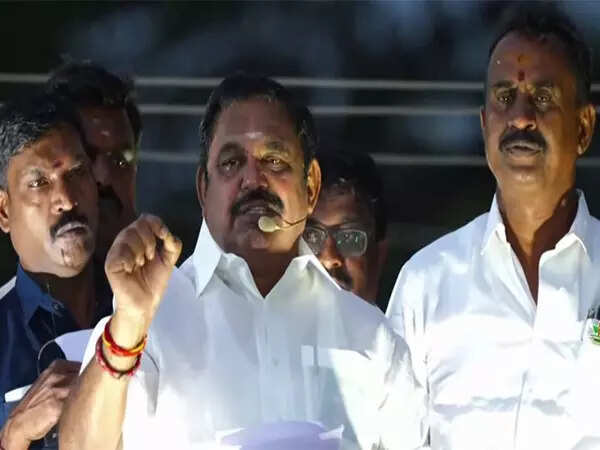
Palaniswami, often called EPS, did not wait long to respond. He held a meeting where he criticized the DMK’s long-standing relationship with the Congress party. He argued that the DMK has lost its identity and now does whatever the Congress leadership tells them to do. He stated that the AIADMK is a party that stands on its own feet and makes choices that benefit the people of Tamil Nadu, rather than following a national party's agenda.
Important Numbers and Facts
The AIADMK officially broke its alliance with the BJP in late 2023, which changed the political balance in the state. Since then, the DMK has consistently accused the AIADMK of having a "secret deal" with the BJP. Meanwhile, the DMK remains a key part of the INDIA bloc, a group of many parties led by Congress. Palaniswami pointed out that the DMK has been in and out of power with Congress for many years, using this history to support his claim that they are dependent on the national party for survival.
Background and Context
To understand this fight, it is important to know that Tamil Nadu politics usually revolves around state pride and independence from central government control. Both the DMK and AIADMK claim to be the true protectors of the state's rights. When one party accuses the other of being a "slave" to a national party like Congress or BJP, it is a very serious charge. It suggests that the party is putting the interests of leaders in Delhi above the interests of the people in Tamil Nadu.
The mention of Nitish Kumar is also significant. Nitish Kumar has switched sides multiple times in Bihar, which has made his name a symbol for political instability in India. By using this name, Stalin is trying to make voters feel that they cannot trust Palaniswami to stay consistent in his opposition to the current central government.
Public or Industry Reaction
Political experts believe that this exchange shows both parties are worried about their public image. Supporters of the DMK have praised Stalin for calling out what they see as Palaniswami's lack of a clear plan. They argue that the AIADMK is only pretending to be independent. Conversely, AIADMK supporters have shared Palaniswami’s comments widely, agreeing that the DMK often remains silent on important state issues to avoid upsetting their Congress allies. Social media has been filled with debates between the two sides, with each group trying to prove their leader is the more courageous one.
What This Means Going Forward
As the next election cycle approaches, we can expect this "independence versus loyalty" debate to grow. The AIADMK will likely continue to attack the DMK for its ties to Congress, especially on issues where the state and the central government disagree. They will try to position themselves as the only truly local party that does not take orders from outside. Meanwhile, the DMK will likely keep reminding voters of the AIADMK’s past alliance with the BJP to suggest that they might team up again in the future. This strategy helps both parties keep their core supporters excited and engaged.
Final Take
The heated exchange between Palaniswami and Stalin shows that the fight for political dominance in Tamil Nadu is becoming more personal. By trading insults about who is a "slave" and who is "unreliable," both leaders are trying to define the other before the voters do. This high-stakes name-calling reflects the deep pressure both parties feel to prove they are the best choice to lead the state without outside interference.
Frequently Asked Questions
Why did M.K. Stalin compare Palaniswami to Nitish Kumar?
Stalin used the comparison to suggest that Palaniswami is politically unstable and might change his alliances frequently, similar to how Nitish Kumar has moved between different political groups in Bihar.
What was Palaniswami's main argument against the DMK?
Palaniswami argued that the DMK is not an independent party and that it acts like a "slave" to the Congress party, following their directions instead of standing up for the state's own interests.
Is the AIADMK currently in an alliance with the BJP?
No, the AIADMK officially ended its alliance with the BJP in 2023 and has stated that it intends to move forward without a partnership with the national party.