Summary
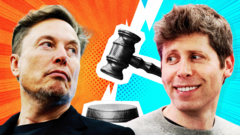
Elon Musk and Sam Altman, two of the most famous names in technology, are now fighting in court over the future of artificial intelligence. Musk, who helped start OpenAI, claims the company has moved away from its original goal of helping humanity. He argues that OpenAI has become a closed-source subsidiary of Microsoft instead of the open, non-profit group it was meant to be. This legal battle marks a major turning point for the tech industry and how AI will be developed.
Main Impact
The outcome of this legal fight could change how AI companies operate around the world. At the heart of the case is a debate about whether powerful technology should be shared with everyone or kept secret for profit. If Musk wins, it could force OpenAI to release its research and change how it works with big investors like Microsoft. This case also highlights the deep personal and professional split between leaders who once worked together to protect the world from dangerous AI.
Key Details
What Happened
The conflict began when Elon Musk filed a lawsuit against Sam Altman and OpenAI. Musk was one of the original founders and financial backers of the company in 2015. He claims that he only gave money because the group promised to be a non-profit that would share its work with the public. However, after OpenAI released ChatGPT and became very successful, it formed a close partnership with Microsoft. Musk says this violates the "founding agreement" and turns a public benefit into a private money-making machine.
Important Numbers and Facts
OpenAI started as a non-profit in 2015 with the goal of creating Artificial General Intelligence (AGI) that is safe for humans. Musk reportedly donated more than $44 million to the project in its early years. In 2019, the company shifted its structure to include a "capped-profit" branch to attract more money for expensive computer power. Since then, Microsoft has invested about $13 billion into OpenAI. Musk left the board of directors in 2018 and has since started his own competing company called xAI.
Background and Context
Years ago, Musk and Altman were friends who shared a common fear. They were worried that large companies like Google would develop AI in secret and create a machine so powerful it could harm humans. To prevent this, they created OpenAI to be a transparent alternative. They wanted the best scientists to work together to make sure AI was used for good. Over time, the cost of building these systems grew into the billions. Altman argued that the only way to get enough money was to partner with big corporations. Musk disagreed, believing that profit would eventually come before safety and openness.
Public or Industry Reaction
The tech world is divided on this issue. Some people believe Musk is right to hold OpenAI accountable for changing its mission. They worry that if the most powerful AI is kept behind closed doors, only a few wealthy people will benefit. Others think Musk is acting out of spite because he is no longer part of the most successful AI company in the world. Critics also point out that Musk’s own AI company, xAI, is a for-profit business, which makes his complaints about OpenAI’s profits seem hypocritical to some observers.
What This Means Going Forward
This case will likely take a long time to move through the legal system. It will force courts to decide what a "founding agreement" really means in the fast-moving world of tech startups. If the court sides with Musk, OpenAI might have to open up its technology, which could help competitors but might also raise safety concerns. If the court sides with Altman, it will prove that tech companies can change their non-profit status to pursue commercial success. This battle will also influence how future AI startups are funded and whether they choose to be open or closed to the public.
Final Take
The fight between Musk and Altman is more than just a disagreement between two billionaires. It is a struggle over who gets to control the "brain" of the future. As AI becomes a part of daily life, the rules set by this court case will determine if the technology stays in the hands of a few giant corporations or if it remains a tool for everyone to use. The friendship that started OpenAI is gone, and in its place is a legal war that will shape the next decade of innovation.
Frequently Asked Questions
Why is Elon Musk suing OpenAI?
Musk claims OpenAI broke its original promise to remain a non-profit and share its technology with the public. He believes the company is now focused on making money for Microsoft instead of helping humanity.
What does "Open Source" mean in this case?
Open source means that the code and research behind a program are available for anyone to see, use, and improve. Musk wants OpenAI to share its secrets, while OpenAI says keeping them private is safer and helps them fund their work.
Is Sam Altman still the head of OpenAI?
Yes, Sam Altman remains the CEO of OpenAI. Despite a brief period where he was removed by the board in late 2023, he returned to his position and continues to lead the company through its partnership with Microsoft.