Summary
The Artemis 2 mission has reached a major milestone as the Orion spacecraft begins its journey back to Earth. After traveling further into space than any human has in decades, the crew successfully passed behind the far side of the Moon. This move caused a planned communication blackout before the ship reappeared and started its return trip. This mission serves as a vital test for NASA’s goal of sending humans back to the lunar surface in the coming years.
Main Impact
This event marks the first time in over 50 years that humans have looked at the far side of the Moon with their own eyes. By completing this loop around the Moon, the Artemis 2 crew has proven that the Orion spacecraft can safely carry people through deep space. The success of this flyby brings NASA one step closer to landing the first woman and the first person of color on the lunar surface during the next mission, Artemis 3. It also shows that the systems designed to keep humans alive in space are working as they should.
Key Details
What Happened
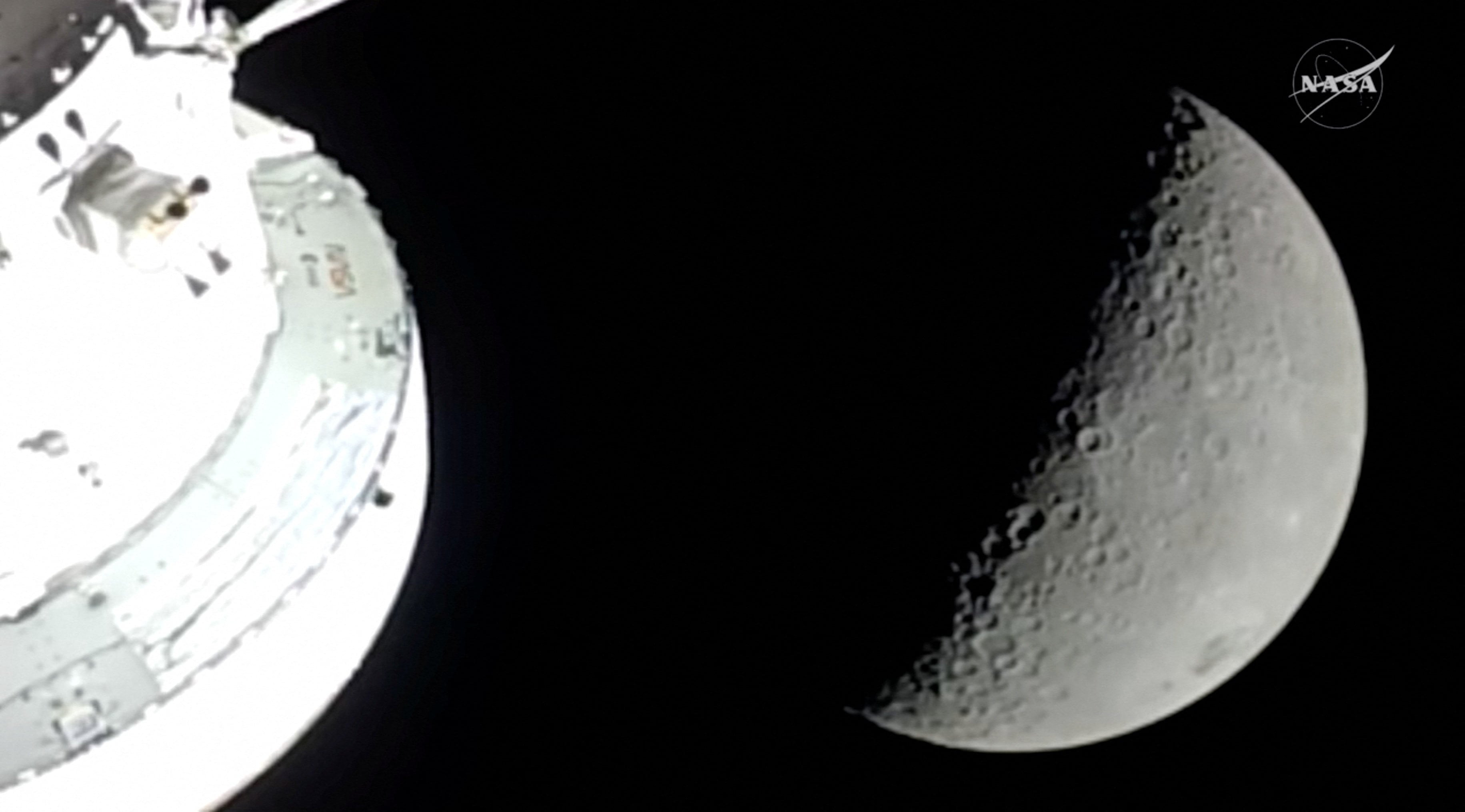
On the sixth day of the mission, the Orion spacecraft moved behind the Moon, which blocked all radio signals between the crew and Earth. This was a tense but expected moment for the team at Mission Control in Houston. Just before the signal cut out, astronaut Victor Glover sent a heartfelt message back home, saying, "We love you, from the Moon." The spacecraft spent about 41 minutes in total silence as it moved through the shadows of the lunar far side.
When the ship finally emerged from behind the Moon, the communication link was restored. Live video feeds showed a stunning view of the Earth rising over the lunar horizon. Both the Earth and the Moon appeared as thin crescents in the dark sky. This "Earthrise" moment was a powerful reminder of how far the crew had traveled from home.
Important Numbers and Facts
The communication loss began at 0:44 Spanish time on Tuesday. The signal was successfully picked up again at 1:25. During this time, the crew was traveling at high speeds, using the Moon's gravity to help sling them back toward Earth. The mission is currently on its sixth day of a planned ten-day trip. The four crew members on board are Reid Wiseman, Victor Glover, Christina Koch, and Jeremy Hansen. They are the first humans to leave low Earth orbit since the Apollo program ended in 1972.
Background and Context
The Artemis program is NASA’s modern plan to explore the Moon. While the Apollo missions of the 1960s and 70s were about getting there first, Artemis is about staying there. NASA wants to build a base on the Moon where astronauts can live and work for long periods. This will help scientists learn how to survive on another world before they try to send people to Mars.
Artemis 2 is a "test flight" with people on board. The previous mission, Artemis 1, sent an empty spacecraft around the Moon to make sure the rocket and the ship were safe. Now that humans are on board, the stakes are much higher. The crew is testing everything from the air they breathe to the way the ship handles manual steering. Passing behind the Moon is one of the most difficult parts of the trip because the crew must rely entirely on their onboard computers without help from Earth.
Public or Industry Reaction
Space fans and scientists around the world watched the live stream as the signal returned. The images of the Earth rising over the Moon's edge quickly spread across social media. Many people expressed excitement at seeing such clear, high-definition video from so far away. Experts in the space industry noted that the mission has been very smooth so far, with no major technical problems reported. The emotional exchange between Victor Glover and the ground team also touched many viewers, highlighting the human side of high-tech space exploration.
What This Means Going Forward
Now that Orion has finished its loop around the Moon, the focus shifts to the return home. The spacecraft is currently heading toward Earth at thousands of miles per hour. The most dangerous part of the trip is still to come: re-entry. When Orion hits the Earth's atmosphere, it will be moving so fast that the outside of the ship will reach temperatures of nearly 5,000 degrees Fahrenheit. The heat shield must hold together to protect the astronauts inside.
If the splashdown in the Pacific Ocean is successful, NASA will begin looking toward Artemis 3. That mission will involve docking with a separate landing craft to put boots on the ground near the Moon's South Pole. The data gathered during this current flight will be used to make sure that future landing is as safe as possible.
Final Take
The successful flyby of the Moon's far side is a historic achievement for the Artemis 2 crew. It proves that human curiosity and modern technology can take us back to the stars. As the Orion spacecraft speeds toward its ocean landing, the world is watching a new era of space travel begin. This mission is not just about a single trip; it is about opening the door for humans to live and work in deep space for generations to come.
Frequently Asked Questions
Why did the spacecraft lose contact with Earth?
The spacecraft lost contact because it moved behind the Moon. Since the Moon is a solid object, it blocks radio waves from traveling between the ship and the antennas on Earth. This is a normal part of any mission that goes around the Moon.
Who are the astronauts on the Artemis 2 mission?
The crew consists of four people: Commander Reid Wiseman, Pilot Victor Glover, and Mission Specialists Christina Koch and Jeremy Hansen. They are the first crew to fly the Orion spacecraft into deep space.
When will the mission end?
The mission is expected to last about ten days in total. After completing its loop around the Moon, the Orion spacecraft will travel back to Earth and land in the Pacific Ocean, where recovery teams will be waiting to pick up the crew.