
Summary
Agnikul Cosmos, a space technology company based in India, has successfully tested a new rocket engine made entirely through 3D printing. This booster engine is the first of its kind and represents a major shift in how space hardware is built. By using 3D printing, the company can produce a full engine in just one week, which is much faster than the months required by traditional methods. This breakthrough could make it cheaper and easier for companies to send small satellites into space.
Main Impact
The successful test of this 3D-printed engine changes the speed at which rockets can be built. In the past, making a rocket engine was a slow and difficult process that involved joining hundreds of different parts together. Agnikul has simplified this by printing the engine as a single piece. This reduces the chance of parts failing and cuts down the time needed for assembly. It allows the company to move from a design on a computer to a finished product ready for testing in a fraction of the time usually expected in the aerospace industry.
Key Details
What Happened
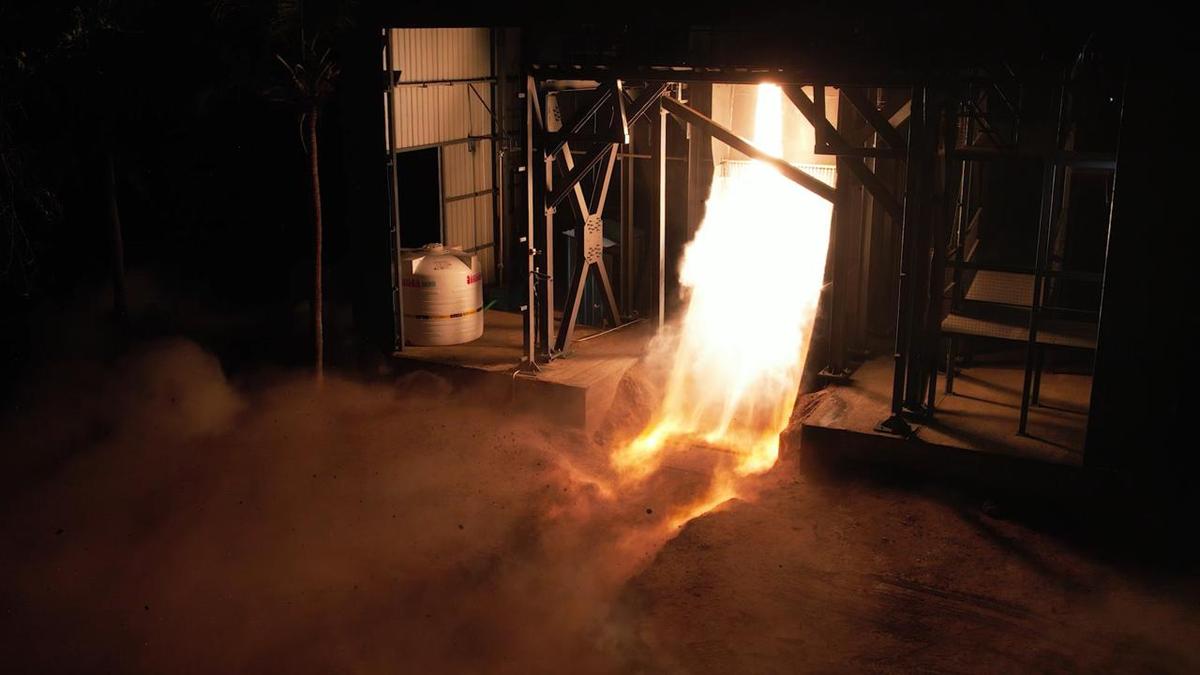
The company conducted a test fire of its "Agnite" booster engine to ensure it could handle the extreme heat and pressure of a launch. During the test, the engine performed as expected, proving that 3D-printed materials are strong enough for space travel. This engine is designed to power the company's custom rocket, which aims to carry small payloads into Earth's orbit. The test was a critical step in proving that their manufacturing process is safe and effective.
Important Numbers and Facts
The most impressive figure from this development is the production time. While a standard rocket engine often takes three to six months to manufacture, Agnikul can print theirs in only seven days. The engine is created using a process called "additive manufacturing," where a machine builds the object layer by layer using metal powder and a high-power laser. Because the engine is printed as one solid component, it eliminates the need for thousands of bolts, welds, and seals that usually hold an engine together.
Background and Context
For a long time, space travel was something only large governments could afford. However, in recent years, private companies have started building their own rockets. Agnikul Cosmos, which started at the Indian Institute of Technology Madras, is part of this new wave of space startups. Their goal is to provide "on-demand" space launches. This means instead of waiting years for a spot on a large rocket, small satellite owners can book a flight on a smaller, cheaper rocket that is built specifically for their needs. Using 3D printing is the key to making these frequent and affordable launches possible.
Public or Industry Reaction
Experts in the space industry have praised the test as a sign of India's growing strength in private space technology. Engineers have noted that printing an entire engine as one piece is a difficult technical feat. By successfully firing the engine, Agnikul has shown that they can compete with larger international space firms. Many see this as a turning point that will encourage more investment in automated manufacturing for high-tech industries. The success also highlights the role of young startups in solving old engineering problems with new tools.
What This Means Going Forward
The next step for Agnikul is to integrate this engine into their full rocket, named Agnibaan. They plan to conduct more tests to ensure the rocket can fly safely through the atmosphere. If these tests go well, the company will begin offering launch services to customers around the world. This could lead to a future where rockets are produced almost like cars on an assembly line. As the technology improves, we may see even larger parts of spacecraft being 3D printed, further reducing the cost of exploring our solar system.
Final Take
The ability to print a rocket engine in seven days is a massive achievement for the space sector. It moves the industry away from slow, manual labor and toward fast, automated production. This test proves that 3D printing is no longer just for making plastic models; it is now a reliable way to build the powerful machines that will take us into space. By making rockets faster and cheaper, Agnikul is helping to open the doors of space to everyone.
Frequently Asked Questions
How long does it take to print the engine?
Agnikul can fully 3D print one of these rocket engines in just seven days, compared to several months for traditional engines.
Why is 3D printing better for rockets?
It allows the engine to be made as a single piece, which reduces the number of parts that could break and makes the manufacturing process much faster and cheaper.
What is the name of the rocket this engine will power?
The engine is designed for a rocket called Agnibaan, which is built to carry small satellites into space on demand.



