
Summary
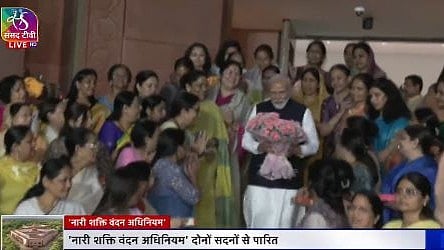
The Congress party has voiced strong opposition to the government's new bills regarding women's reservation in Parliament. Party leaders described the legislation as "mischievous" and warned that it could negatively change the political balance of the country. The main concern involves linking the reservation of seats for women to the redrawing of voting district boundaries. Congress argues that the current proposal should be rejected because it may unfairly benefit certain states over others.
Main Impact
The biggest impact of these bills is the potential shift in how power is shared between different states in India. By connecting women's quotas to "delimitation"—the process of changing the size and number of voting areas—the government could significantly increase the number of seats in states with very large populations. Critics fear this will give more influence to regions where the ruling party is currently strongest, while reducing the voice of other regions in the national government.
Key Details
What Happened
On Thursday, Congress General Secretary Jairam Ramesh attacked the government’s plan during a public statement. He claimed that while the bills are being marketed as a way to empower women, their true purpose is to change the political map of the country. The government has introduced three specific pieces of legislation: the Constitution (One Hundred and Thirty-First Amendment) Bill, the Delimitation Bill, and the Union Territories Laws (Amendment) Bill. These bills aim to set aside one-third of all seats in legislatures for women.
Important Numbers and Facts
The proposed changes are massive in scale. If the bills pass, the number of seats in the Lok Sabha could grow from 543 to as many as 850. This expansion is designed to make it easier to implement the 33 percent reservation for women before the 2029 general election. To pass these laws, the government needs a two-thirds majority in Parliament. Currently, the ruling National Democratic Alliance (NDA) holds 292 seats, while the opposition parties hold 233 seats. This means the government will need support from outside its own alliance to succeed.
Background and Context
The idea of reserving seats for women in India’s Parliament and state assemblies has been discussed for many years. Most political parties agree that women need better representation. However, the disagreement lies in how to do it. The government wants to wait until they can redraw the boundaries of all voting districts based on population data from the 2011 Census. The Congress party and its allies argue that this is an unnecessary delay. They believe the reservation should be applied to the existing seats immediately. They also want to ensure that women from Scheduled Castes, Scheduled Tribes, and Other Backward Classes (OBCs) have their own specific quotas within the 33 percent.
Public or Industry Reaction
Opposition leaders have come together to form a united front against the current version of the bills. Congress President Mallikarjun Kharge and leaders from other parties, including the Aam Aadmi Party, held a meeting to coordinate their strategy in Parliament. They have accused the government of using the bills as a political tool rather than a sincere effort to help women. Jairam Ramesh pointed to previous boundary changes in places like Assam and Jammu and Kashmir as examples of how the process can be used for political gain. The opposition insists that they support women's rights but cannot accept the "hidden" changes to the voting system.
What This Means Going Forward
A special three-day session of Parliament is expected to be very tense as these bills are debated. Union Law Minister Arjun Ram Meghwal and Home Minister Amit Shah are leading the effort to pass the legislation. If the bills are approved, it will trigger a major reorganization of how Indians vote and how many representatives each state sends to the capital. If the bills fail, it could lead to a long delay in women getting the promised reservation. The next few days will show whether the government can convince enough opposition members to support their vision for a larger Parliament.
Final Take
The fight over the women’s quota bills is about much more than gender equality; it is a battle over the future of political power in India. While the goal of bringing more women into leadership is widely supported, the method of redrawing the entire political map has created deep distrust. The outcome of this debate will shape the fairness and balance of the Indian electoral system for decades to come.
Frequently Asked Questions
What is delimitation?
Delimitation is the process of redrawing the boundaries of voting areas, or constituencies, to make sure each area has a similar number of voters based on the latest population data.
Why does the Congress party oppose the bills?
Congress supports women's reservation but opposes linking it to the redrawing of voting districts. They fear this will give too much power to populous states and want the reservation to start immediately without changing boundaries.
How many seats will be added to the Lok Sabha?
The government's proposal could increase the number of seats in the Lok Sabha from the current 543 to 850 to accommodate the new women's quota.

