
Summary
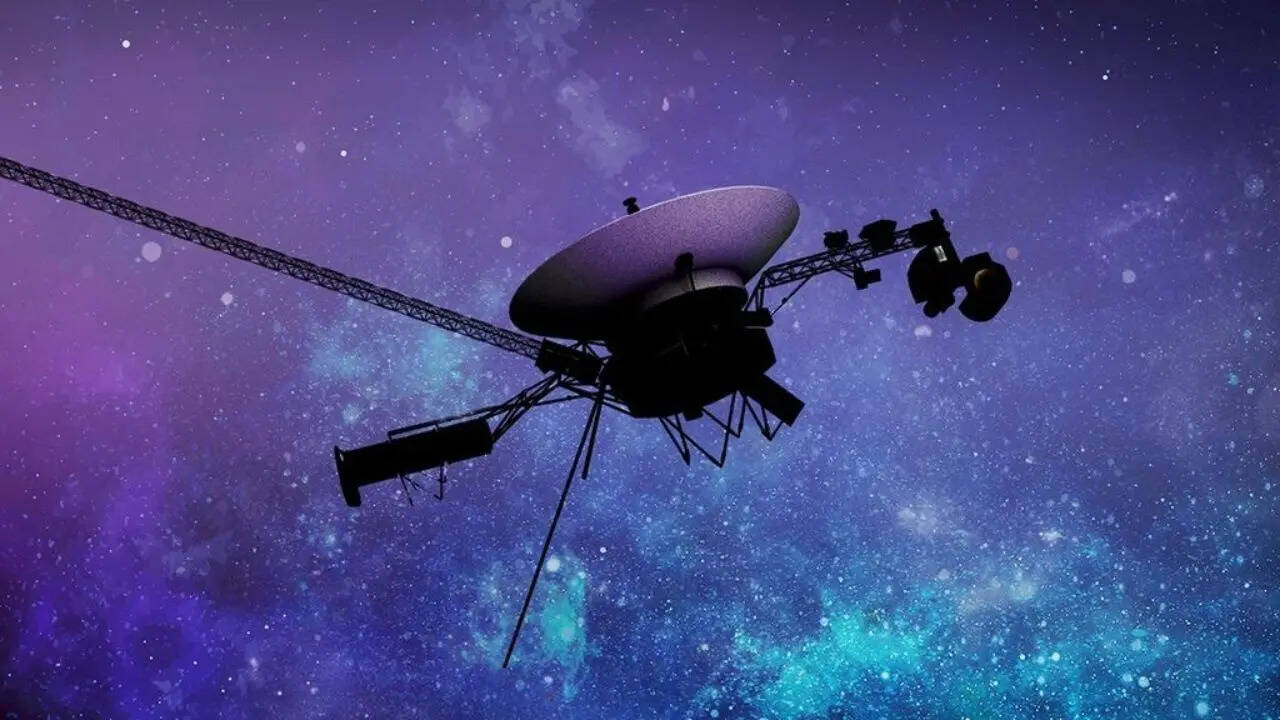
Voyager 1 is the most distant human-made object in history and has been traveling through space for nearly 50 years. It is currently moving through the area between stars, far beyond the edge of our solar system. Despite its extreme age and several technical failures, NASA engineers have successfully kept the probe running. This mission provides unique data about deep space that no other spacecraft can currently reach.
Main Impact
The survival of Voyager 1 is a major achievement for the scientific community. It is the only spacecraft sending back information from interstellar space, which is the space outside the influence of our sun. This data helps scientists understand the environment of the galaxy and how it interacts with our solar system. Without this aging probe, we would have no direct way to study the conditions in this distant part of the universe.
Key Details
What Happened
In recent months, Voyager 1 faced a series of life-threatening technical problems. The most serious issue involved a computer glitch that caused the probe to send back unreadable data. Engineers discovered that a single memory chip in the flight data system had failed. To fix it, the team had to find a way to move the broken code to a different part of the computer. This was difficult because the technology is from the 1970s, and the engineers had to study old paper manuals to understand the system.
Another challenge involved the probe's thrusters, which are used to keep its antenna pointed at Earth. After decades of use, the fuel lines became clogged with a buildup of chemicals. NASA successfully switched the probe to a different set of backup thrusters to ensure it could still talk to ground control. Each of these fixes is a high-stakes gamble because of the massive distance involved.
Important Numbers and Facts
Voyager 1 was launched on September 5, 1977. It is now more than 15 billion miles away from Earth. Because of this distance, it takes about 23 hours for a radio signal to travel from Earth to the probe. This means it takes nearly two full days to send a command and receive a response. The spacecraft travels at a speed of roughly 38,000 miles per hour. It has been operating for 49 years, which is far longer than its original five-year mission plan.
Background and Context
Voyager 1 was originally built to study the planets Jupiter and Saturn. After completing those goals in 1980, it continued its journey toward the edge of the solar system. In 2012, it made history by crossing into interstellar space. The probe carries a famous "Golden Record," which is a gold-plated disc containing sounds, music, and images from Earth. This record is intended to act as a message for any intelligent life that might find the spacecraft in the distant future.
Public or Industry Reaction
The general public and space experts are often amazed that Voyager 1 is still working. Many people refer to it as a "miracle of engineering." Scientists at NASA’s Jet Propulsion Laboratory are highly respected for their ability to repair a machine that is billions of miles away using technology that is much older and simpler than a modern car key. The mission has become a symbol of human curiosity and the desire to explore the unknown.
What This Means Going Forward
The future of Voyager 1 is limited by its power supply. The probe runs on electricity generated from the heat of a small amount of plutonium. Every year, the amount of heat decreases, and the probe loses about four watts of power. To save energy, NASA has already turned off most of the probe's heaters and several scientific tools. Eventually, there will not be enough power to run any instruments at all. Experts believe the probe will finally go silent sometime around 2030. Even after it stops communicating, it will continue to drift through the Milky Way for millions of years.
Final Take
Voyager 1 is a bridge between our world and the stars. Its long life shows the incredible skill of the people who built it and those who continue to fly it today. While the mission will one day come to an end, the information it has gathered has changed our view of the universe forever. It remains a lonely but steady messenger for humanity in the deep dark of space.
Frequently Asked Questions
How does Voyager 1 get power so far from the sun?
It does not use solar panels because the sun is too dim at that distance. Instead, it uses a nuclear battery that turns the heat from decaying plutonium into electricity.
Can Voyager 1 ever return to Earth?
No, it is moving too fast for the sun's gravity to pull it back. It is on a one-way trip out of our solar system and will travel through the galaxy indefinitely.
What happens if the probe hits an asteroid?
Space is mostly empty, so the chance of hitting something is very small. Voyager 1 is likely to travel for billions of years without ever bumping into a large object.

