
Summary
Residents in Vadodara’s Ward Number 11 are expressing deep anger as the local municipal elections approach. People living in areas like Diwalipura and Gadapura say they are struggling with dirty drinking water and overflowing sewage systems. Many citizens claim that local leaders only visit their neighborhoods during election time to buy votes with gifts and money. This report highlights the daily struggles of families who feel ignored by the city government despite paying their taxes regularly.
Main Impact
The poor state of basic services is having a serious effect on the health and finances of local families. Because the drinking water is often mixed with sewage, many children and elderly people are falling ill with stomach pains and viral infections. Families are also facing a heavy financial burden. Many are forced to spend hundreds of rupees on private water tankers or thousands of rupees to fix broken drainage lines themselves because the city authorities fail to take action.
Key Details
What Happened
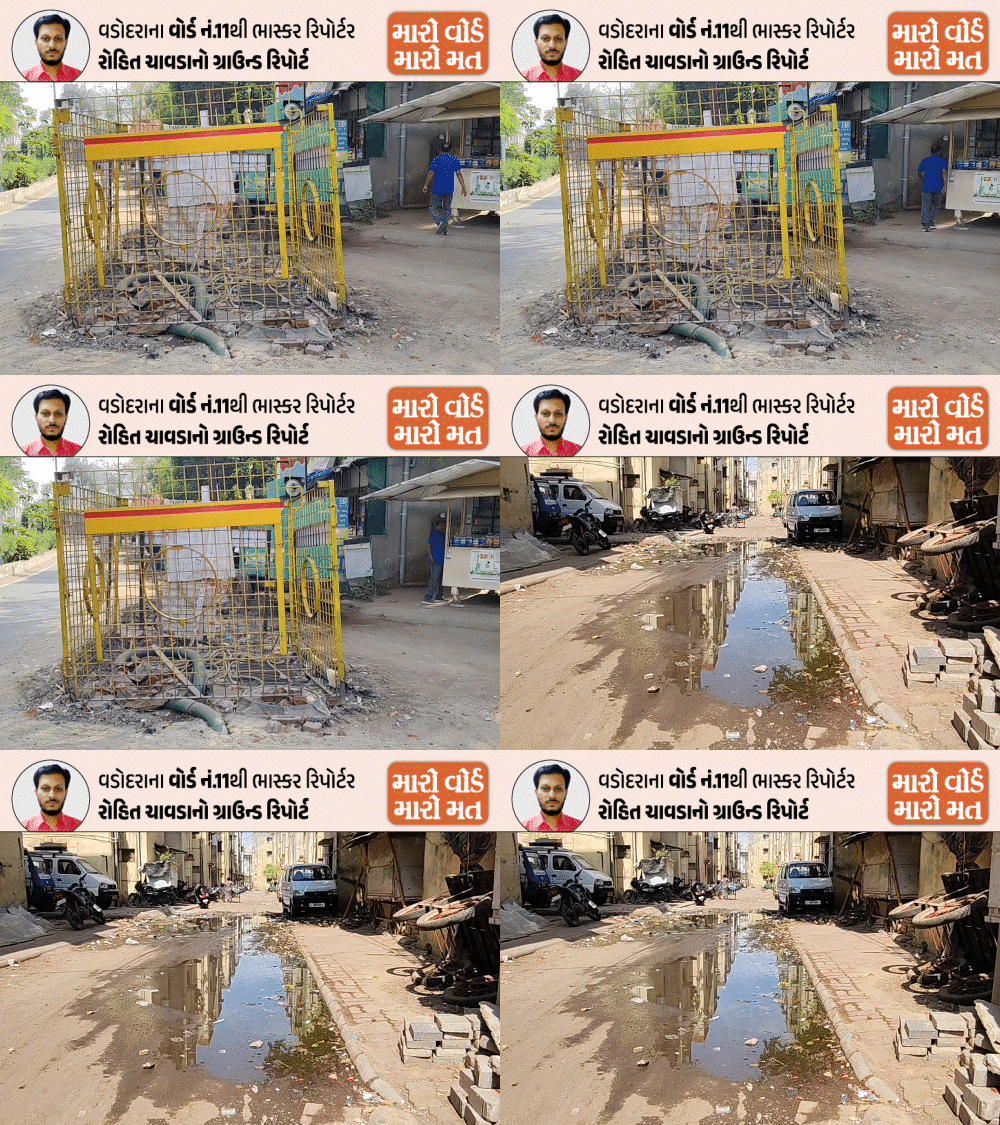
In several neighborhoods within Ward 11, the infrastructure has almost completely failed. In Diwalipura, residents showed reporters water tanks filled with black, smelly sewage water instead of clean drinking water. In Gadapura, the situation is even worse in the government-built housing colonies. The drainage lines are blocked, causing waste to spill out onto the streets where children play. Residents say that when they complain, workers only perform temporary fixes that stop working after a few days.
Important Numbers and Facts
The scale of the problem is clear from the stories told by the locals. One resident, Kapilaben, reported spending 40,000 rupees of her own savings to try and fix the drainage near her home. Another resident, Vibhuti Patel, explained that her family has to pay 600 rupees for a private water tanker because the city water pressure is too low to use. In some areas, the flooding during the monsoon is so severe that families have to move out of their homes for an entire month. Some residents have lived with these water issues for over ten years without a permanent solution.
Background and Context
Vadodara is one of the largest cities in the state, and Ward 11 is located in a central part of the city. Usually, these areas are expected to have the best facilities. However, the residents feel that while the city builds big bridges and libraries, the basic needs like clean water and working toilets are being forgotten. This gap between "big projects" and "basic needs" has created a lot of tension between the public and the people they elected to represent them.
Public or Industry Reaction
The public reaction is one of pure frustration. An elderly resident named Amarsinhbhai made a serious claim, saying that politicians try to buy votes using money, clothes, and alcohol when the election gets close. He even had to climb into a 15-foot deep sewer himself to clean it because the city workers refused to help. On the other hand, the former Deputy Mayor, Chirag Barot, defended the government’s work. He pointed out that the city is spending millions on new bridges, a guest house, and a modern library in the ward. He admitted that problems exist but insisted that his team is working hard to fix them.
What This Means Going Forward
The upcoming election will be a major test for the current leaders. Many residents have threatened to boycott the vote or vote for someone else if their pipes are not fixed. If the city government does not address the sewage-mixed water soon, there is a high risk of a major disease outbreak in these crowded neighborhoods. The focus for the next few months will likely be on whether the city can provide basic clean water rather than just building new roads and bridges.
Final Take
A city cannot be called "developed" if its citizens have to drink water mixed with sewage. While new bridges and libraries are good for a city's image, they do not replace the need for clean water and working drains. The anger in Ward 11 shows that voters are tired of broken promises and want real solutions to the problems inside their homes and on their streets.
Frequently Asked Questions
Why are the residents of Ward 11 angry?
They are angry because their drinking water is mixed with sewage, the drains are constantly overflowing, and they feel that local politicians only visit them during election time.
How are people getting water if the city supply is dirty?
Many families are forced to buy private water tankers, which cost about 600 rupees each, or they have to carry water from nearby temples and other areas.
What is the government's response to these complaints?
Former local leaders say they are working on large projects like new bridges and libraries. They claim that while some problems remain, they are making progress on improving the area's infrastructure.



