Summary
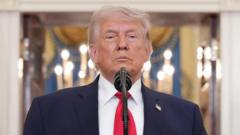
President Donald Trump has issued a stern and aggressive warning to Iran following the closure of the Strait of Hormuz. Using harsh language, the President stated that the United States would take military action against Iranian infrastructure if the vital shipping route is not reopened immediately. This development has raised concerns about a potential military conflict and the stability of global energy markets.
Main Impact
The most immediate impact of this threat is the increased risk of a direct military confrontation between the United States and Iran. Because the Strait of Hormuz is a critical path for global oil shipments, any disruption there causes immediate panic in the financial markets. If the threat is carried out, the destruction of Iranian power plants and bridges would not only cripple Iran's economy but could also lead to a wider war in the Middle East. This situation puts pressure on global oil prices, which often rise when there is a threat to supply lines.
Key Details
What Happened
The situation began when Iran moved to block the Strait of Hormuz, a narrow waterway that connects the Persian Gulf with the rest of the world's oceans. In response, President Trump delivered a message filled with strong language, warning the Iranian leadership of severe consequences. He specifically mentioned that the U.S. military would target non-military infrastructure, such as bridges and power grids, to force the country to back down. This type of threat is seen as a major escalation in the war of words between the two nations.
Important Numbers and Facts
The Strait of Hormuz is often called the world's most important oil "chokepoint." Approximately 20 to 30 percent of the world's total oil consumption passes through this waterway every day. This includes oil from major producers like Saudi Arabia, Iraq, and the United Arab Emirates. The strait is only about 21 miles wide at its narrowest point, making it very easy to block with naval mines or warships. If the waterway remains closed for an extended period, experts suggest that gas prices in many countries could double or triple in a matter of weeks.
Background and Context
To understand why this is happening, it is important to look at the history of the region. The United States and Iran have had a difficult relationship for many years. Tensions often center on Iran's nuclear program and its influence in neighboring countries. Iran has used the threat of closing the Strait of Hormuz in the past as a way to respond to economic sanctions. By stopping the flow of oil, Iran can hurt the economies of the Western nations that are pressuring it. The U.S. Navy maintains a strong presence in the area to ensure that trade continues, but this latest move by Iran is a direct challenge to that mission.
Public or Industry Reaction
The reaction from the international community has been one of deep concern. Oil companies and shipping firms are closely watching the situation, with some already considering alternative routes, though few exist that are as efficient. Diplomatic leaders from Europe and Asia have called for both sides to show restraint. Many fear that a single mistake or a small skirmish could lead to a full-scale war. Within the United States, political reactions are split. Some support the President's "tough talk" as a necessary way to deter Iranian aggression, while others worry that using such aggressive language makes a peaceful solution harder to find.
What This Means Going Forward
In the coming days, the focus will be on whether Iran decides to reopen the waterway or if it will continue to challenge the U.S. warning. The U.S. military is likely to increase its patrols in the region to protect commercial ships. If Iran does not back down, the world will be watching to see if the U.S. actually carries out its threat to strike Iranian soil. Any military action would likely lead to a response from Iran, which could include attacks on U.S. bases in the region or further disruptions to shipping. The next steps will depend on whether diplomacy can replace the current threats of force.
Final Take
The threat issued by President Trump highlights the extreme tension in one of the world's most sensitive regions. While the goal is to keep global trade moving, the use of such direct and harsh language increases the stakes for everyone involved. The world economy relies on the free flow of oil through the Strait of Hormuz, and any conflict there would have consequences that reach far beyond the borders of the Middle East. The situation remains highly unstable, and the risk of a major crisis is higher than it has been in years.
Frequently Asked Questions
Why is the Strait of Hormuz so important?
It is the main route for oil leaving the Persian Gulf. About one-fifth of the world's oil passes through this narrow waterway, making it essential for global energy supplies and the economy.
What did President Trump threaten to do?
The President warned that the U.S. would destroy Iranian infrastructure, specifically mentioning power plants and bridges, if Iran does not stop blocking the strait.
How could this affect regular people?
If the strait remains blocked or a war starts, the price of oil will likely go up. This means people would pay much more for gasoline and electricity, and the cost of shipping goods would also increase.