Summary
President Donald Trump has decided not to use the United States' emergency oil supply despite a sharp rise in fuel costs. This decision comes after oil prices jumped following the start of a war involving the U.S., Israel, and Iran. While gas prices are climbing for American drivers, the president believes the market will fix itself without government help. He stated that the country has plenty of oil and that the current supply issues will be resolved quickly.
Main Impact
The choice to keep the Strategic Petroleum Reserve closed means that gas prices may continue to rise in the short term. For many families, higher fuel costs make it harder to pay for groceries and other daily needs. This situation is also creating political pressure for the government. With midterm elections approaching in November, voters are closely watching how the administration handles the rising cost of living. By not releasing more oil, the government is relying on private companies and global trade to bring prices back down.
Key Details
What Happened
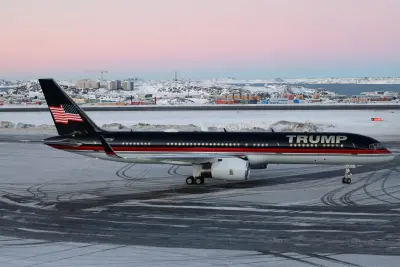
During a recent trip on Air Force One, reporters asked President Trump if he would release oil from the national reserve. The war in the Middle East has made it harder and more expensive to move oil around the world. This has caused a sudden spike in the price of crude oil. However, Trump told reporters that the U.S. has a "tremendous amount" of oil and does not need to use the emergency stockpile yet. He also criticized how the reserve was used in the past and said he wants to focus on filling it back up when the time is right.
Important Numbers and Facts
The cost of oil has moved up very fast in just one week. The international price for a barrel of oil reached $92.69, which is an 8.5% increase. In the United States, the price for a barrel of crude oil rose by more than 12% to reach $90.90. These are the highest prices seen since 2023. At the gas pump, the average price for a gallon of gas in the U.S. is now around $3.41. This is an increase of 43 cents compared to only a week ago. Some states are seeing even higher prices, with California averaging over $5.00 per gallon.
Background and Context
The Strategic Petroleum Reserve is a massive collection of oil kept in underground salt caverns. These caverns are located in Texas and Louisiana. The reserve was started in the 1970s after a major oil shortage caused problems for the U.S. economy. Its purpose is to provide a safety net during wars or natural disasters that stop the flow of oil. Currently, the reserve holds about 415 million barrels of oil. While this is a lot, it is much less than the 726 million barrels it held at its peak years ago. The reserve was used heavily in 2022 to help lower prices after the invasion of Ukraine, which brought the supply to its lowest level since the 1980s.
Public or Industry Reaction
There is a lot of debate about whether the president should act. Some people believe that using the reserve is the only way to help low-income families who are struggling with high gas bills. Others agree with the president that the reserve should only be used for extreme emergencies. To help ease the pressure, the Treasury Department recently allowed India to keep buying oil from Russia for a short time. This was done to make sure there is enough oil moving through the global market so that prices do not go even higher. However, many people are still worried that if the war lasts a long time, these small steps will not be enough to keep costs down.
What This Means Going Forward
The future of gas prices depends on how long the conflict in the Middle East lasts. If the war continues to disrupt oil production, prices could stay high for many months. Refineries usually buy their oil weeks or months in advance. This means that even if the war ended today, it might take a while for gas prices at the local station to go back down. The Trump administration has said it will watch the situation closely. The president mentioned that he would use his "gut instinct" to decide when to start buying more oil to refill the national reserve. For now, the plan is to wait and see if the market stabilizes on its own.
Final Take
The decision to hold back the nation's oil reserves is a significant move that highlights the administration's belief in domestic energy strength. While the immediate result is higher costs for drivers, the government is betting that the global oil market will recover without intervention. Whether this strategy works will depend on the stability of the Middle East and the ability of oil companies to keep up with demand. For now, Americans will have to manage the rising costs at the pump as the global situation continues to change.
Frequently Asked Questions
Why are gas prices going up so fast?
Gas prices are rising because of the war between the U.S., Israel, and Iran. This conflict makes it harder to produce and ship oil, which causes the global price of crude oil to increase.
What is the Strategic Petroleum Reserve?
It is a large supply of emergency oil stored in underground salt caverns in the southern United States. It is meant to be used during major emergencies like wars or natural disasters.
Will the government do anything to lower prices?
Currently, the administration is not using the oil reserve. They have taken smaller steps, such as allowing some international oil trades to continue, but they are mostly waiting for the market to fix itself.