Summary
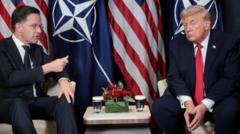
President Donald Trump has voiced strong criticism against NATO, claiming the military alliance failed to support the United States during past tensions with Iran. During a high-level meeting, the President suggested that the group is not doing enough to help with global security issues outside of Europe. The head of NATO described the discussions as very honest and direct, signaling a growing divide between the U.S. and its long-term allies. This disagreement raises new questions about the future of international military cooperation.
Main Impact
The primary impact of these comments is a renewed strain on the relationship between the United States and its European partners. By questioning NATO's loyalty during the Iran conflict, the President is challenging the core purpose of the alliance. If the U.S. continues to feel that the group does not provide enough support, it could lead to a reduction in American funding or military presence in Europe. This shift forces other member countries to reconsider their own defense budgets and how they handle security threats without relying solely on American power.
Key Details
What Happened
During a recent gathering of world leaders, President Trump expressed his disappointment with the North Atlantic Treaty Organization, commonly known as NATO. He specifically pointed to the "Iran war" or conflict period, stating that the alliance was absent when the United States needed help the most. He argued that while the U.S. spends a massive amount of money to protect Europe, the favor is not returned when American interests are at stake in the Middle East. In response, the NATO Secretary General acknowledged that the talks were difficult but necessary for the health of the alliance.
Important Numbers and Facts
The United States currently provides a significant portion of NATO’s total budget. For years, the U.S. has asked other member nations to spend at least 2% of their gross domestic product on defense. While some countries have increased their spending, many still fall short of this goal. The President’s recent comments suggest that even if countries meet their spending targets, he expects the alliance to broaden its focus beyond the borders of Europe. The meeting lasted several hours, with officials describing the atmosphere as tense but professional.
Background and Context
NATO was created many years ago to ensure that North American and European nations would protect each other from attacks. For a long time, the main focus was on preventing conflict in Europe. However, the world has changed, and new threats have emerged in other regions like the Middle East. The U.S. government has often felt that it carries too much of the burden for global security. President Trump has been a vocal critic of this arrangement since his first term, often calling the alliance outdated. He believes that if the U.S. is going to pay for the protection of others, those nations must be willing to help the U.S. in any conflict, regardless of where it happens.
Public or Industry Reaction
The reaction to these comments has been mixed. Some political experts in the United States agree with the President, stating that it is time for Europe to take more responsibility for its own safety. They argue that the U.S. cannot be the world's only police force. On the other hand, many European leaders are concerned. They believe that NATO’s strength comes from its focus on collective defense in the Atlantic region. Some diplomats have expressed worry that these public disagreements make the alliance look weak to its enemies. They fear that if the U.S. pulls back, it could lead to more instability in the world.
What This Means Going Forward
Moving forward, we can expect more pressure on NATO members to change how they operate. There will likely be more meetings to discuss how the alliance can help with threats like terrorism and regional conflicts in the Middle East. If the member nations cannot reach an agreement, the U.S. might start making its own security deals with individual countries instead of working through the group. This would be a major change in how international politics has worked for decades. The next few months will be critical as leaders try to find a middle ground that keeps the U.S. satisfied while maintaining the unity of the alliance.
Final Take
The bond between the U.S. and NATO is facing one of its toughest tests. While the alliance has lasted for over 70 years, the demand for more balance and broader support is becoming impossible to ignore. Whether the group can adapt to these new demands or if it will slowly break apart remains the biggest question for global leaders today. Clear communication and a shared vision will be the only way to keep the partnership alive in a changing world.
Frequently Asked Questions
Why is the President criticizing NATO?
The President believes that NATO does not provide enough support to the United States during conflicts outside of Europe, specifically mentioning Iran. He also feels the U.S. pays too much of the costs compared to other members.
What does "very frank" mean in this context?
In the world of politics, "very frank" is a polite way of saying that the leaders had a very serious and direct argument. It means they did not agree on many things and spoke very honestly about their frustrations.
What is the 2% spending goal?
NATO members have agreed to try and spend 2% of their country's total economic output on their military. The U.S. wants all members to reach this goal to ensure everyone is contributing fairly to the alliance's strength.