
Summary
The Surat Municipal Corporation (SMC) is entering a new term without an official Leader of the Opposition. This unusual situation occurred because the Bharatiya Janata Party (BJP) won a massive majority in the local elections, leaving rival parties with very few seats. Under the current rules, a political party must win a specific number of seats to claim the leadership post for the opposition. Since no other party met this requirement, the position will remain empty, giving the ruling party almost total control over the city council.
Main Impact
The absence of a Leader of the Opposition changes how the local government in Surat functions. Usually, this role is vital for checking the power of the ruling party and asking tough questions about how public money is spent. Without a recognized leader from a rival party, the BJP will face much less formal resistance during council meetings. This could lead to faster approvals for new projects, but it also means there will be less public debate on controversial decisions affecting the city's residents.
Key Details
What Happened
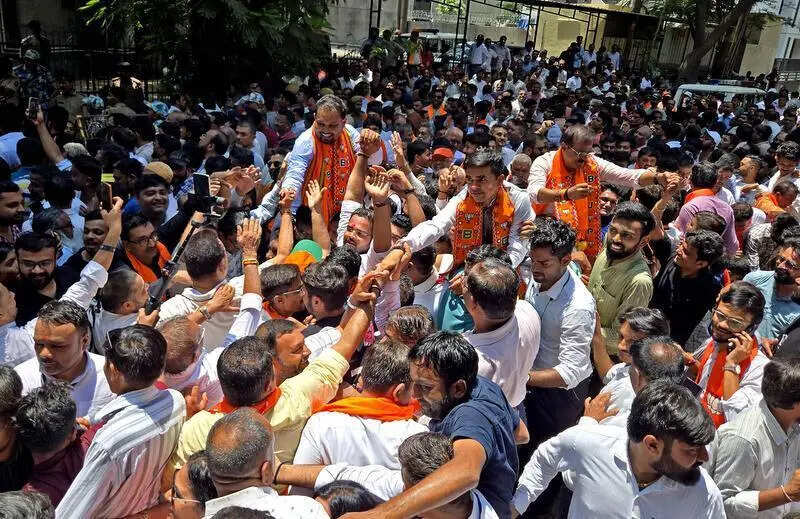
In the most recent political cycle, the BJP managed to sweep the majority of the seats in the Surat Municipal Corporation. The Aam Aadmi Party (AAP) and the Indian National Congress, which are the main rivals, saw their numbers drop significantly. In the past, these parties held enough seats to challenge the BJP and hold official leadership roles within the opposition. However, after several members switched parties and others lost their seats in the election, the remaining opposition members are now too few to qualify for the official post of Leader of the Opposition.
Important Numbers and Facts
The Surat Municipal Corporation consists of 120 elected seats. According to the established rules for local governance in Gujarat, a party needs to hold at least 10% of the total seats to be eligible for the Leader of the Opposition post. This means a party must have at least 12 members in the council. Currently, the BJP holds the vast majority of these seats, while the AAP and Congress fall well below the 12-seat mark. Because the law looks at individual parties rather than a combined group of rivals, the post cannot be filled by a coalition of smaller parties.
Background and Context
Surat is one of the largest and fastest-growing cities in India, known for its diamond and textile industries. The municipal corporation is responsible for managing the city's infrastructure, including roads, water supply, and public health. For many years, the city council had a balanced structure where the opposition could voice the concerns of citizens who did not vote for the ruling party. However, the political climate in Gujarat has shifted toward a single-party dominance in urban areas. This latest development in Surat is a clear example of how traditional opposition parties are struggling to maintain a foothold in major municipal bodies.
Public or Industry Reaction
Political observers have expressed mixed feelings about this development. Some experts argue that a healthy democracy requires a strong opposition to ensure transparency and prevent the misuse of power. They worry that without an official leader to represent the minority voice, the needs of some citizens might be ignored. On the other side, supporters of the ruling party believe that the "clean sweep" is a sign of the public's trust. They suggest that a unified council will be more efficient and can focus on development without the delays often caused by political disagreements.
What This Means Going Forward
Going forward, the BJP will have a clear path to implement its policies and budgets in Surat. The lack of an official opposition leader means that the formal office, staff, and special powers given to that role will not be used. For the AAP and Congress, the next few years will be a time of rebuilding. They will need to find ways to influence city policy from the outside or through the few members they still have in the council. The city's residents will have to see if this one-sided power structure leads to better services or if the lack of oversight creates new challenges for the local government.
Final Take
The current state of the Surat Municipal Corporation marks a major shift in local politics. While the BJP celebrates a historic victory, the empty seat of the opposition leader serves as a reminder of the changing political environment in the region. The city now moves into a period where the ruling party holds almost all the cards, leaving the responsibility of accountability largely to the public and the media.
Frequently Asked Questions
Why is there no Leader of the Opposition in Surat?
No opposition party won the required 10% of the total seats in the municipal corporation. Without at least 12 seats, a party cannot officially claim the leadership role.
Which party currently controls the Surat Municipal Corporation?
The Bharatiya Janata Party (BJP) holds a massive majority and controls the decision-making process in the council.
Can the opposition parties join together to pick a leader?
Under the current rules, the 10% requirement applies to a single political party. Even if different opposition parties work together, they do not qualify for the official post unless one party has enough seats on its own.



