
Summary
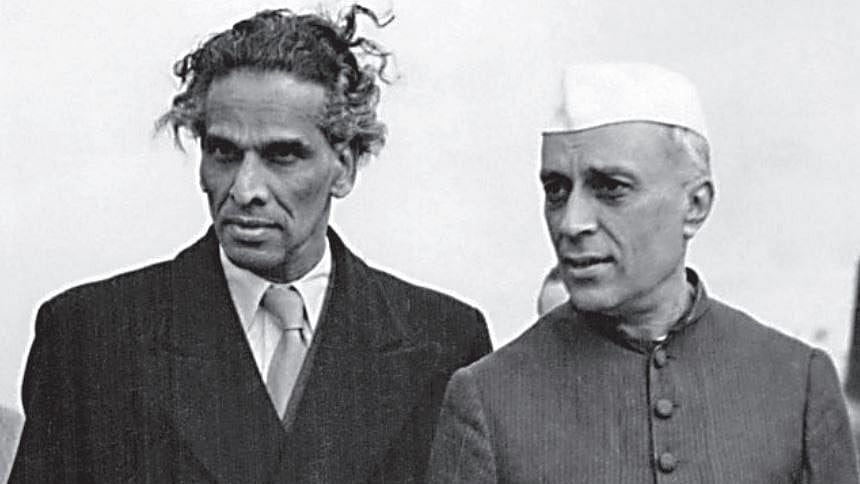
Congress leader Jairam Ramesh recently highlighted the historical role of Indian diplomat V.K. Krishna Menon during the 1956 Suez Crisis. As the world faces new tensions in the Strait of Hormuz, Ramesh reminded the public of how India once led global peace efforts. He noted that Menon’s work at the United Nations was vital in cooling down a situation that nearly led to a much larger war. This historical look back comes at a time when global energy routes are once again under threat.
Main Impact
The main impact of this reminder is to show the importance of strong diplomacy during international conflicts. By bringing up the Suez Crisis, Ramesh points out that India has a long history of helping to solve global problems. Today, the Strait of Hormuz is a major worry for many countries because it is a primary route for oil. If this path is blocked or becomes too dangerous, it could cause energy prices to rise and hurt the global economy. Ramesh suggests that the lessons learned 70 years ago are still very useful for leaders today.
Key Details
What Happened
In 1956, the Suez Crisis began when Egyptian President Gamal Abdel Nasser decided to nationalize the Suez Canal. This meant Egypt took full control of the waterway, which was a vital path for ships traveling between Europe and Asia. This move upset Britain and France, who had previously controlled the canal. Along with Israel, they launched a military attack on Egypt. V.K. Krishna Menon, representing India at the United Nations, worked hard to find a peaceful solution. His efforts helped lead to a ceasefire and the withdrawal of foreign troops.
Important Numbers and Facts
The Suez Crisis took place about 70 years ago, starting in July 1956. After the fighting stopped, the United Nations created the UN Emergency Force (UNEF) to keep the peace. India played a major role in this force, sending many soldiers to help. In 1960, India’s first Prime Minister, Jawaharlal Nehru, even visited the Indian troops stationed in Gaza. Today, the Strait of Hormuz is just as significant as the Suez Canal was then. About one-fifth of the world’s total oil supply passes through this narrow stretch of water every single day.
Background and Context
To understand why this matters, we have to look at how global trade works. Certain narrow waterways are called "choke points." If these areas are closed or attacked, the whole world feels the effect. In 1956, the Suez Canal was the most important choke point. Today, the Strait of Hormuz, located between Oman and Iran, holds that title. It connects the Persian Gulf with the Gulf of Oman and the Arabian Sea. Because so much of the world's oil comes from this region, any instability there makes every country nervous about their fuel supplies and economy.
Public or Industry Reaction
Many people in the political and diplomatic world have reacted to Ramesh’s comments by discussing India’s current role in global affairs. Some experts believe that India should return to the active style of diplomacy seen during the time of Menon and Nehru. There is a growing conversation about how India can help keep the Strait of Hormuz safe for ships. Shipping companies and energy experts are also watching the situation closely. They worry that if tensions between regional powers continue to grow, the cost of shipping goods and oil will go up significantly.
What This Means Going Forward
Looking ahead, the situation in the Strait of Hormuz will require careful handling. Just as the United States under President Eisenhower pressured allies to stop the Suez invasion in 1956, modern leaders must use their influence to prevent a full-scale conflict. India’s history shows that being a neutral party can be very effective. In the coming months, we may see more calls for international cooperation to protect trade routes. If diplomacy fails, the risk of a military clash remains high, which would have a direct impact on gas prices and the cost of living for people all over the world.
Final Take
The memory of V.K. Krishna Menon serves as a reminder that talking is often more powerful than fighting. While the world has changed since 1956, the need for calm and steady leadership remains the same. Protecting global trade routes like the Strait of Hormuz is not just about politics; it is about ensuring that the world economy stays stable for everyone. India’s past success in the Suez Crisis offers a hopeful example of how even the most heated international disputes can be settled through patient and clever negotiation.
Frequently Asked Questions
Who was V.K. Krishna Menon?
V.K. Krishna Menon was a prominent Indian diplomat and politician. He served as India's defense minister and was well-known for his long speeches and strong work at the United Nations during the 1950s and 1960s.
Why is the Strait of Hormuz so important?
The Strait of Hormuz is a vital waterway because a large portion of the world's oil supply is shipped through it. Any disruption there can cause global oil prices to spike and lead to energy shortages in many countries.
What was the result of the Suez Crisis?
The Suez Crisis ended after international pressure, led by the US and the UN, forced Britain, France, and Israel to withdraw. It resulted in Egypt keeping control of the canal and the deployment of the first-ever UN peacekeeping force.

