
Summary
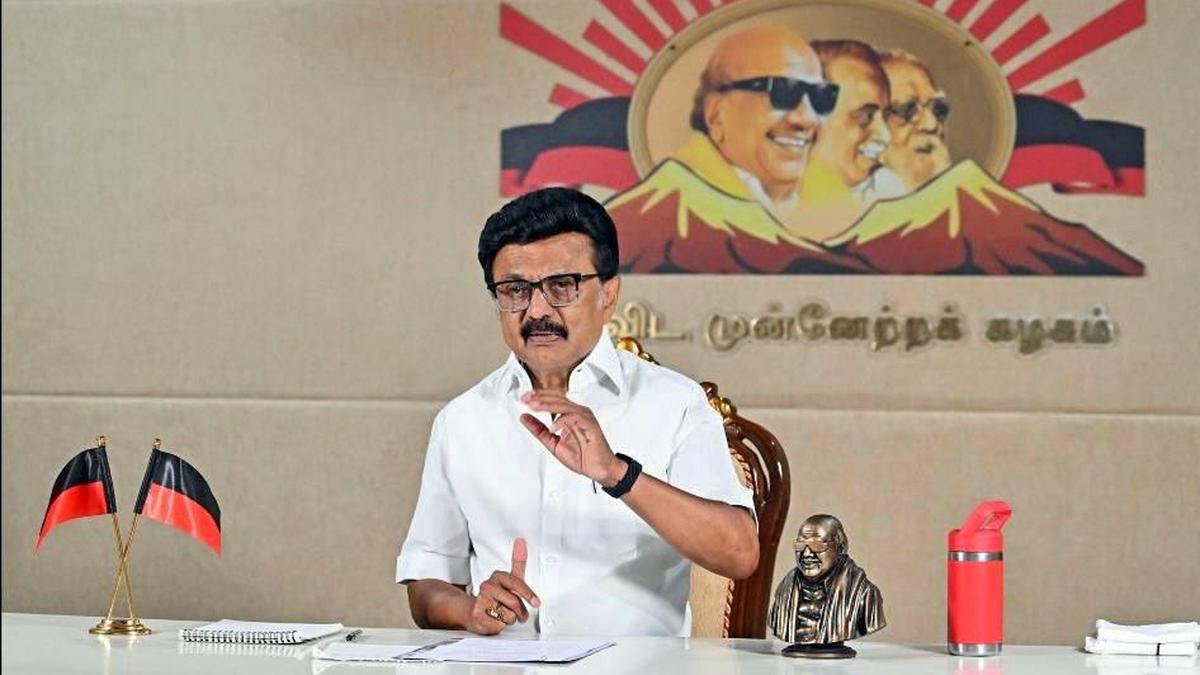
Tamil Nadu Chief Minister M.K. Stalin has voiced strong opposition to the latest curriculum changes introduced by the Central Board of Secondary Education (CBSE). He claims that these updates are not meant to improve the quality of education but are instead a hidden plan to force the Hindi language on students. Stalin argues that the central government is using the idea of promoting "Indian languages" as a way to prioritize Hindi while ignoring the many other languages spoken across the country. This move has sparked a fresh debate about how education policies affect the cultural and linguistic diversity of India.
Main Impact
The main impact of this development is a growing tension between state leaders and the central government over education standards. By accusing the BJP-led NDA government of a "centralizing agenda," Stalin is highlighting a fear that regional identities are being erased. If these curriculum changes continue, it could change how millions of students learn and interact with their own local cultures. This situation also puts pressure on the CBSE to explain how it will protect the rights of students who do not speak Hindi as their first language.
Key Details
What Happened
Chief Minister Stalin recently spoke out against the new directions taken by the CBSE regarding language studies. He stated that the government is pretending to support all Indian languages while actually making Hindi the most important one. According to Stalin, this is a "calculated attempt" to change the way schools function. He believes that the central government wants to create a uniform system that does not respect the unique history and speech of different states. This criticism comes at a time when schools are trying to adapt to new national standards for teaching.
Important Numbers and Facts
The debate centers on the National Education Policy (NEP), which suggests a three-language formula for schools. In this system, students are often encouraged to learn English, a regional language, and a third language, which is frequently Hindi. Tamil Nadu has historically followed a two-language policy, focusing only on Tamil and English. The state has resisted any move that makes a third language mandatory. While the central government says this helps national unity, critics point out that India has 22 officially recognized languages and hundreds of dialects that deserve equal respect and funding.
Background and Context
Language has been a very sensitive topic in India for many decades. In the 1960s, there were massive protests in South India, especially in Tamil Nadu, against the idea of making Hindi the only official language of the country. People in these regions feel a very strong connection to their mother tongue and see it as a core part of who they are. They worry that if Hindi becomes too dominant in schools and government offices, their own languages might slowly disappear or become less useful in daily life. Stalin’s current comments are a continuation of this long-standing fight to keep India a land of many different cultures rather than just one.
Public or Industry Reaction
The reaction to Stalin’s statement has been divided. Many political leaders in Southern and Eastern India have supported his views, agreeing that the central government should not interfere with state education choices. Educators have also expressed concern that forcing too many languages on young children might make learning harder and more stressful. On the other side, supporters of the central government argue that learning Hindi helps people from different states communicate better and find jobs in different parts of the country. They claim the policy is about giving students more choices, not taking them away.
What This Means Going Forward
Looking ahead, this disagreement could lead to legal challenges or changes in how states implement central education rules. Tamil Nadu might choose to ignore certain CBSE guidelines or create its own versions of the curriculum to protect the two-language system. There is also a chance that other states, such as West Bengal or Karnataka, might join in these protests. This could force the central government to rethink how it talks about language in schools. The goal for many will be to find a balance where students can learn useful skills without losing their connection to their local heritage.
Final Take
The fight over the CBSE curriculum is about much more than just school books; it is about the future of India’s identity. While the central government aims for a more connected and unified nation, leaders like Stalin remind us that India’s strength lies in its variety. Forcing one language over others risks creating more division rather than unity. Education should be a tool for growth that respects where every student comes from, ensuring that no language is treated as less important than another.
Frequently Asked Questions
Why is the Tamil Nadu Chief Minister upset with the CBSE?
He believes the new curriculum changes are a way to force students to learn Hindi while making regional languages seem less important. He calls this a "linguistic imposition."
What is the three-language formula?
It is an education policy that suggests students should learn three languages in school. Usually, this includes English, a regional language, and another Indian language, which is often Hindi.
How does Tamil Nadu’s education policy differ from the rest of India?
Tamil Nadu follows a two-language policy, focusing on Tamil and English. The state has long rejected the mandatory teaching of Hindi to protect its own linguistic culture.



