
Summary
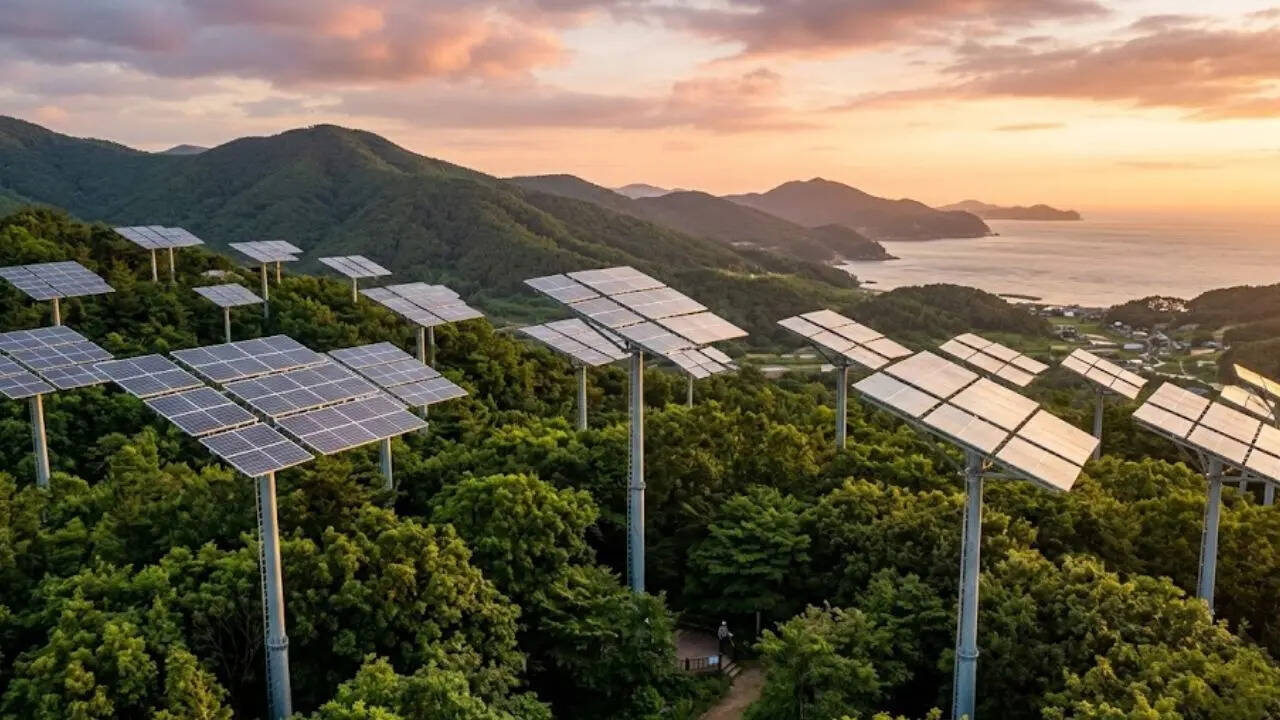
South Korea is finding new ways to create clean energy without harming its natural environment. The country has started using "solar trees," which are tall structures designed to look like trees but covered in solar panels. This move helps the nation generate electricity in small spaces, especially in cities and parks. By using these vertical designs, South Korea can meet its green energy goals without having to cut down its important forests.
Main Impact
The biggest impact of this technology is the protection of South Korea’s limited land. For a long time, building large solar farms meant clearing large areas of trees and plants. This created a problem because cutting down forests to make "green" energy felt like a step backward for the environment. Solar trees change this by going up instead of spreading out across the ground. This allows the government to increase its power supply while keeping its mountains and forests green and healthy.
Key Details
What Happened
Engineers and designers in South Korea have developed solar power systems that mimic the shape of real trees. These structures have a central trunk and several branches. At the end of each branch is a solar panel that acts like a leaf. These panels are placed at different heights and angles to catch as much sunlight as possible throughout the day. Because they stand tall, they can be placed in busy areas where a traditional flat solar farm would never fit.
These solar trees are being installed in public places like parks, parking lots, and along sidewalks. They do more than just make power; they also provide shade for people walking by and often have LED lights that turn on at night. Some models even include charging ports for mobile phones or electric scooters, making them very useful for people living in modern cities.
Important Numbers and Facts
South Korea has a very clear goal: it wants to reach "net-zero" carbon emissions by the year 2050. This means the country must stop adding more pollution to the air than it can remove. To do this, they need a lot of renewable energy. However, about 70% of South Korea’s land is covered by mountains, which makes it hard to find flat ground for regular solar panels. Solar trees are a perfect solution because they take up about 90% less ground space than a standard solar setup that produces the same amount of power. This efficiency is vital for a country with a high population and limited space.
Background and Context
In the past, many people in South Korea were unhappy when forests were cleared to build solar farms. They felt that destroying nature to save the planet did not make sense. Forests are important because they clean the air, provide homes for animals, and prevent soil from washing away during heavy rain. This created a conflict between the government’s green energy plans and the public’s desire to protect nature.
Solar trees were created to solve this conflict. By moving solar panels into urban areas and onto vertical structures, the need to use forest land decreases. This approach is part of a larger trend called "biomimicry," where humans copy designs found in nature to solve modern problems. By making solar panels look and act like trees, they become a part of the city environment rather than an eyesore.
Public or Industry Reaction
The reaction from the public has been mostly positive. People living in cities enjoy the modern look of the solar trees and appreciate the shade they provide during hot summers. City planners like them because they can be added to existing parks without taking away space from children’s play areas or walking paths. Environmental groups have also praised the move, noting that it shows a commitment to protecting biodiversity while still moving away from coal and gas power.
In the energy industry, experts see this as a smart way to decentralize power. Instead of having one giant power plant far away, these solar trees create electricity right where people use it. This reduces the amount of energy lost as it travels through long wires, making the whole system more efficient.
What This Means Going Forward
As the technology becomes cheaper, we will likely see solar trees in many other countries. Places like Japan, Singapore, and parts of Europe also have very little flat land and could benefit from this vertical design. In the future, these structures might become even more advanced. Some researchers are looking into ways to make the "leaves" move so they can follow the sun, just like real plants do. This would allow them to create even more electricity.
There is also a chance that solar trees will be used to help power smart cities. They could be connected to a network that monitors air quality, provides free Wi-Fi, or helps manage traffic. By combining energy production with other useful tools, South Korea is setting an example for how modern cities can grow in a way that is good for both people and the planet.
Final Take
South Korea’s use of solar trees proves that we do not have to choose between green energy and green forests. By thinking creatively and using vertical space, the country is finding a balance that works for its unique geography. This project shows that the best solutions for the future are often the ones that respect and copy the natural world around us.
Frequently Asked Questions
How much space does a solar tree save?
A solar tree can take up to 90% less ground space than a traditional solar panel array because it builds upward rather than outward. This makes it ideal for crowded cities.
Do solar trees work as well as regular solar panels?
Yes, they are very efficient. Because the panels are placed at different angles on the "branches," they can catch sunlight at various times of the day, sometimes even better than flat panels.
Can solar trees be used for anything else?
Many solar trees are designed to provide shade, night-time lighting, and charging stations for electronic devices, making them a multi-purpose tool for public spaces.

