
Summary
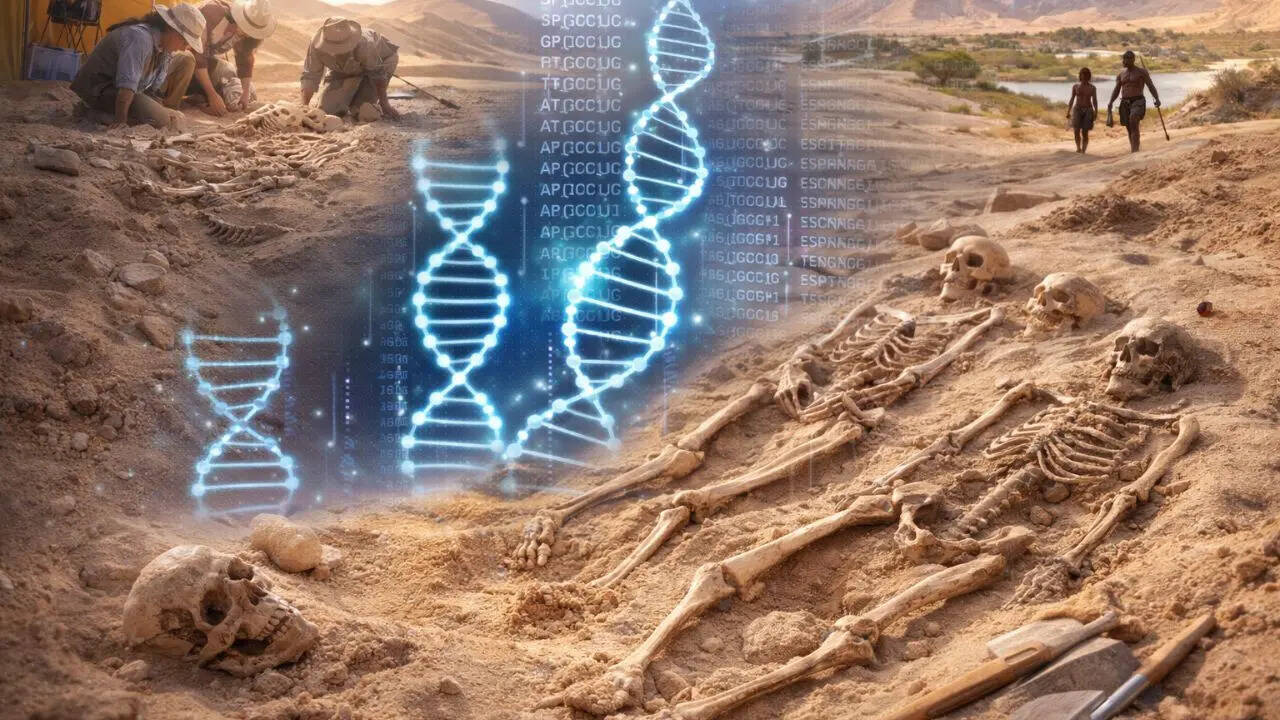
Archaeologists have made a startling discovery in the Sahara Desert, uncovering human skeletons that are approximately 7,000 years old. While finding ancient remains is not uncommon, the DNA results from these individuals have left the scientific community in shock. The genetic data does not match any known ancient or modern human groups, suggesting the existence of a "ghost population" that once lived in North Africa. This find challenges our current understanding of how humans moved and lived across the continent thousands of years ago.
Main Impact
The primary impact of this discovery is the realization that human history in Africa is far more complex than previously thought. For decades, researchers believed they had a clear map of how different groups migrated and settled. However, these skeletons prove that a completely unknown group of people existed and thrived in the Sahara. Their unique genetic markers suggest they were isolated for a long time or belong to a lineage that has since vanished from the earth. This discovery forces historians and scientists to rethink the family tree of early humans.
Key Details
What Happened
The discovery took place during an excavation in a remote part of the Sahara. Researchers found a burial site containing several well-preserved skeletons. When they took samples to analyze the DNA, they expected to find links to early African farmers or hunter-gatherers from nearby regions. Instead, the genetic sequences were unlike anything recorded in global databases. These people lived during a time when the Sahara was not a desert, but a lush, green environment filled with life.
Important Numbers and Facts
The skeletons date back to roughly 5,000 BCE, making them 7,000 years old. This period is known as the Mid-Holocene. At that time, the area featured large lakes, flowing rivers, and a variety of wildlife including hippos and crocodiles. The burial site itself showed signs of careful placement, suggesting that these people had specific cultural or religious rituals. Scientists have spent months verifying the DNA results to ensure there were no errors, but the conclusion remains the same: these people are a genetic mystery.
Background and Context
To understand why this is so surprising, it helps to know about the "Green Sahara" period. Thousands of years ago, the Earth's tilt was slightly different, which brought heavy monsoon rains to North Africa. What is now a dry, sandy wasteland was once covered in grass and trees. This environment allowed different groups of people to move into the heart of the Sahara. When the climate changed and the rains stopped around 5,000 years ago, the area dried up. Most people moved toward the Nile River or further south into Africa. It appears this mystery group may have stayed or disappeared as the environment became harsher.
Public or Industry Reaction
The scientific community is reacting with a mix of excitement and caution. Geneticists are calling for more samples from other parts of the desert to see if this "unknown" DNA appears elsewhere. Some experts believe this group might have been a remnant of a much older human population that survived in isolation. Meanwhile, historians are eager to look for tools, pottery, or other items at the site that might tell us more about how these people lived, what they ate, and how they interacted with their neighbors.
What This Means Going Forward
The next steps involve more advanced testing. Scientists want to use "deep sequencing" to get a better look at the genetic code of these skeletons. They also hope to find more sites in the Sahara that have not been covered by shifting sands. This discovery highlights the importance of protecting archaeological sites in desert regions. As technology improves, we are becoming better at pulling information from old bones, even in hot climates where DNA usually breaks down quickly. We may soon find that there are many more "lost" groups of humans waiting to be found.
Final Take
This discovery serves as a reminder that the story of humanity is still being written. Even in places that seem empty and lifeless today, there are deep layers of history hidden beneath the surface. Finding a group of people with unknown DNA shows that we still have much to learn about our own ancestors. The Sahara continues to hold its secrets, but each new find brings us closer to understanding the true diversity of the human experience throughout time.
Frequently Asked Questions
Why is the DNA called "unknown"?
It is called unknown because it does not share enough markers with any known human groups, past or present, to be classified. It represents a lineage that scientists have not seen before.
How did the skeletons stay preserved in the desert?
The dry conditions of the desert can sometimes act as a natural preservative. However, extracting DNA is still hard because heat usually destroys genetic material over thousands of years.
Was the Sahara always a desert?
No, about 7,000 years ago, the Sahara was a green region with lakes and forests. It only became the desert we know today after a major shift in the Earth's climate cycle.

