
Summary
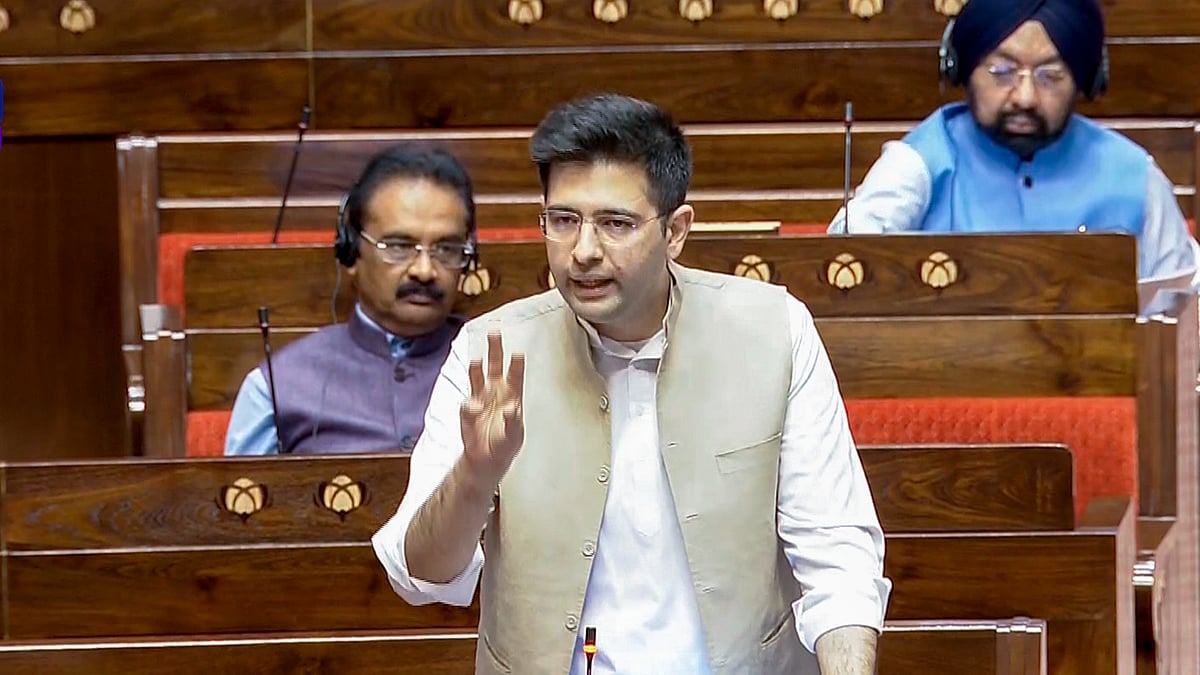
On April 24, 2026, the Aam Aadmi Party (AAP) experienced a major internal split that has changed the face of the Rajya Sabha. Seven out of the party's ten members in the upper house, led by prominent leader Raghav Chadha, announced they are joining the Bharatiya Janata Party (BJP). This move has caused a massive political storm, with AAP leaders claiming the shift was forced by outside political pressure. The departure of such a large group marks one of the biggest challenges the party has faced since it was formed.
Main Impact
The most immediate impact of this move is the loss of power for AAP in the Rajya Sabha. By losing seven members at once, the party has lost its ability to strongly influence national debates and voting in the upper house. This shift gives the BJP more control over the legislative process, making it easier for the government to pass new laws. For AAP, this is not just a loss of numbers but a blow to its reputation as a united political force that can challenge the current government on a national level.
Key Details
What Happened
Raghav Chadha held a press conference in New Delhi to announce the decision. He confirmed that seven MPs have officially moved to merge with the BJP. To make this legal, they submitted formal documents to the Rajya Sabha Chairman, C P Radhakrishnan. By having seven out of ten members leave together, the group met the legal requirement that allows them to switch parties without losing their positions in Parliament. This coordinated move suggests the plan had been in the works for some time.
Important Numbers and Facts
The group leaving AAP includes several well-known names. Along with Raghav Chadha, the MPs joining the BJP are Sandeep Pathak, Harbhajan Singh, Swati Maliwal, Ashok Mittal, Rajendra Gupta, and Vikram Sahni. This leaves AAP with only three members in the Rajya Sabha. The move follows a rule in Indian law that says if two-thirds of a party's elected members decide to merge with another party, they cannot be disqualified. Since seven out of ten is more than two-thirds, the move is legally valid.
Background and Context
This split did not happen overnight. Raghav Chadha was once a very close aide to AAP leader Arvind Kejriwal and a key face of the party. However, in recent months, he had become less active in party affairs. There were many reports that he was unhappy with how the party was being run and disagreed with its election strategies. Observers noticed that he had stopped criticizing the BJP as strongly as he used to. These signs led many to believe that a break was coming, though the scale of the exit surprised many people.
The Aam Aadmi Party has been trying to grow its influence in states like Punjab and Delhi. Losing key leaders who were responsible for organizing the party in these areas makes this growth much harder. The timing is also difficult, as the party is currently dealing with several other legal and political battles.
Public or Industry Reaction
The Aam Aadmi Party reacted quickly and angrily to the news. Senior leader Sanjay Singh held his own press meeting to attack the move. He claimed that the BJP used a strategy called "Operation Lotus" to break the party. This is a term AAP and other parties use to describe claims that the BJP uses pressure or rewards to make opposition members switch sides. Singh argued that the BJP is trying to weaken the AAP government in Punjab by taking away its representatives in Delhi. He stated that the people who voted for these MPs would feel cheated by this decision.
On the other side, BJP supporters welcomed the move. They see it as a sign that even top leaders within AAP are losing faith in their own party's leadership. Political experts suggest that this move will create a lot of tension in Punjab, where many of these MPs have a strong following.
What This Means Going Forward
In the coming weeks, AAP will have to work hard to keep its remaining members together. The party needs to show its supporters that it is still strong and focused on its goals. There will likely be a lot of legal talk about the merger, but since the two-thirds rule was met, the change is expected to stand. For the BJP, this is a strategic win. They have not only gained more votes in the Rajya Sabha but have also weakened a rival that has been very vocal against them.
The focus will now shift to Punjab and Delhi. Voters will be watching to see how the remaining AAP leaders respond and whether this split leads to more members leaving at the state level. This event marks a new chapter where AAP must prove it can survive internal divisions and continue to function as a major political player.
Final Take
The exit of Raghav Chadha and six other MPs is a major turning point in Indian politics. It shows how quickly political alliances can change and how internal disagreements can lead to big shifts in power. While AAP blames outside forces for this split, the party will need to look closely at its own internal culture to prevent more leaders from leaving. This move has strengthened the BJP's hand in Parliament and left AAP searching for a way to rebuild its national presence.
Frequently Asked Questions
Why are the MPs allowed to join the BJP without losing their seats?
Under Indian law, if at least two-thirds of a party's members in a house decide to merge with another party, they are protected from being disqualified. In this case, seven out of ten MPs moved, which meets that requirement.
What is "Operation Lotus"?
This is a term used by opposition parties in India. They use it to claim that the BJP is actively trying to make members of other parties switch sides through various forms of pressure or influence.
How many Rajya Sabha members does AAP have left?
After this move, the Aam Aadmi Party is left with only three members in the Rajya Sabha, down from their original ten.

