Summary
Pope Francis has issued a strong message against world leaders who spend massive amounts of money on weapons and conflict. He described these leaders as "tyrants" for choosing to fund wars instead of helping people in need. These comments come shortly after a public disagreement with U.S. President Donald Trump, who recently criticized the Pope's stance on law and order. The Pope’s words highlight a deep divide between religious values and modern political strategies regarding global security.
Main Impact
The primary impact of this statement is the heightening of tensions between the Vatican and the White House. By using the word "tyrants," the Pope is moving beyond simple calls for peace and is directly questioning the morality of current political leadership. This shift could influence how millions of people view government spending on defense. It also forces a public conversation about whether tax money should go toward military power or social services like healthcare and education.
Key Details
What Happened
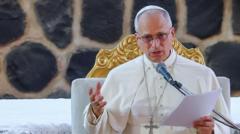
During a recent public address, Pope Francis spoke about the state of the world and the many conflicts currently taking place. He expressed deep sadness over the billions of dollars being poured into the arms industry. He argued that this money is being used to create tools of death rather than supporting life. His remarks were seen by many as a direct response to President Trump, who had recently called the Pope "weak on crime" during a political event. The Pope’s response suggests that he views the focus on military strength and harsh punishment as a failure of leadership.
Important Numbers and Facts
Global military spending has reached record levels in recent years, with some reports suggesting it exceeds $2 trillion annually. The Pope pointed out that even a small portion of this budget could end world hunger or provide clean water to every person on earth. In the United States, the defense budget continues to be one of the largest parts of federal spending. The timing of the Pope's speech, occurring just days after the "weak on crime" comment, shows that the Vatican is willing to engage in a war of words to defend its humanitarian focus.
Background and Context
This is not the first time Pope Francis and Donald Trump have disagreed. Their history of conflict goes back several years, covering topics like immigration, climate change, and border walls. The Pope has consistently argued for open borders and mercy, while the President has focused on national security and strict law enforcement. The term "tyrant" is particularly strong in this context. In simple terms, a tyrant is a leader who uses their power in a cruel or unfair way. By using this word, the Pope is suggesting that leaders who prioritize war are abusing their authority and hurting the very people they are supposed to protect.
Public or Industry Reaction
The reaction to the Pope’s comments has been split. Supporters of the Pope praise him for being a moral voice in a world that seems obsessed with violence. They believe his message is a necessary reminder of human dignity. On the other hand, critics of the Pope, including many political allies of the President, argue that the Pope does not understand the realities of national security. They claim that a strong military is necessary to prevent even bigger wars and that the Pope should stay out of political matters. Social media has been filled with debates between those who value religious guidance and those who prioritize political strength.
What This Means Going Forward
Looking ahead, this exchange suggests that the relationship between the Vatican and the U.S. government will remain difficult. We can expect more public disagreements as the Pope continues to push for peace and social justice. This could also affect how religious voters view political candidates in the future. If the Pope continues to label certain policies as "tyrannical," it may force some leaders to rethink how they talk about war and spending. There is also a risk that this divide will lead to more polarization among the public, as people feel forced to choose between their religious leaders and their political ones.
Final Take
The Pope is making it clear that he will not be silenced by political criticism. By calling out the high cost of war, he is challenging the world to think about what it truly values. Whether or not world leaders listen, his message serves as a powerful reminder that the choices made by those in power have a direct impact on the poorest and most vulnerable people in society. The clash between the Vatican and the White House is more than just a personal argument; it is a debate about the future direction of global society.
Frequently Asked Questions
Why did the Pope call world leaders "tyrants"?
The Pope used this word to describe leaders who spend billions on war and weapons instead of using that money to help people with food, medicine, and education.
What did Donald Trump say about the Pope?
President Trump recently called the Pope "weak on crime," suggesting that the Pope's focus on mercy and forgiveness is not effective for maintaining law and order.
How much money is spent on war globally?
Global military spending is estimated to be over $2 trillion every year. The Pope argues that this money should be redirected to solve major global problems like poverty.