Summary
United States Secretary of Defense Pete Hegseth has issued a stern warning to Iran, stating that military operations will resume if a new agreement is not reached. This announcement follows the collapse of peace talks held in Pakistan over the weekend. With a temporary ceasefire set to expire next Wednesday, the risk of a larger conflict is growing. The situation is further complicated by a naval blockade in the Strait of Hormuz, a vital route for the world's energy supply.
Main Impact
The primary impact of this development is the immediate threat of renewed full-scale war in the Middle East. If the United States and Israel resume their military campaign, it could lead to a significant loss of life and regional instability. Furthermore, the blockade of the Strait of Hormuz is already affecting global markets. Since one-fifth of the world's oil and gas passes through this narrow waterway, any prolonged disruption will likely cause fuel prices to rise across the globe, impacting transport, manufacturing, and household costs.
Key Details
What Happened
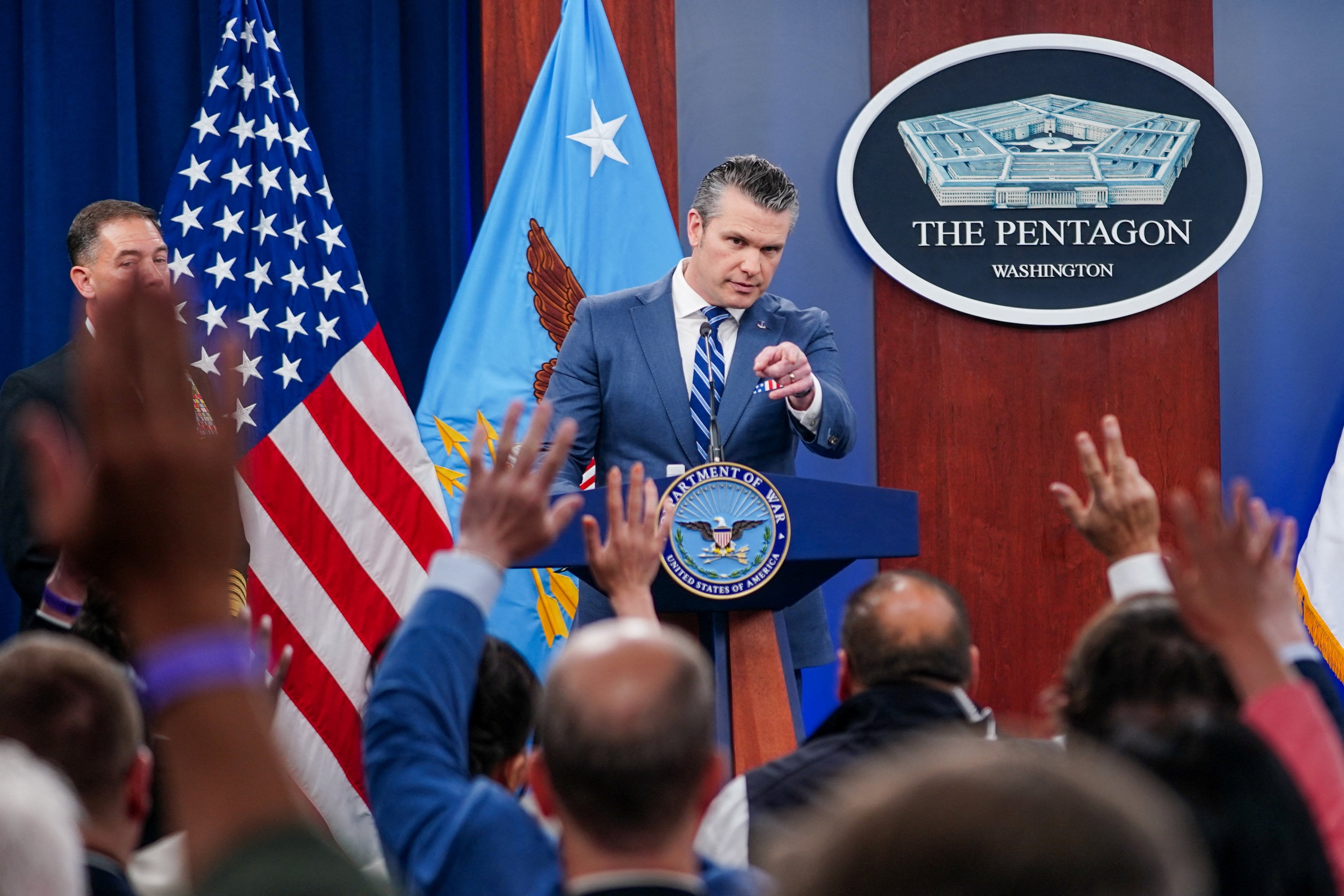
Secretary Pete Hegseth spoke at the Pentagon on Thursday to address the ongoing crisis. This was his eighth press appearance since the conflict began 47 days ago. He spoke shortly after President Donald Trump ordered a military blockade of the Strait of Hormuz. This move was a response to Iran’s own attempts to restrict ship movement in the area. Hegseth made it clear that the U.S. is prepared to use force if Iran does not accept the terms of a new peace deal.
Important Numbers and Facts
The war between the U.S.-Israel coalition and Iran has now lasted for nearly seven weeks. The Strait of Hormuz is the most critical point in this conflict because 20% of the world's liquid fuels move through it. Peace talks in Islamabad, Pakistan, failed to produce a lasting result, leaving only a few days before the current ceasefire ends on Wednesday, April 22. Military analysts note that the blockade is a "de facto" closure of the Persian Gulf, meaning it is effectively shut down for most commercial traffic.
Background and Context
The tension between the United States and Iran has been building for years, but it turned into an active war 47 days ago. The conflict involves complex issues, including nuclear programs and regional influence. The Strait of Hormuz is often called a "choke point" because it is a very narrow passage that connects oil producers in the Middle East to the rest of the world. If this passage is closed, the global economy suffers almost immediately. The current administration in Washington has taken a hard line, using both military pressure and economic blockades to force Iran to the negotiating table.
Public or Industry Reaction
Global markets have reacted with concern to the news of the failed talks and the blockade. Oil traders are watching the situation closely, fearing a supply shortage. International leaders have called for both sides to return to the bargaining table to avoid a humanitarian disaster. Within the United States, there is a mix of support for the strong military stance and worry about the potential for a long, expensive war. Shipping companies are currently rerouting vessels where possible, though there are few easy alternatives to the Persian Gulf routes.
What This Means Going Forward
The next few days are critical for global security. If diplomatic efforts do not restart before the Wednesday deadline, the ceasefire will end, and active fighting is expected to begin again. The U.S. military is already in position to launch new strikes if ordered. Iran must decide whether to accept the U.S. terms or face a renewed military offensive. For the rest of the world, this means continued uncertainty regarding energy prices and the possibility of a wider war that could involve other countries in the region.
Final Take
The window for a peaceful solution is closing fast. With the Strait of Hormuz blocked and military forces on high alert, the world is watching to see if a deal can be reached at the last minute. The choice now lies with the leaders in Tehran: they must either agree to the pact or prepare for the return of a high-stakes military conflict that will have consequences far beyond their borders.
Frequently Asked Questions
What is the Strait of Hormuz?
It is a narrow waterway between the Persian Gulf and the Gulf of Oman. It is the most important oil shipping lane in the world because a large portion of global oil exports must pass through it.
When does the current ceasefire end?
The temporary ceasefire is scheduled to expire next Wednesday, April 22, 2026. If no agreement is reached by then, military actions are expected to resume.
Why did the peace talks fail?
The talks in Islamabad failed because the two sides could not agree on the specific terms of a long-term deal. The U.S. is demanding strict changes to Iran's policies, while Iran is seeking relief from military and economic pressure.