Summary
The conflict between the United States, Israel, and Iran has entered its second week, causing major shocks to the global economy. Oil prices have jumped past $100 a barrel for the first time in years, while the stock market is seeing a massive sell-off. Hopes for a quick end to the fighting have faded as both sides target vital infrastructure like oil depots and water plants. This escalation has raised fears of a long-term war that could involve more countries and lead to a global energy crisis.
Main Impact
The most immediate effect of the war is the sharp rise in energy costs and the drop in investor confidence. On Monday, oil prices surged by more than 15%, leading to predictions that gasoline prices in the U.S. will soon exceed $4 per gallon. At the same time, the Dow Jones Industrial Average saw its futures drop by over 900 points. This double blow of high fuel costs and falling stock values is creating a difficult environment for businesses and consumers alike. The closure of the Strait of Hormuz, a vital path for global oil, has effectively cut off a large portion of the world's energy supply.
Key Details
What Happened
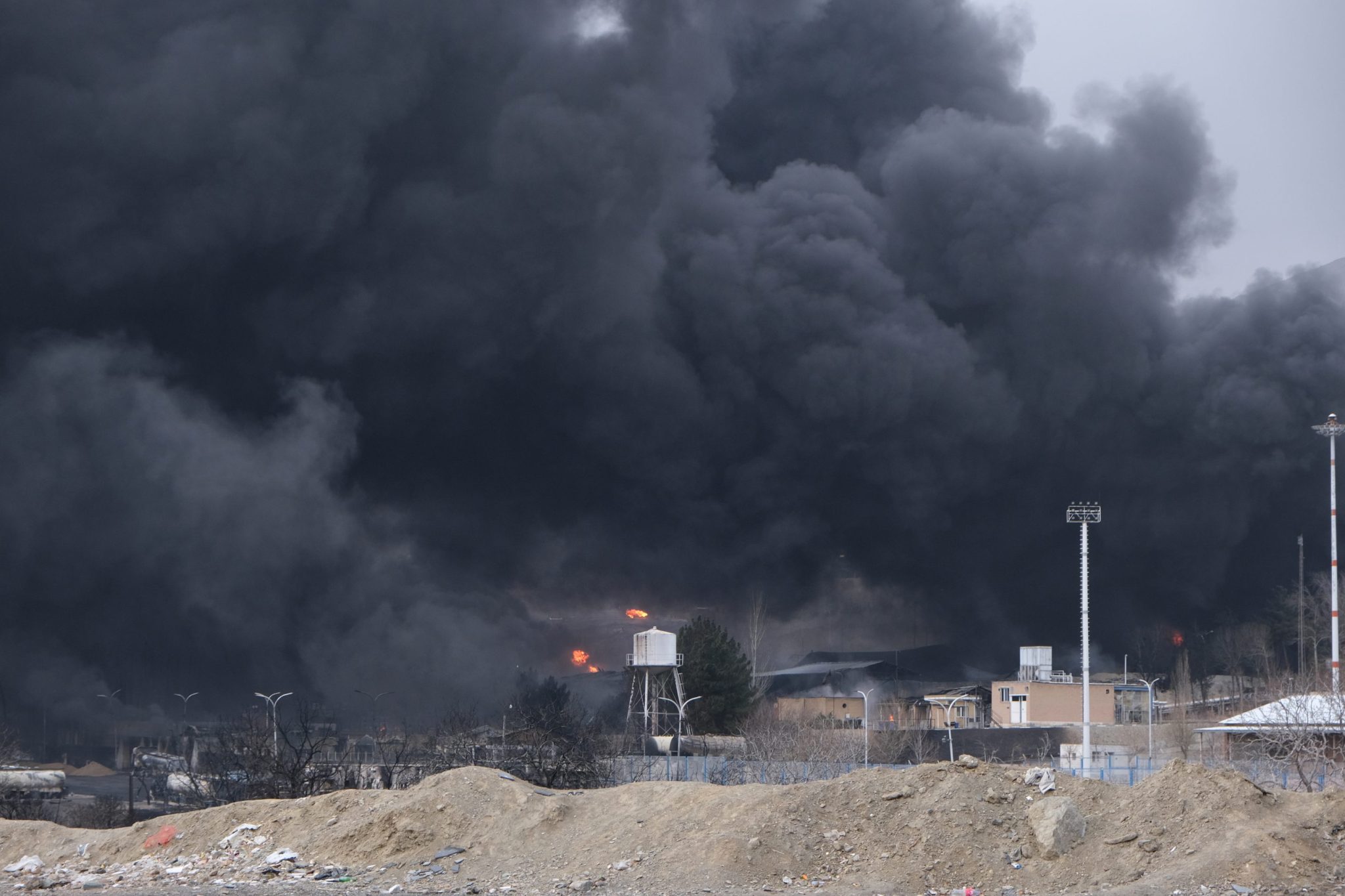
The war has moved into a dangerous new phase where critical civilian and military resources are being destroyed. U.S. and Israeli forces recently hit a major oil storage site in Tehran, which has caused fuel shortages and environmental damage in the city. In response, Iran has used drones and missiles to attack oil and water facilities across the Persian Gulf. Perhaps most concerning is the attack on desalination plants in Bahrain and Iran. These plants turn seawater into drinking water, and their destruction could leave millions of people without a way to survive in the desert region.
Important Numbers and Facts
The economic data shows the severity of the situation. U.S. oil futures rose 17.2% to reach $106.57, while Brent crude hit $106.81. Stock market futures for the S&P 500 and Nasdaq also fell by more than 1.6%. In the Middle East, Iraq’s oil production has dropped by 60% because it can no longer export its goods through the blocked sea routes. On the military side, the Pentagon confirmed that seven U.S. service members have died since the start of the conflict. Additionally, gold prices have shifted to $5,078 per ounce as investors look for safe places to put their money.
Background and Context
This conflict is rooted in long-standing tensions over Iran's nuclear program and its influence in the Middle East. The Strait of Hormuz is a narrow waterway that carries about a fifth of the world's oil. For decades, experts have warned that closing this strait would be a "nightmare scenario" for the global economy. Now that it is effectively shut, the world is seeing how dependent it is on this single region. Furthermore, the death of Iran's previous Supreme Leader last week has led to a power struggle. The appointment of his son, Mojtaba Khamenei, suggests that the Iranian government is choosing a hardline path rather than seeking peace.
Public or Industry Reaction
President Donald Trump has stated that he will not release oil from the nation's emergency reserves yet. He argued on social media that high oil prices are a small price to pay for long-term safety and the removal of nuclear threats. However, energy analysts are less optimistic. Experts from GasBuddy suggest there is an 80% chance that gas prices will hit $4 a gallon within the next month. Meanwhile, other countries are starting to take sides. Russia is reportedly providing intelligence to Iran, and neighboring Gulf states have warned Iran that they may take direct military action if their own territories continue to be hit by stray attacks.
What This Means Going Forward
The situation could get much worse if the U.S. decides to send ground troops into Iran. Reports suggest that the U.S. is considering a special forces mission to seize uranium supplies before they can be used to make nuclear weapons. This would be a major escalation from air strikes to direct ground combat. There is also the risk of a humanitarian disaster if water supplies are not restored. If desalination plants remain offline, entire cities may need to be evacuated. Economically, if the Strait of Hormuz remains closed, the world may face a prolonged period of high inflation and slow growth.
Final Take
The shift from a localized conflict to a broad regional war is now a reality. With oil prices staying high and the threat of nuclear escalation growing, the global economy is facing its biggest test in years. The coming days will determine if the conflict can be contained or if it will draw the world's largest powers into a much larger struggle.
Frequently Asked Questions
Why are oil prices going up so fast?
Prices are rising because the Strait of Hormuz is closed, preventing oil from leaving the Persian Gulf. Additionally, attacks on oil depots in Iran and reduced production in Iraq have created a shortage of supply.
Will the U.S. use its emergency oil reserves?
President Trump has indicated that he does not plan to release oil from the Strategic Petroleum Reserve at this time. He believes the current high prices are necessary to achieve the military goals of the conflict.
Who is the new leader of Iran?
Iran has named Mojtaba Khamenei, the son of the former Supreme Leader, as the new head of the country. This move is seen as a sign that the Iranian government will continue to take a tough stance against the U.S. and Israel.