Summary
The conflict between the United States, Israel, and Iran has entered its second week with no signs of stopping. Financial markets reacted sharply as oil prices jumped past $110 a barrel and the Dow Jones futures fell by more than 1,000 points. Both sides are now targeting vital infrastructure, including oil supplies and water plants, leading to fears of a long and difficult war. President Donald Trump has indicated that the U.S. will not release emergency oil reserves yet, calling the high prices a necessary cost for global safety.
Main Impact
The biggest immediate impact is being felt in the global economy and energy markets. Oil prices saw a massive one-day jump of nearly 25%, which will soon lead to much higher costs for drivers at the gas pump. Investors are moving away from stocks due to the uncertainty, causing major market indexes to tumble. Beyond the money, the war is now hitting basic human needs, as attacks on water processing plants threaten the supply of drinking water for millions of people in the Middle East.
Key Details
What Happened
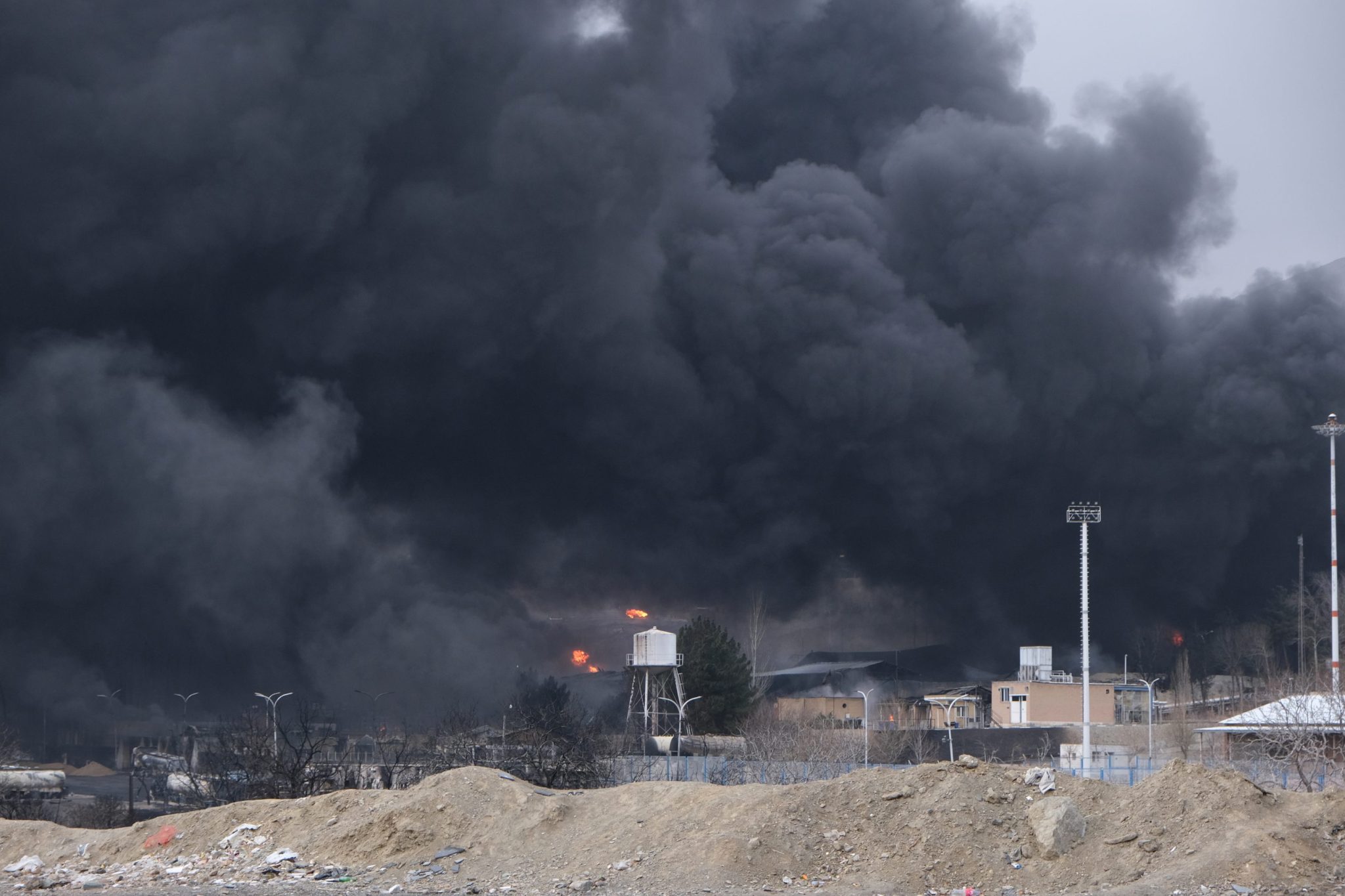
The war has moved into a more dangerous phase where both sides are hitting "critical infrastructure." This means they are attacking the systems that keep a country running, such as power, water, and fuel. U.S. and Israeli forces hit a major oil storage site in Tehran, causing massive fires and environmental damage. In return, missiles and drones have targeted oil facilities across the Persian Gulf. This has effectively shut down the Strait of Hormuz, a narrow water path that is essential for moving oil around the world.
Important Numbers and Facts
The financial data shows the severity of the situation. U.S. oil futures rose 24.6% to reach $113.30 per barrel. Brent crude, the international standard, hit $114.38. Experts now say there is an 80% chance that gas prices in the U.S. will go above $4 per gallon within the next month. On Wall Street, Dow futures dropped 1,011 points, a loss of over 2%. Other markets like the S&P 500 and Nasdaq also saw drops of more than 2%. Meanwhile, the cost of borrowing money is rising as the 10-year Treasury yield went up to 4.198%.
Background and Context
The Middle East is a vital region for the world's energy and trade. The Strait of Hormuz is often called a "choke point" because so much of the world's oil must pass through it. For decades, experts have warned that closing this path would cause a global economic crisis. Additionally, many countries in this dry region rely on desalination plants. These are factories that turn salty ocean water into fresh water that people can drink. Attacking these plants is considered a "worst-case scenario" because it could force entire cities to be evacuated if they run out of water.
Public or Industry Reaction
President Trump shared his thoughts on social media, telling the public that high oil prices are a "very small price to pay" to remove the nuclear threat from Iran. He believes prices will fall quickly once the military goals are met. However, other countries are getting involved in ways that worry many leaders. Russia is reportedly giving intelligence to Iran to help them track U.S. ships and planes. At the same time, neighboring Gulf states have warned Iran that they might take direct military action if their own lands continue to be hit by missiles.
What This Means Going Forward
The situation is becoming more complex as the U.S. considers sending special forces into Iran. The goal of such a mission would be to seize uranium, which is the material used to make nuclear weapons. This would be a high-risk move that could lead to more ground fighting. Furthermore, Iran has named a new leader, Mojtaba Khamenei, the son of the previous leader who was killed recently. This choice suggests that Iran's government is not looking to negotiate and will continue to fight. The U.S. has already stated they do not accept this new leader, which makes a peaceful solution seem unlikely in the near future.
Final Take
The hope for a short, limited conflict has disappeared. As the war moves into its second week, the focus has shifted from military targets to the basic resources that sustain life and the global economy. With oil prices soaring and the threat of a nuclear crisis looming, the world is facing a period of extreme instability. The coming days will show if the conflict spreads to even more countries or if a path to de-escalation can be found before the economic damage becomes permanent.
Frequently Asked Questions
Why are oil prices going up so fast?
Prices are rising because the Strait of Hormuz is closed and oil facilities are being attacked. This makes it very hard to move oil from the Middle East to the rest of the world, creating a shortage.
Will the U.S. use its emergency oil reserves?
President Trump has indicated that he does not plan to release oil from the Strategic Petroleum Reserve right now. He believes the current high prices are a temporary necessity for national security.
What is a desalination plant and why are they being attacked?
These plants turn seawater into drinking water. They are being targeted because they are essential for survival in the Middle East. Damaging them puts immense pressure on the government and the people living there.