Summary
Nomagic, a robotics company with offices in Poland and the U.S., says it has successfully deployed a new type of AI system in real customer warehouses. The system, called a vision-language-action (VLA) model, helps robots understand their surroundings and follow text commands. The company claims this is one of the first times such advanced AI has been used in live operations, not just in lab tests. Early results show the system has cut the number of times robots get stuck and need human help by about half.
Main Impact
The key development is that Nomagic has moved a cutting-edge AI model from research into everyday use. This matters because many companies are trying to build general-purpose "robot brains," but most are still in the testing phase. By deploying its VLA model with paying customers, Nomagic is showing that this technology can work in real-world conditions. The impact is already visible: fewer robot errors mean less downtime and more efficient warehouse operations.
Key Details
What Happened
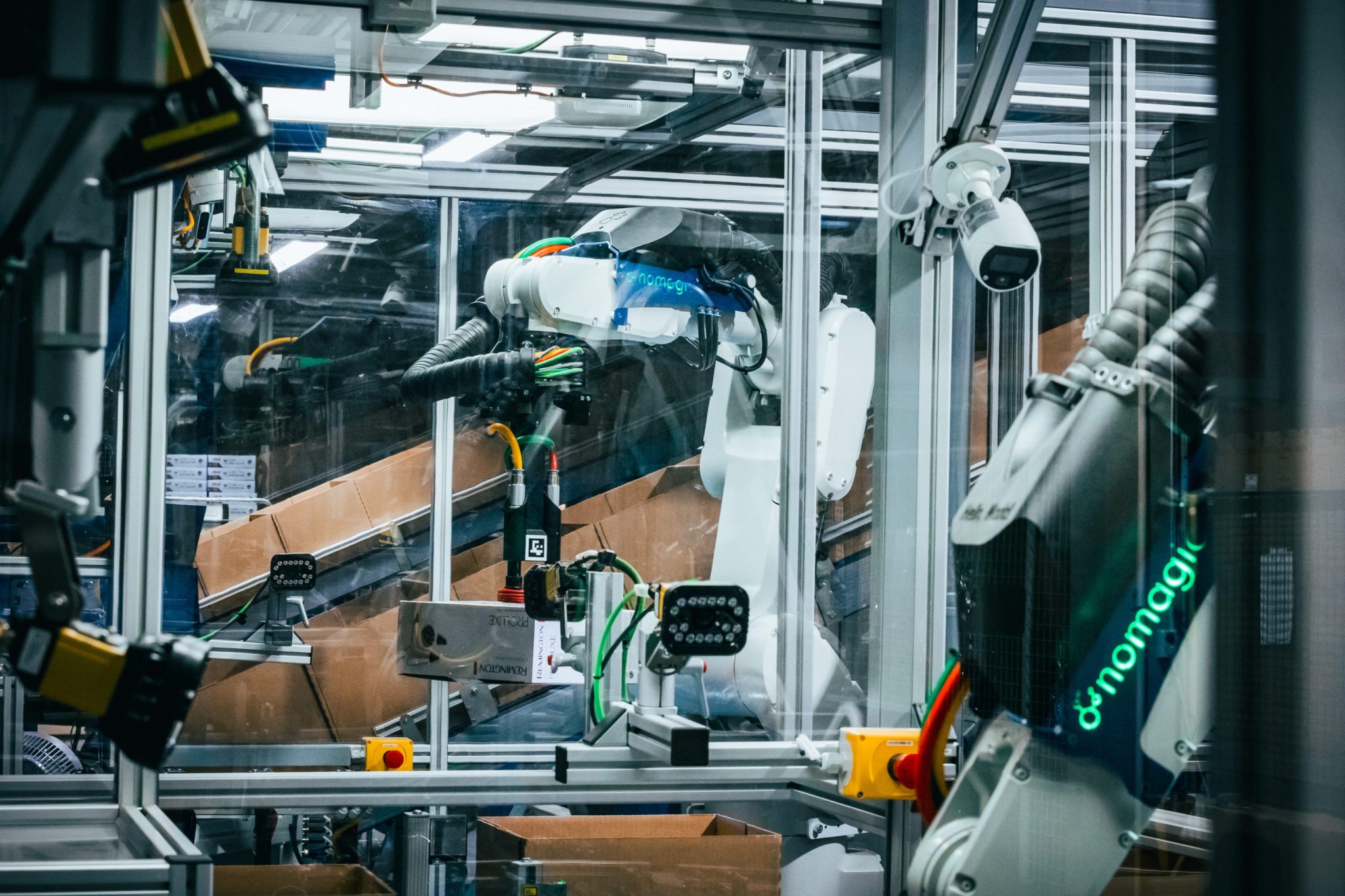
Earlier this year, Nomagic set up a new AI research lab led by Markus Wulfmeier, a former researcher from Google DeepMind. The lab's goal was to create a VLA model that could be used in warehouses. Now, the company has announced that this model is running live with customers. The first deployment is with Brack.Alltron, Switzerland's second-largest e-commerce platform. The robots are used to pick and pack orders automatically.
Important Numbers and Facts
Nomagic says its VLA system has cut the rate of robot-caused interruptions by roughly 50%. The company's robots already handle millions of successful package picks each month. For example, the fashion platform Zalando alone accounts for two million picks monthly. The company also recently won the 2026 IFOY Award for its Shoebox Picker, a device that can handle tricky two-piece shoeboxes without the lids falling off.
Background and Context
For years, warehouse robots have relied on control software that takes weeks or months to program for each task. This made it expensive and slow to set up automation. Now, many startups are trying to build general-purpose AI models that can work in any robot and do almost anything. But these models often perform poorly right out of the box. They need extra training on-site to reach high accuracy. Nomagic is taking a different path. Instead of starting with a general model and then making it better at specific tasks, it builds models that are already very good at certain jobs. The hope is that by mastering these tasks one by one, the system can eventually become more general.
Public or Industry Reaction
Roland Brack, founder and owner of Brack.Alltron, said the new AI system marks a big change. He noted that in the past, the goal was simply to reduce the need for human help. Now, the robots truly understand their environment. This allows the company to run autonomous shifts at night and on Sundays without putting more pressure on workers. The response from the industry is also positive. Winning the IFOY Award shows that Nomagic's technology is recognized as a leader in warehouse automation.
What This Means Going Forward
Nomagic admits its VLA system is not perfect. It is not yet 99.9% reliable on its own. No customer-deployed VLA system is at that level yet. To work around this, the company uses older robotics software as a safety harness. This harness catches errors and enforces safety rules, so the whole system can be trusted in a warehouse. Over time, as the AI improves, parts of that harness may become unnecessary. The company also has a big advantage: it collects real-world data from its fleet of robots already working with customers. This data helps train the AI on rare situations, which is a major challenge for all robotics companies. Wulfmeier, the chief scientist, said that the physical world is full of rare events, and training for all of them is hard. But by using real deployment data, Nomagic hopes to close the gap to the high reliability that the physical world demands.
Final Take
Nomagic's approach is a practical bet that real-world experience matters more than building the most general AI model first. By focusing on specific tasks and using data from actual operations, the company is showing that advanced AI can work in warehouses today. This could speed up the adoption of robotics in many industries, but the path to full reliability is still long.
Frequently Asked Questions
What is a vision-language-action (VLA) model?
A VLA model is a type of AI that can see objects, understand text instructions from people, and then take actions in the real world. For example, a warehouse robot with a VLA model can look at a box, read a command to pick it up, and then do so.
How is Nomagic's approach different from other robotics companies?
Many companies are trying to build a general-purpose "robot brain" that can do many tasks. Nomagic instead builds AI that is already very good at specific tasks, like picking boxes. It then hopes to expand from these mastered tasks to a more general system over time.
Why is 99.9% reliability important for warehouse robots?
In a warehouse, even one error per hour can ruin the cost savings from automation. If a robot needs human help too often, it becomes cheaper to just use human workers. So, robots must be extremely reliable to be worth the investment.