Summary
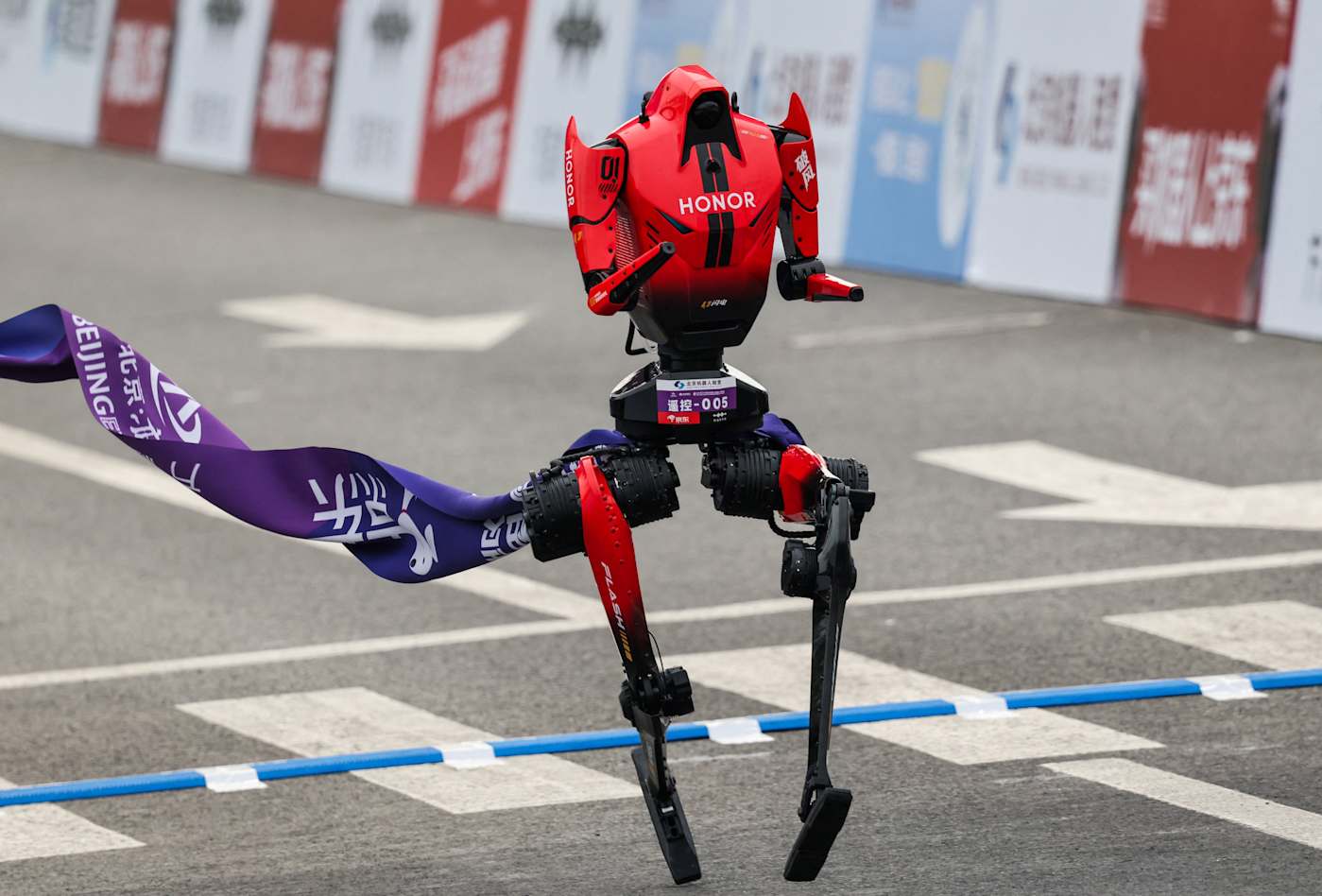
Beijing recently held its second annual half-marathon for humanoid robots, showing a massive leap in technology compared to last year. While the first event was filled with robots falling over and moving slowly, this year’s race featured machines that were much faster and more stable. The winning robot, created by the tech company Honor, finished the 13-mile course in just over 50 minutes. This performance was not only better than previous robot attempts but also faster than the current world record held by human runners.
Main Impact
The most significant takeaway from this event is the incredible speed of progress in the robotics industry. In only twelve months, these machines went from being a source of jokes to performing at a level that exceeds human physical limits. By finishing the race in 50 minutes and 26 seconds, the winning robot proved that mechanical legs and artificial intelligence are becoming highly efficient at handling long-distance movement. This shift suggests that humanoid robots are moving away from being laboratory experiments and are becoming capable of performing intense physical tasks in the real world.
Key Details
What Happened
The race took place in Beijing and featured more than 100 different robot competitors. These robots are designed to look and move like humans, using two legs to walk or run. Unlike last year, when many robots needed humans to walk beside them to prevent them from falling, many of this year's entries operated entirely on their own. The event was a competition between various Chinese technology firms to see whose hardware and software could handle the 13-mile distance most effectively.
Important Numbers and Facts
The winning robot, named Lightning, was built by the company Honor. It completed the half-marathon in 50 minutes and 26 seconds. To put this in perspective, the human world record for a half-marathon is around 57 minutes and 31 seconds, set by Jacob Kiplimo. This means the robot was several minutes faster than the fastest human in history. This is a giant improvement over last year’s winning time, which was two hours and 40 minutes. Additionally, while only 21 robots competed last year, over 100 took part this time around.
Background and Context
This topic is important because building a robot that can walk on two legs is very difficult. Humans have a natural sense of balance, but robots have to use complex sensors and computer code to stay upright. Last year’s inaugural event was widely mocked online because the robots looked clumsy. Many of them fell down at the starting line or moved at a very slow walking pace. The fact that these machines can now run at high speeds for long distances shows that engineers have solved many of the problems related to balance and battery life. It also shows that smartphone companies like Honor are now using their expertise in chips and batteries to enter the world of robotics.
Public or Industry Reaction
The reaction to this year's race has been a mix of surprise and caution. Industry experts are impressed that 40 percent of the robots were able to navigate the course autonomously, meaning they made their own decisions without a human controller. However, some critics pointed out that 60 percent of the robots were still being remote-controlled by people. There were also several crashes during the race, showing that the technology is still not perfect. Despite these small failures, the general feeling is that China is making very fast progress in the race to build the world's best humanoid robots.
What This Means Going Forward
Looking ahead, we can expect these robots to become even more independent. The next step for engineers is to make sure these machines can handle different types of ground, such as hills or uneven paths, without falling. As the technology improves, these robots might be used for more than just racing. They could eventually work in delivery services, help in hospitals, or perform dangerous jobs that are currently done by people. The goal is to create robots that can move through human environments as easily as we do. We will likely see more companies joining these competitions as they try to prove their robots are the most reliable.
Final Take
The Beijing robot half-marathon has quickly turned from a funny internet video into a serious display of technical power. While there are still some technical bugs to fix, the gap between what a human can do and what a robot can do is closing fast. Seeing a machine beat a human world record is a clear sign that the future of robotics is arriving much sooner than many people expected. The days of robots being slow and clumsy are officially over.
Frequently Asked Questions
How fast did the winning robot run?
The winning robot, named Lightning, finished the 13-mile race in 50 minutes and 26 seconds, which is faster than the human world record.
Did all the robots run by themselves?
No. About 40 percent of the robots ran autonomously, while the other 60 percent were controlled by humans using remote controls.
Who built the winning robot?
The winning robot was created by Honor, a company that is mostly known for making smartphones and other mobile devices.