
Summary
For a long time, many people believed that Neanderthals went extinct because they were not as smart as modern humans. However, a new study reveals that their brain structure and intelligence were likely not the cause of their disappearance. Instead of being "lesser" than us, Neanderthals were highly capable individuals who faced a series of unfortunate events. Researchers now point to factors like small population sizes, changes in the environment, and simple bad luck as the real reasons they died out.
Main Impact
This discovery changes how we look at human history and our closest ancient relatives. It removes the idea that modern humans survived simply because we were "better" or more evolved. By proving that Neanderthal brains were complex and efficient, the study suggests that survival often depends on external factors rather than just raw intelligence. This shift in thinking helps scientists focus on how climate and group dynamics play a role in whether a species lives or dies.
Key Details
What Happened
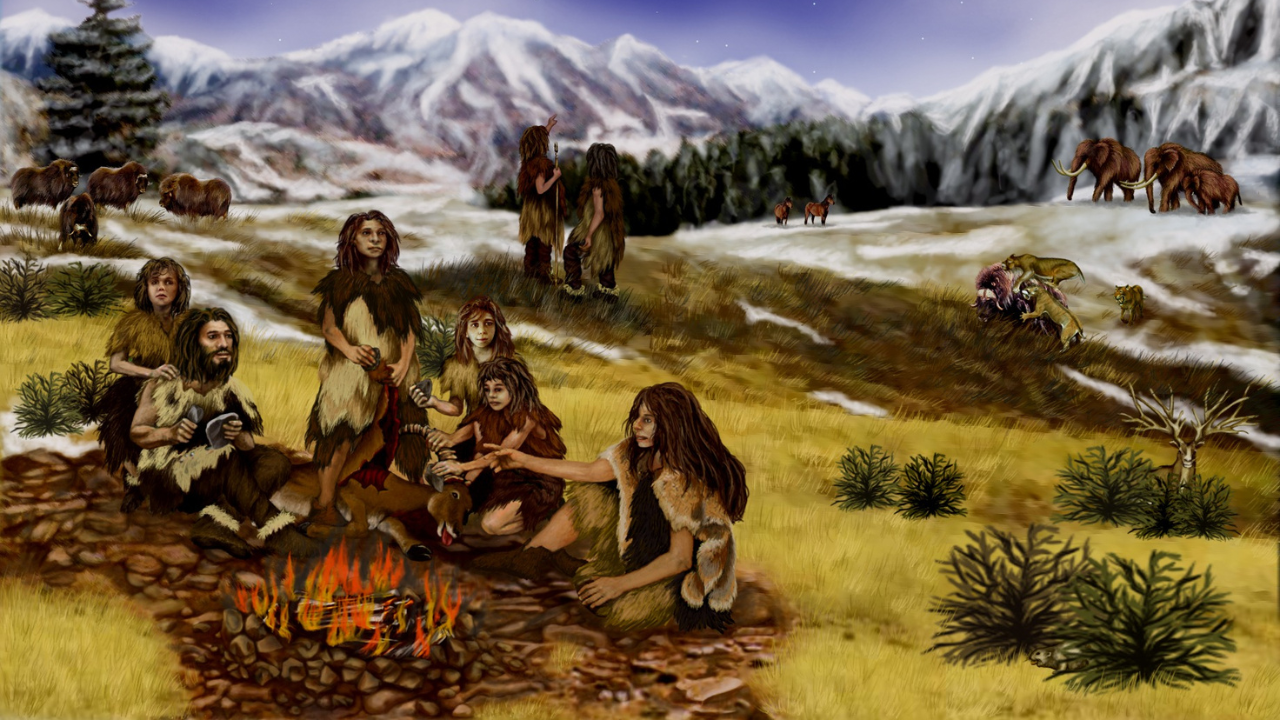
Scientists used advanced computer models and fossil evidence to look closely at how Neanderthals lived and thought. They found that Neanderthals had brains that were just as large as modern humans, and in some cases, even larger. They were skilled at making tools, using fire, and even creating basic forms of art. The study shows that their social structures were complex, meaning they cared for their sick and buried their dead. These are not the actions of a "primitive" species that lacked the mental power to survive.
Important Numbers and Facts
Neanderthals lived in Europe and parts of Asia for more than 400,000 years. This is a very long time, considering modern humans have only been around for a fraction of that. They officially disappeared about 40,000 years ago. At their peak, the total population of Neanderthals was surprisingly small, likely never exceeding 70,000 individuals across the entire continent. For comparison, a modern football stadium can hold more people than the entire Neanderthal population at certain points in history.
Background and Context
The word "Neanderthal" has often been used as an insult to describe someone who is slow or dim-witted. This idea started in the early 1900s when the first fossils were found. Early scientists thought they were hunched over and lacked the ability to speak or think clearly. Over the last few decades, archaeology has proven this wrong. We now know they wore clothes, used herbal medicine, and traded items over long distances. This latest study is the final piece of evidence showing that their brains were not the weak link in their survival story.
Public or Industry Reaction
The scientific community has welcomed this research as it confirms what many archaeologists have suspected for years. Experts in human evolution say this helps move the conversation away from "competition" and toward "environment." Some researchers suggest that instead of a violent war between modern humans and Neanderthals, the two groups likely met, traded, and even had children together. This is supported by the fact that most people living today have a small amount of Neanderthal DNA in their bodies.
What This Means Going Forward
Now that we know intelligence wasn't the problem, scientists are looking at "demographic" issues. This means looking at how many people were in a group and how they moved around. Because Neanderthals lived in very small, isolated groups, they were at high risk. If a cold winter killed off a few successful hunters in a small group, the whole group might starve. Modern humans lived in much larger, more connected groups. This allowed us to share food and information more easily, which acted as a safety net during hard times.
Final Take
Neanderthals were not failures; they were a successful species that lived for hundreds of thousands of years in harsh conditions. Their story teaches us that being smart is not always enough to survive. Sometimes, the size of your community and the luck of the weather matter just as much as the power of your brain.
Frequently Asked Questions
Were Neanderthals less smart than humans?
No, recent studies show their brains were similar in size and complexity to modern humans. They were capable of complex tasks like making jewelry and using medicine.
Why did Neanderthals actually go extinct?
It was likely a mix of small population sizes, inbreeding, and sudden changes in the climate that made it hard for them to find enough food to support their groups.
Do humans have Neanderthal DNA?
Yes, most people outside of sub-Saharan Africa have about 1% to 4% Neanderthal DNA, proving that the two groups met and lived together thousands of years ago.

